


Welcome to our blog!
It's all about our discoveries in our private Shady Oaks Sanctuary for birds, pollinators and wildlife. We gauge our success by the diversity of species we observe and document with our photography.
We hope you are inspired to create your own refuge!
Bubbler Water Features for Birds - Part One - Bubbler Pond and Basin
Back in May, I wrote on Simple Ways to Add Moving Water for Birds. It included a brief mention of our Bubbler along with a small fountain and a dripper on a birdbath.
http://hummerhavenunltd.com/blog/2016/5/simple-ways-to-add-moving-water-for-birds
It is time for a few more details on our Bubbler Pond, but before I start, the first concern before adding a Bubbler to your yard must be the health and safety of people and birds near your water feature. Please review this list of considerations in planning your Bubbler!
1. GFCI electrical outlets for the pump and heater need to be installed by a properly licensed electrician. This will protect anyone near the water from electrical shock. It is not safe to use extension cords! Check local codes regarding approved installation. The cords on the pump and heater are usually ten feet long, so placement of the electrical service will have to be carefully planned to be near the pond.
2. It is critical that no chemicals, herbicides, pesticides or fertilizers are used near the water feature. The overspray or run-off could enter the water and cause harm to the birds and other wildlife.
3. It is also important to keep the water feature clean and the pond (reservoir) topped off throughout the year with fresh water. Even in winter, water evaporates and low water levels can cause problems with the pump.
4. Carefully consider the site where the Bubbler Pond will be placed.
a. It should be in an area that is preferably shaded with small trees and shrubs nearby. The plants will give protection to the birds if they must fly quickly to cover. If you are planning a new area for a Bubbler with plants surrounding it, that idea will work, it just may take some time for the birds to get comfortable.
b. The Bubbler pond should be installed so that rainwater run-off will be diverted around it and not into it.
c. The Bubbler should be easily viewed from a favorite window. Proper placement will give many hours of enjoyment watching the bird activity!
5. Maintenance will be required on a regular basis to keep the Bubbler area clean and functional.
a. It is a good idea to hose off the surrounding rocks to clean off any bird droppings. This may need to be done a few times a week up to twice a day depending on the activity.
b. Leaves will need to be cleaned out of the pond and basin areas so the birds can come in and to keep debris from accumulating in the pond.
c. The filter will need to be cleaned on a bi-weekly to monthly basis as needed. Bird activity will slow down if it is not clean! We use hydrogen peroxide to help disinfect the water and powdered hydrogen peroxide (Green Clean) to control string algae in spring and fall.
Overview: Our Bubbler Pond for Birds
It was April of 2000- the foundation was being dug for our breakfast room addition, and the perfect Bubbler Rock was unearthed. It was smooth enough, large enough, and had a very nice groove in it that ran off to one side, just right for a waterfall effect. It was October when we began the installation of the pond.
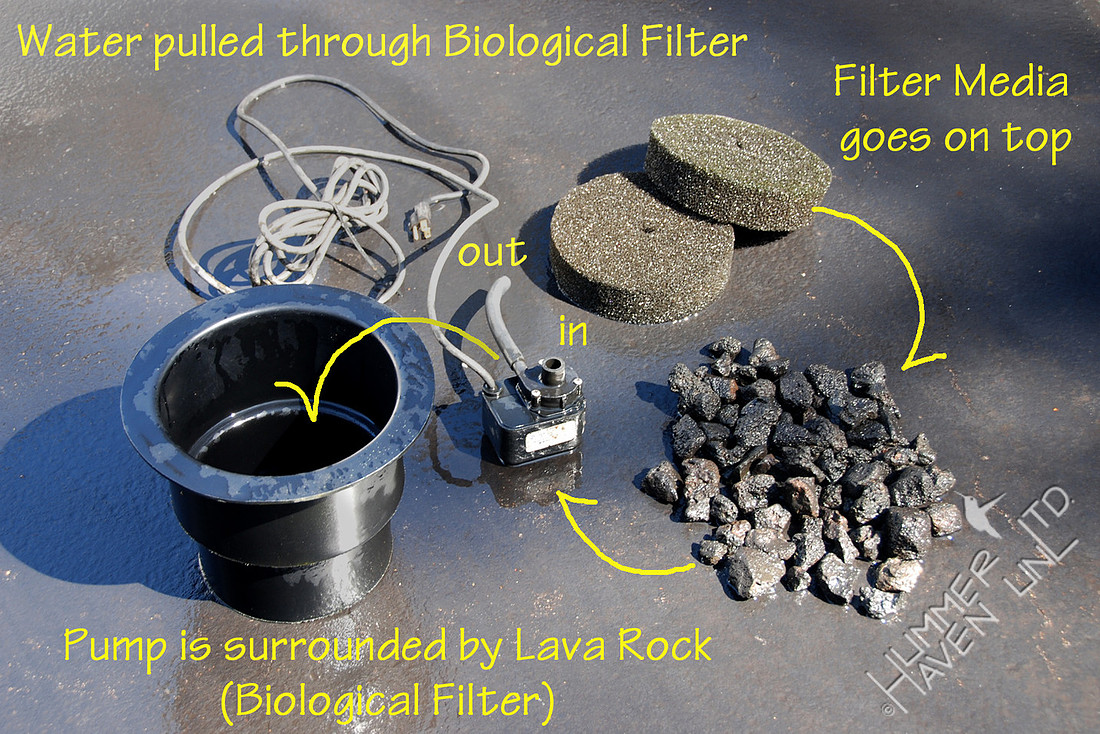
During the remodeling, an extra electrical line was run out to the approximate area where we would be putting the pond in, for the pump and heater. We moved the rock to the desired position by the caveman method, with 2x4’s and rocks. We purchased a 100 gallon preformed pond by MacCourt, the “Madeira”. Dan dug the hole and leveled up the pond in a bed of sand. We then rented a large hammer drill with a 5/8” masonry bit that was 16” long to drill through the rock. We purchased a recirculating pump and a mechanical/biological filtration setup, and filled the pond. The water is pulled into the pump through the filtration material, then back out through the tubing where we put in a “T”. This allowed half the water to pump up through the rock and bubble on top of the rock, and then trickle down the ‘waterfall groove’. The other half recirculated in the pond. (We added a basin off to one side a few years later and the "T" was used for an additional Bubbler Rock there.) We also bought a floating trough heater/de-icer to use through the winter to keep the surface water from freezing over.
On October 25, 2000, the bubbler was fully functional. I set the stage early that morning, hosing off the rocks, and sprinkling the blackhaw viburnum leaves. It seemed to add to the invitation to come, drink and bathe! Birds did come down and we saw many species at the Bubbler in those first few years.
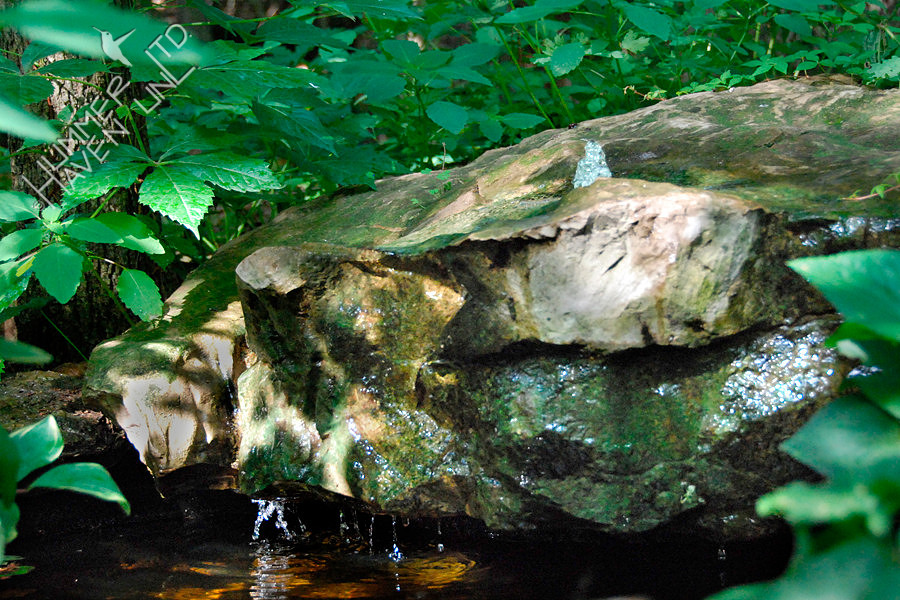
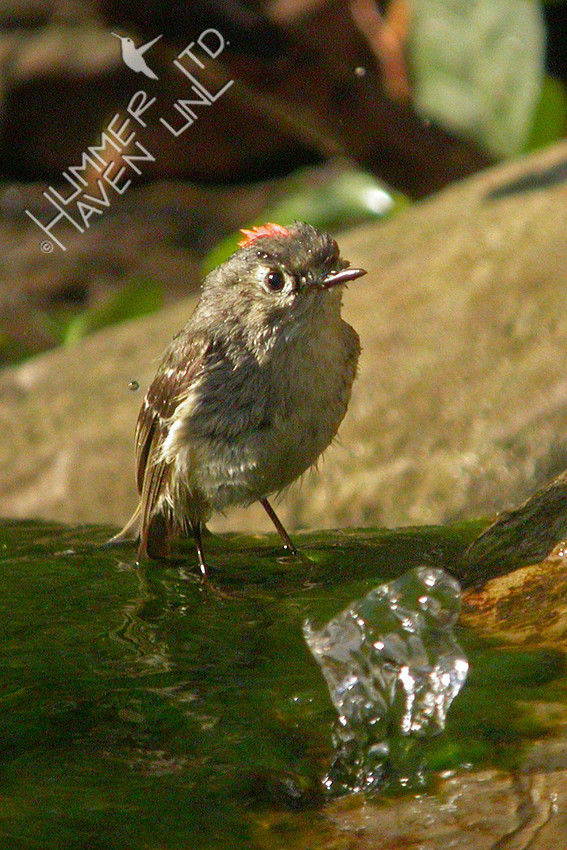
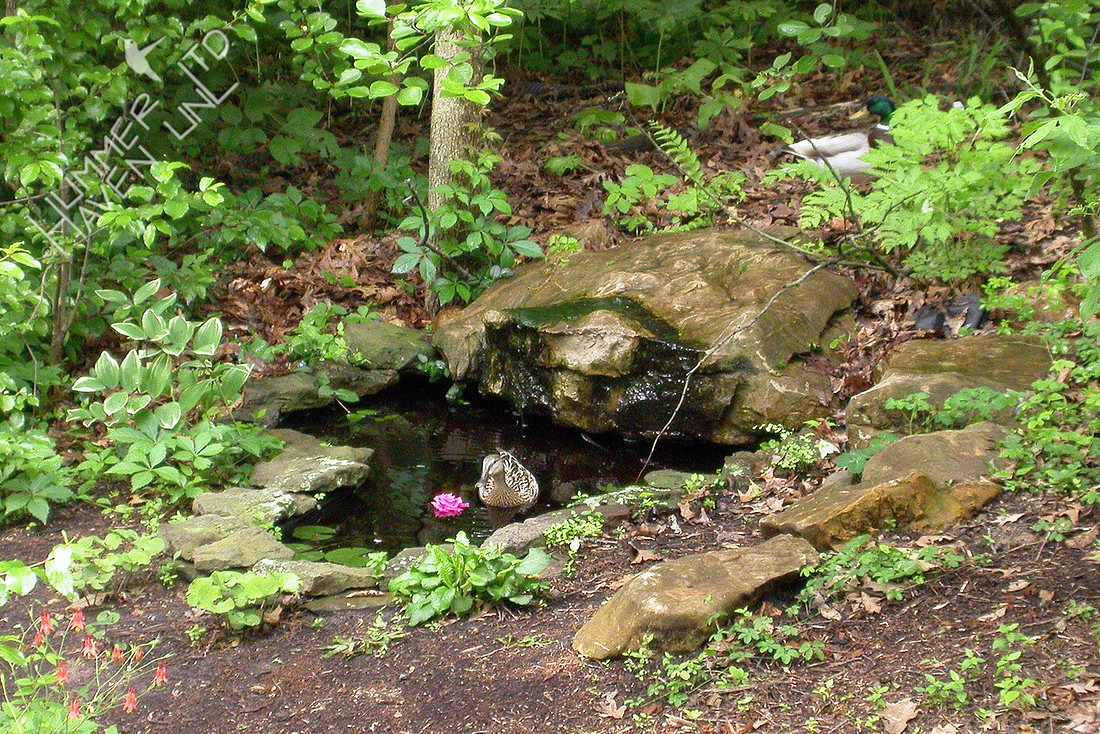
Here are some photos from the early days with a Ruby-crowned Kinglet at the 'Bubble' on the Bubbler Rock and a Mallard pair investigating the pond.
Here is a two-dimensional diagram showing the basic components.

In spring of 2004, we added a basin off to the side for more room for birds to bathe. The "T" was used for additional tubing that pushes water through this second Bubbler Rock. The original graveled basin area was approximately 15" x 18" x 2" deep. The gravel helps the birds see the bottom of the basin. Birds don't have very good depth perception and 2" - 2 1/2" is the maximum water depth needed for them to bathe safely.

Here is a Magnolia Warbler on the Bubbler Rock with 3 Tennessee Warblers behind it in the Basin. Birds are quick to use both areas.

This photo shows the different parts in winter. The total area taken up by the pond, basin and rocks is roughly ten feet in diameter.

One more change was made in November, 2011 when we enlarged the basin area using some leftover Pond Liner from the Pondless Bubbler Project. (More on that in the next post.)
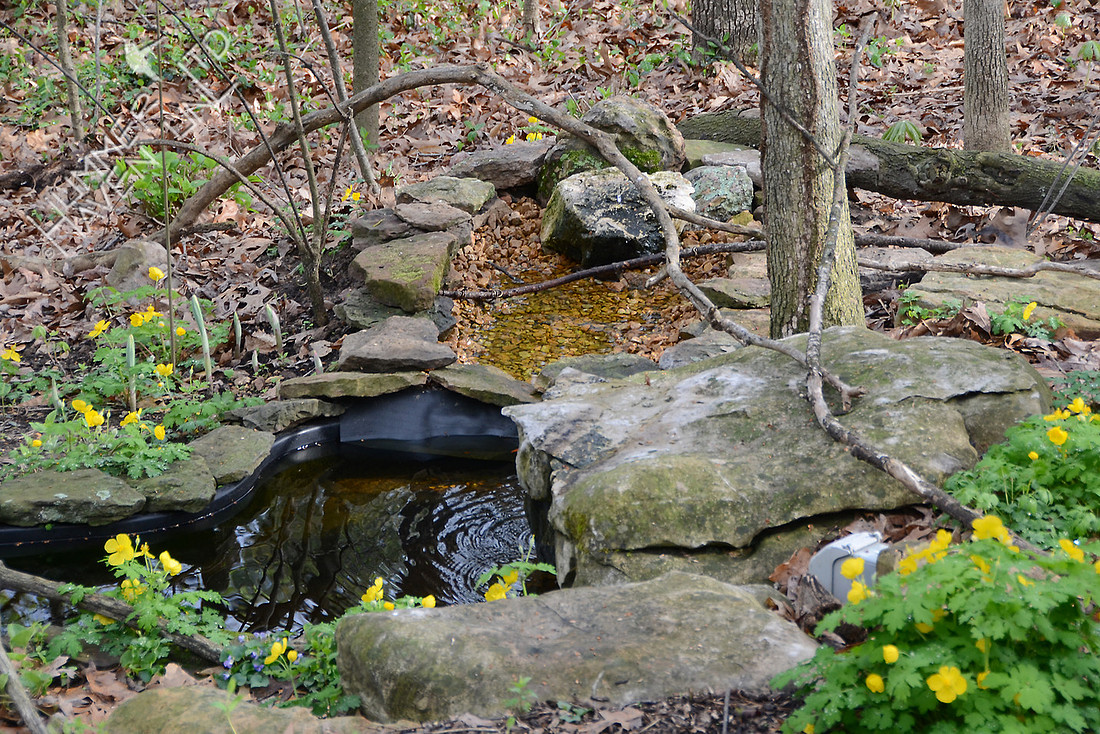
The Bubbler Basin is now 18" x 24" which is over half again as large as the original area. It is the same 2" - 2 1/2" depth as the original basin. This "bird's eye view" gives an idea of how the birds approach the water using the stepped perches.

This front view should help to guide in the placement of various sized branches for various sized birds.

The encircled areas show small puddles of different depths. A branch across the width of the basin is a perch but also a divider of sorts for smaller birds to come in and feel safe behind larger birds that may be in the front areas.
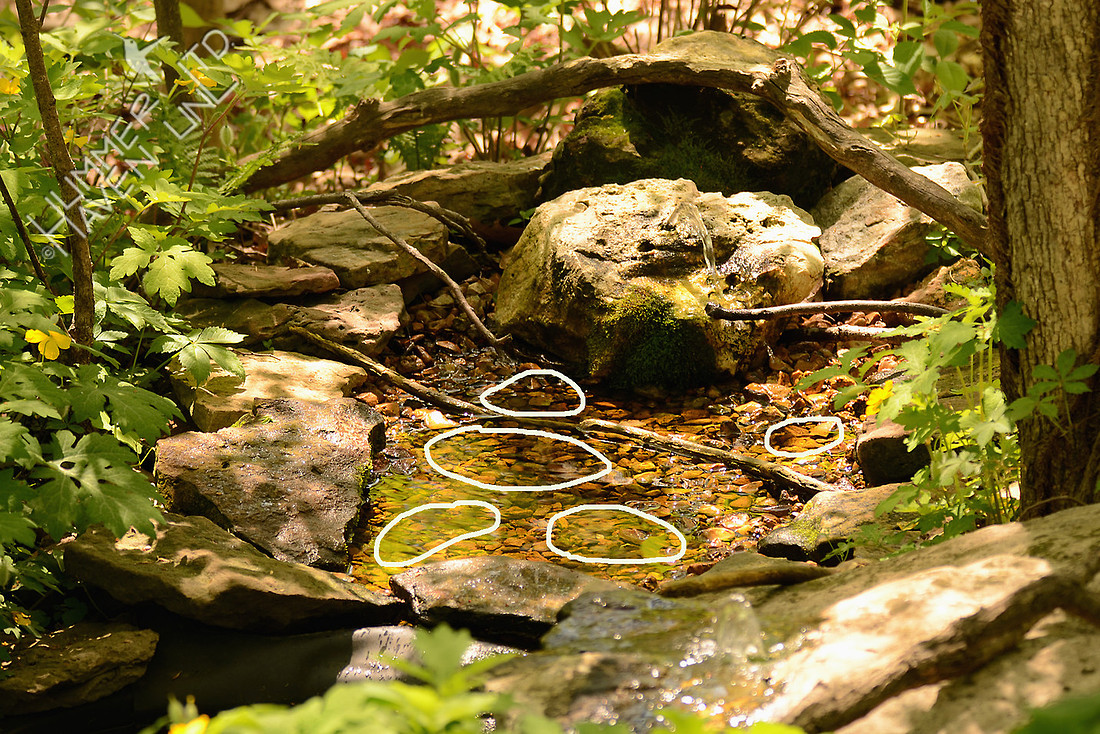
We hope this information helps you to imagine and plan for a Bubbler in your own shady setting. You could easily simplify and have a basin area like this recirculating into a pond and not worry about finding a large boulder. Check local pond suppliers or hardware stores for tubing, gravel and other components.
We believe that our continued efforts to restore our habitat with native plants has increased the attractiveness of our yard to the birds. Native plants provide shelter, attract the insects the birds feed upon and provide nesting places. Once fresh, moving water is added, how can the birds resist! "If you build it, they will come!" At this point in sixteen years, I have recorded 116 species plus one hybrid warbler at the Bubbler.
Here are a few helpful links:
MacCourt Pre-formed Pond Products:
http://www.maccourt.com/products/ponds.html
MacCourt Pond Installation:
http://www.maccourt.com/products/ponds_install.html
Note: People often want a pond for fish and plants and six hours of sun is needed for that purpose. However, that is not our intent with a Bubbler Pond. We have had fish in the past, but this pond is too small to provide caves and hiding places for the fish to escape mink and raccoons.
Lowe's comparison of pumps of two different sizes:
A simple Pond Filter example:
http://www.homedepot.com/p/Total-Pond-Universal-Pump-Filter-Box-MF13010/202278958
The heater or Floating Pond De-Icer that we use is this one:
Be sure to look at the post next Tuesday on the Pondless Bubbler design and installation. There will be links to videos to watch with that one and they may help in visualizing how to build a basin area or drill the hole in the Bubbler rock, for example. We wish you success in your own project to benefit our native birds!
12/1/16 Coming soon - Two posts on Bubbler Water Features for Birds
Check back soon for two informative posts on our Bubbler Pond and a Pondless Bubbler that you might plan for your yard!


First week of November 2016
Yesterday was 'Fall Back' Sunday. We've lost 4 hours and 11 minutes of daylight since the Summer Solstice, by my reckoning. Dan spotted the first young white-tailed buck of November as it walked through the woodland at 7 a.m. and it was chilly at 37 degrees. It finally felt like November.
We have had visitors this week. Ruby-crowned Kinglets and Orange-crowned Warblers were still around on Wednesday with the record warmth. Their dull fall plumage provided camouflage as they blended in with the gray bark and yellowing ribbed leaves of these young American elms (Ulmus americana).
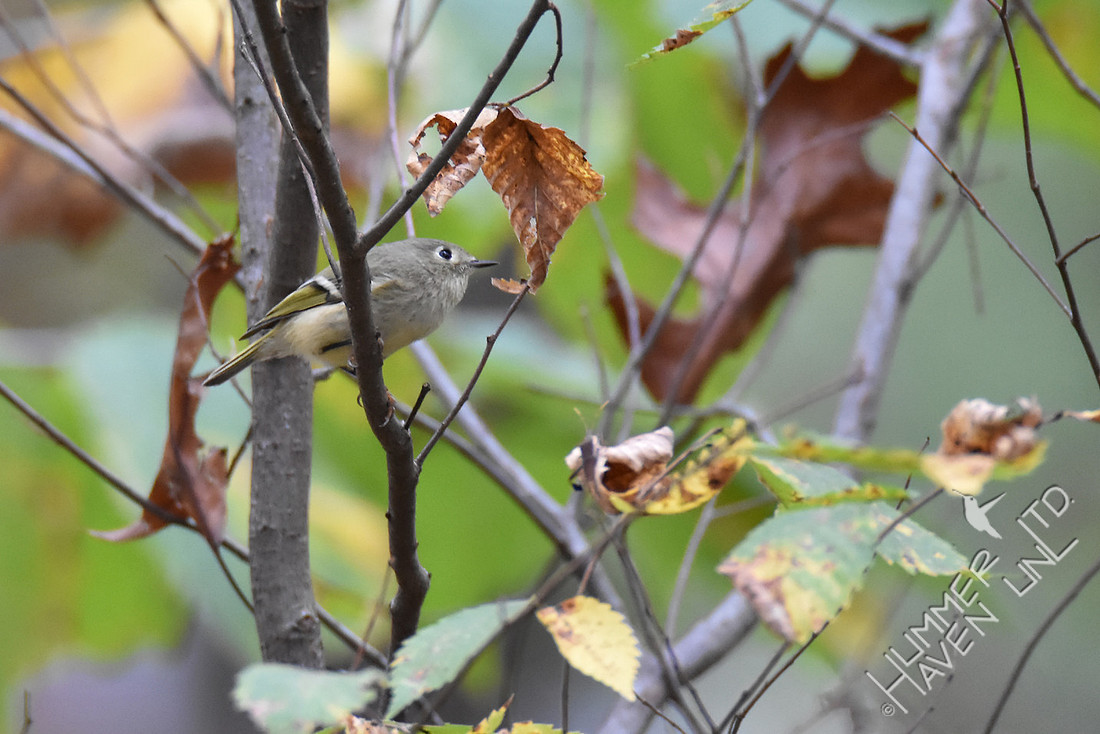

A bit of the orangish crown was visible on this warbler once it got wet!
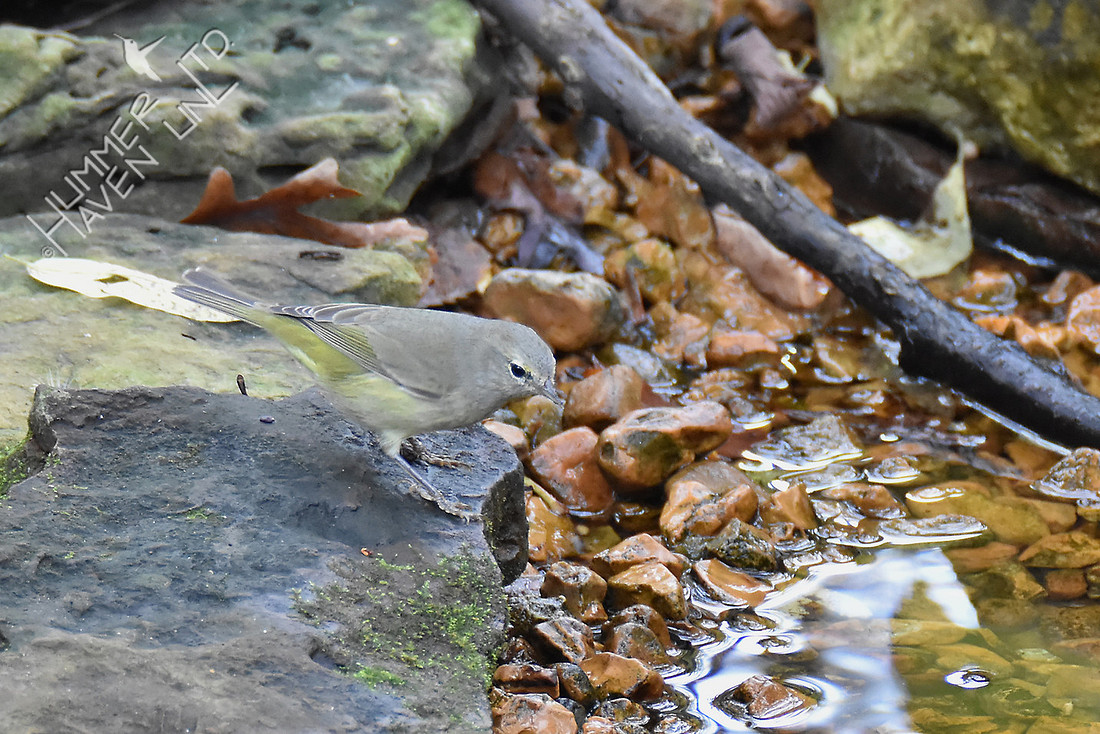

We finally got a good 2" of rain on Wednesday and early Thursday as a cool front moved through. In the late afternoon on Thursday, several species of birds really made a fuss. I suspected a Barred Owl was the reason for the ruckus but could not locate it in the tree canopy.
Friday, one of the healthier looking foxes strolled along the 'Bubbler trail' early in the morning.
It was kind of quiet for most of Friday with the usual suspects around. I looked out to check the bubbler about 5 p.m. and saw one of the owls nearby. The bird was hunched over some prey, which it would soon reveal and quickly devour.

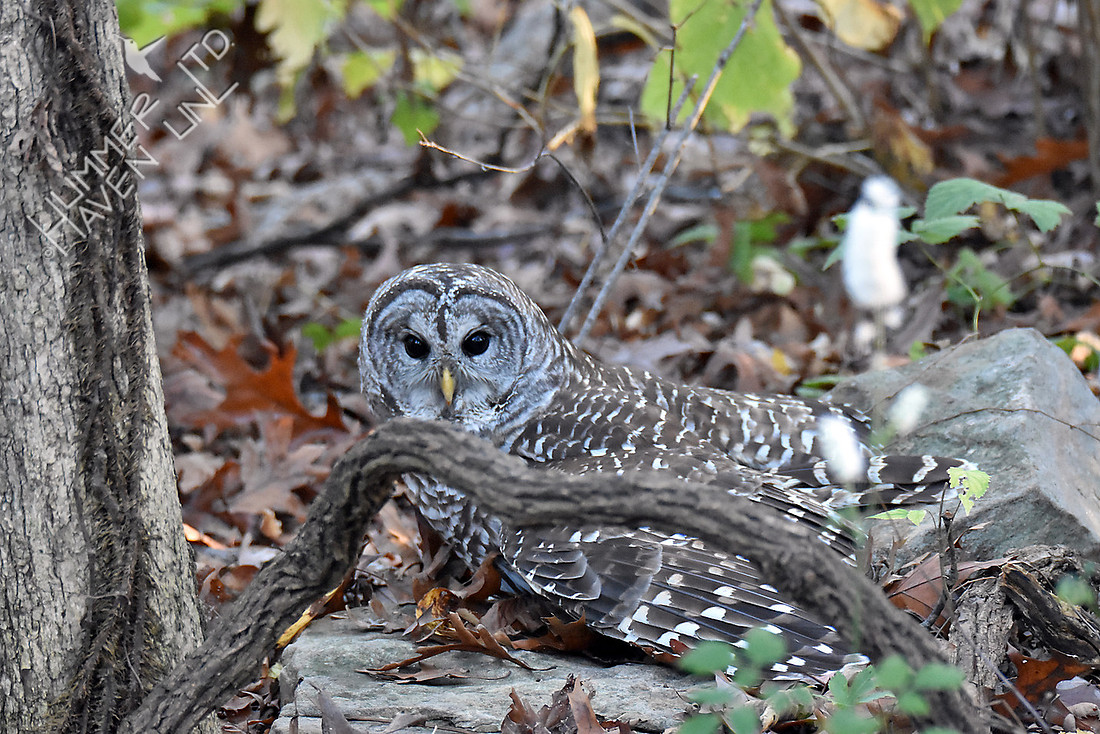
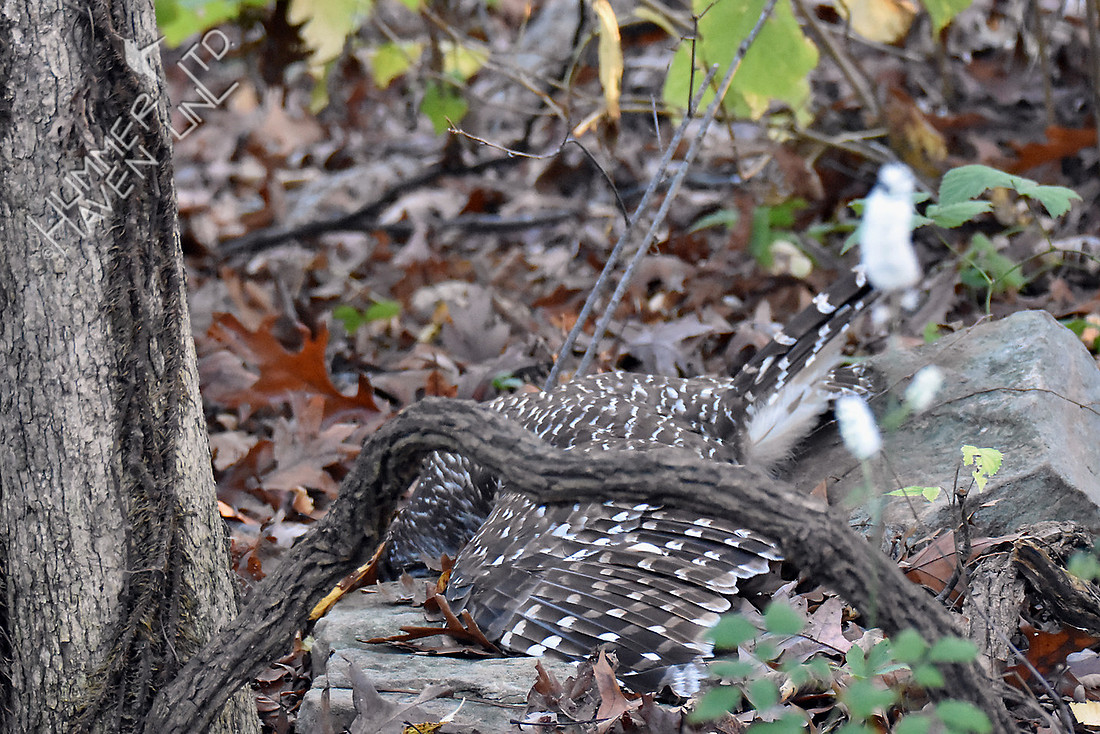
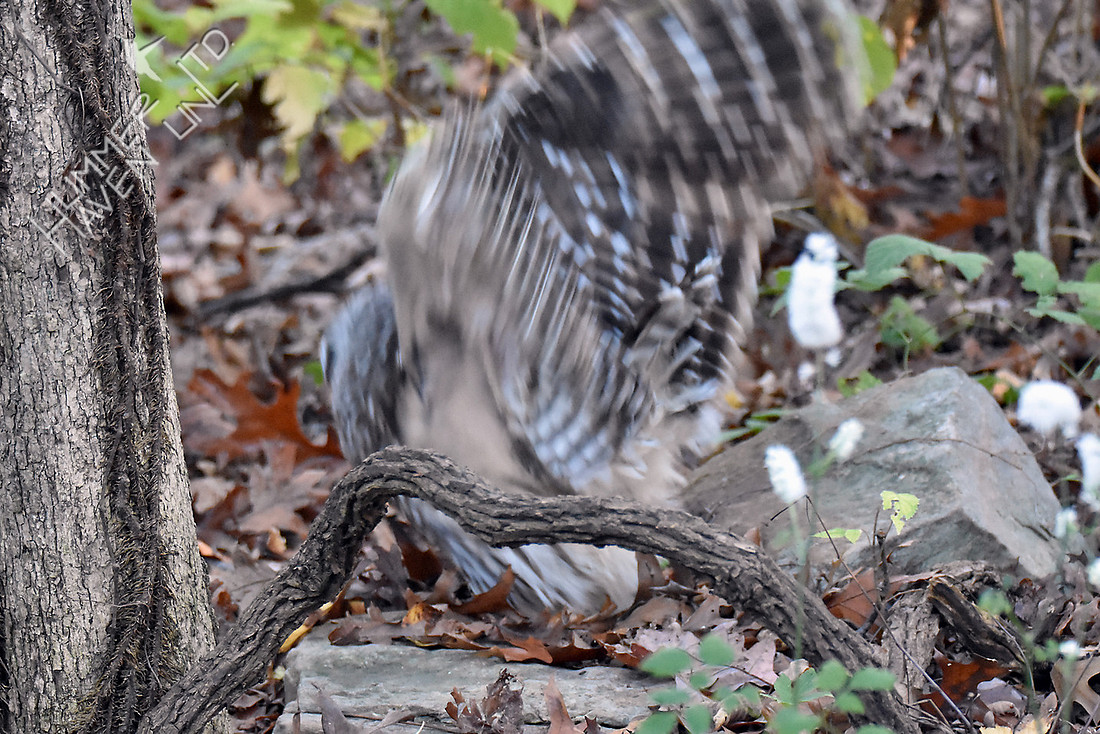
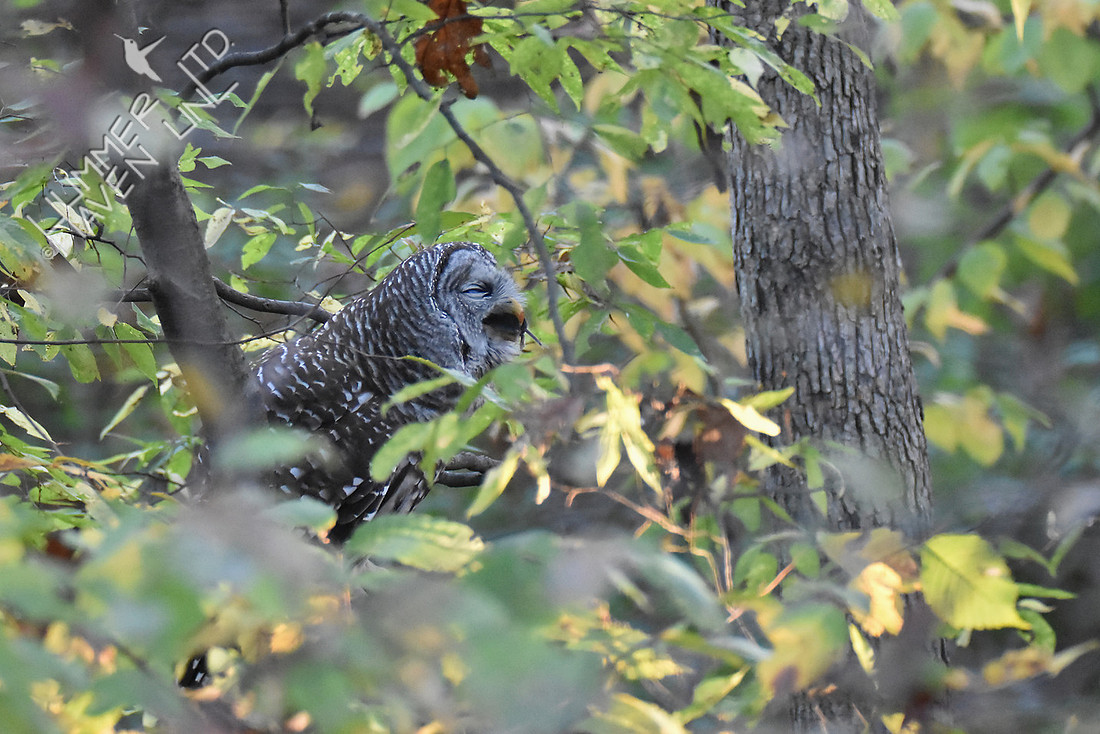

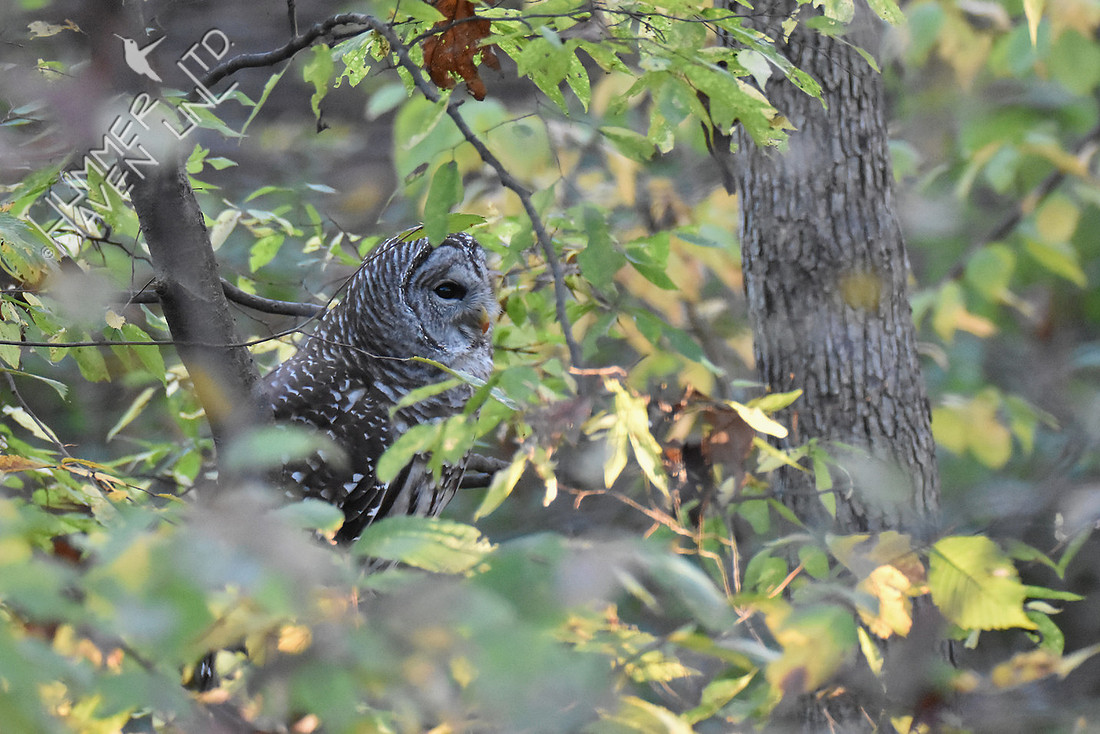
The appetizer was a field mouse, brought closer to the surface by the rains. The owl perched in the small hackberry (Celtis occidentalis) for over 45 minutes, digesting its food.
A flock of American Robins arrived on Saturday and their preferred food was American Beautyberry (Callicarpa americana). The lemony leaves accent the magenta berries in a bewitching way this time of year, signaling to the birds that the fatty fruits are ready for their taking.
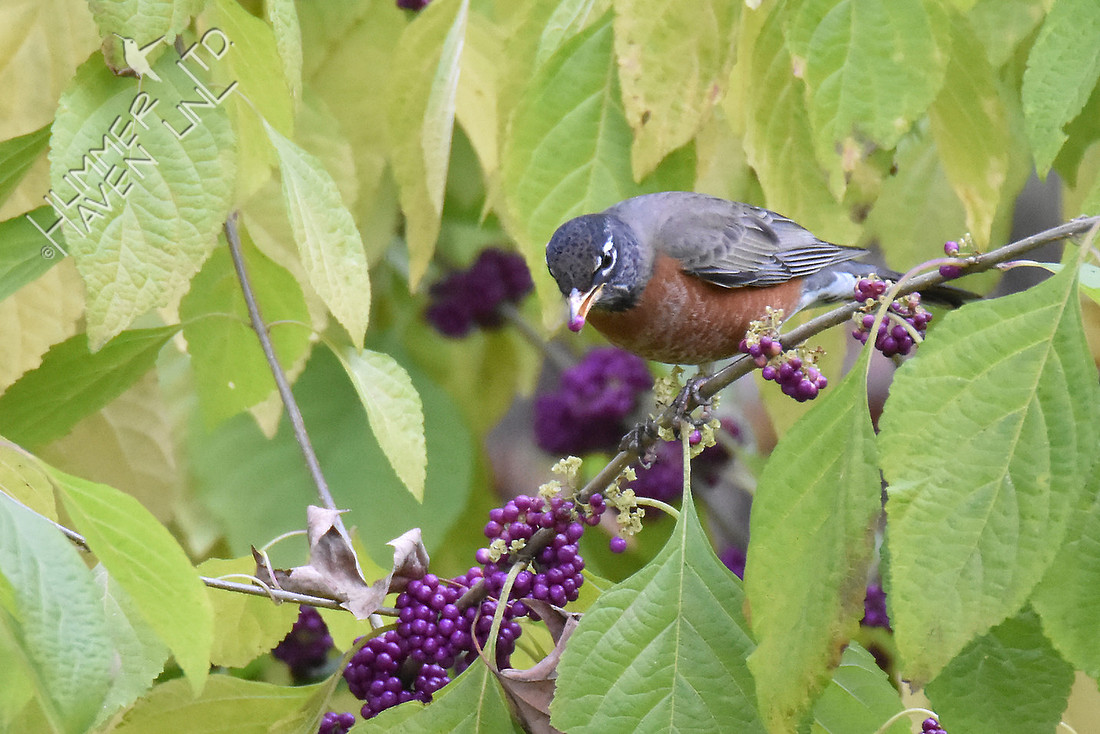
Yesterday, while Dan was cleaning the leaves off the driveway, I watched the little mangey fox come in for a long drink. One can see by the kinked white tip of a tail that it is not the same fox as the healthy one that came by a few days ago.
In the afternoon, I went out to the gazebo to photograph American Goldfinches that were in the garden. The fading sun shone on this one as it was eating the seeds of Eastern Blazingstar (Liatris scariosa).
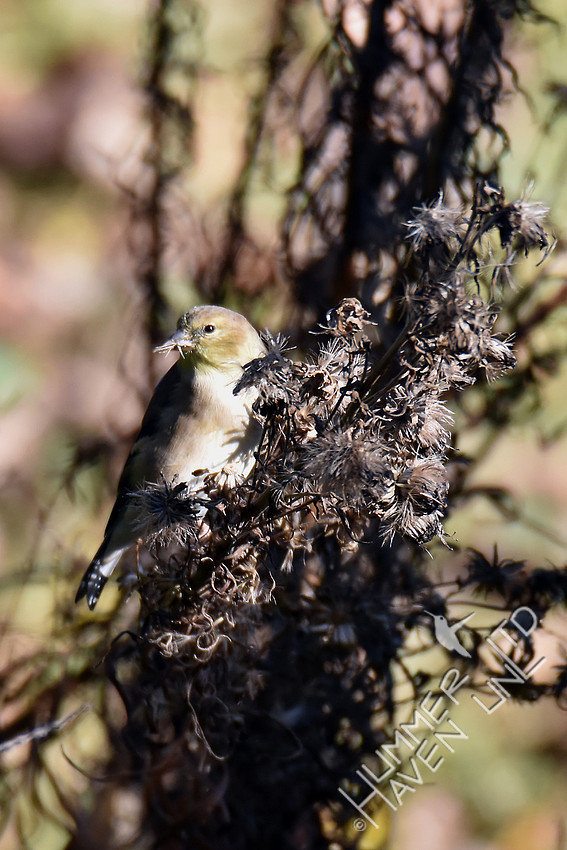
Just as I was about to finish, a Barred Owl flew right in front of me, navigating around the gazebo and between it and the Pond Cypress (Taxodium distichum var. imbricarium) that is barely 6 feet away. I could have touched its wing it was so close! It swooped up to a favorite perch on a leaning Green Ash (Fraxinus pennsylvanica) in the swampy thicket.
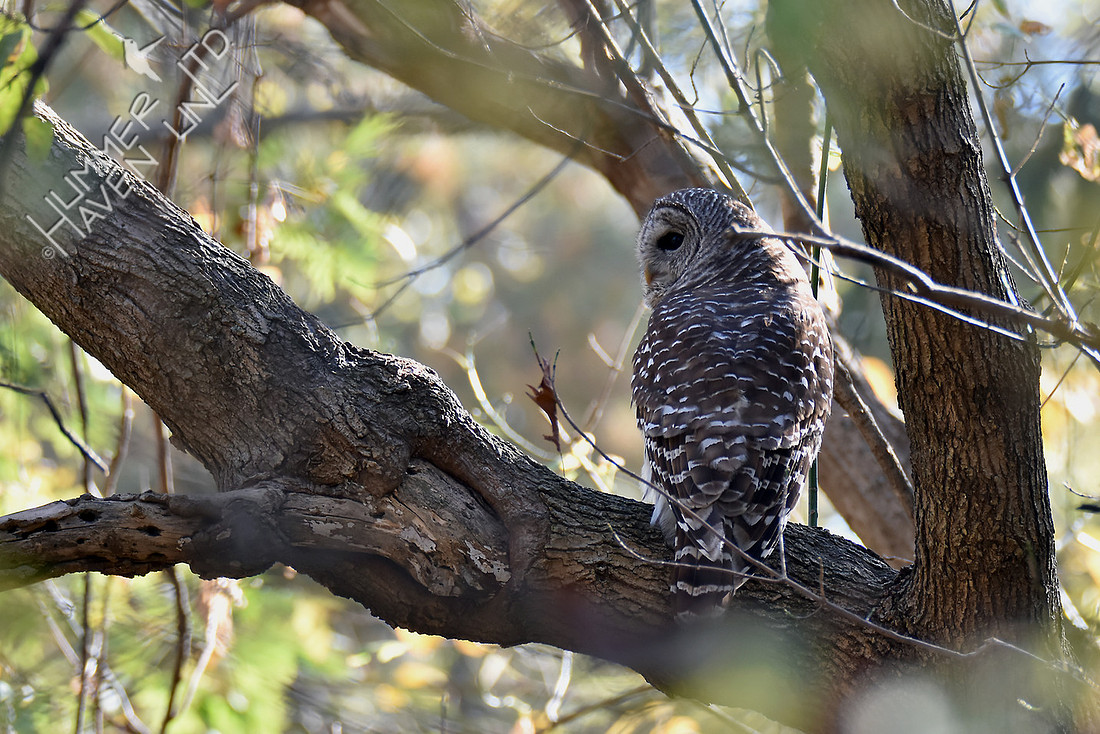
The owl had caught a vole and was caching it in the crook of the tree for a later meal.

The owl's presence had caused much commotion with all the birds fussing about the situation, including one of the Carolina wrens brought into focus just in front of me.
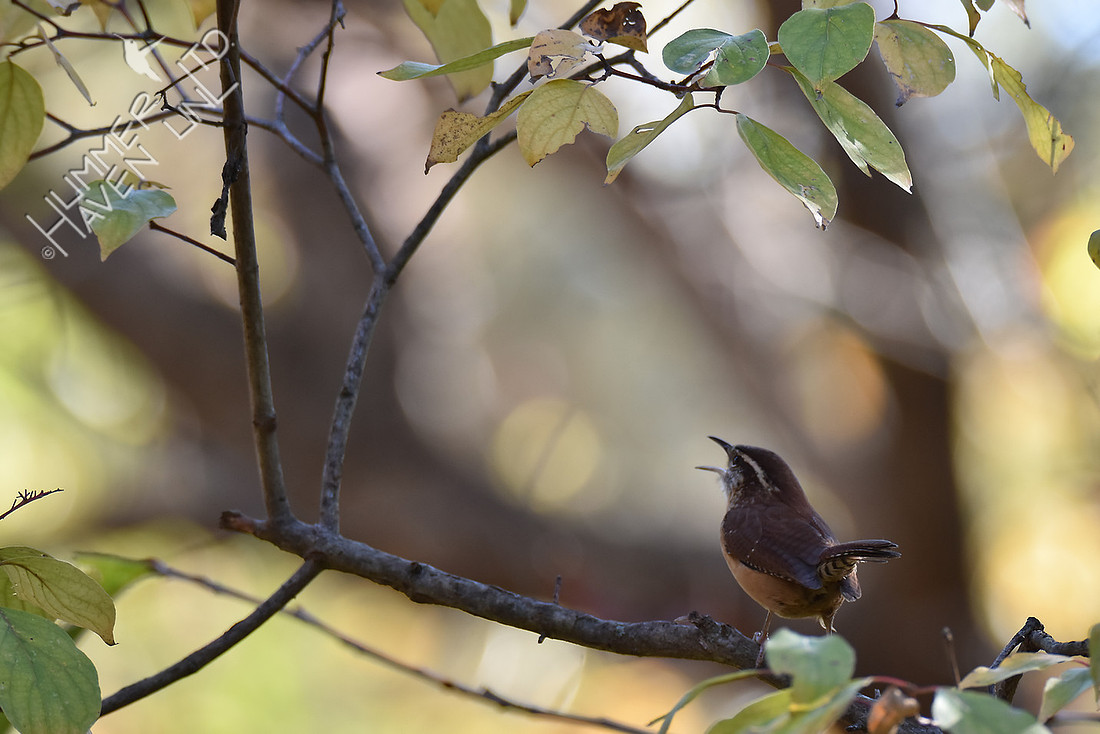

The owl had been harassed enough and flew off to denser cover.
Cooler weather does tend to increase hunger and activity. It has been a good start to the new month.
Happy Halloween! Wrap-up on October 10-31-16
It's the last day of October. Birds like this American Goldfinch are now coming to the hummingbird feeder for a sip. The ruby-throats have left and from this point on there is a chance of seeing a rarer hummingbird species. A long shot maybe, but it still is possible. Our feeder is ready and waiting.

Leaves are coming down and it's pretty darn dry. The bubbler has also been a busy place for thirsty birds. A family of Cedar Waxwings have been coming in and this one was brave enough to get a drink between groups of robins.

Waiting nearby was a young bird, the first I've ever photographed. What a scruffy little guy!

By spring, the young one will be as beautiful as this one! Their fine feathers look like a velvet cloak to me.

There have been several days lately when Ruby-crowned Kinglets have been in the mix. The little ruby crown is visible on this bird, though not as obvious as it was in the breeding season.

We've had regular visits from Orange-crowned Warblers. Young birds like this first year female are still coming through.

Both the 'crowned' birds got in together for a 'royal splash'.

The Golden-crowned Kinglet showed up a little too late to join them and preferred the Bubbler rock.

What a gorgeous, tiny bird!

Last Friday, the first of the season Red-winged Blackbird landed on one of the feeders and chowed down some black-oil sunflower seeds.

It was hanging out with this Common Grackle, perhaps they were scouting together for their mixed flock which may be swirling in soon.

The young male Yellow-bellied Sapsucker has been here on several days to feed as well.

Dark-eyed Juncos arrived here last Sunday and this female came to the bubbler.

White-throated Sparrows are also making themselves here at home for the new season.

More Orange-crowned Warblers came in yesterday, early and later in the day with a whoosh of cooler air.
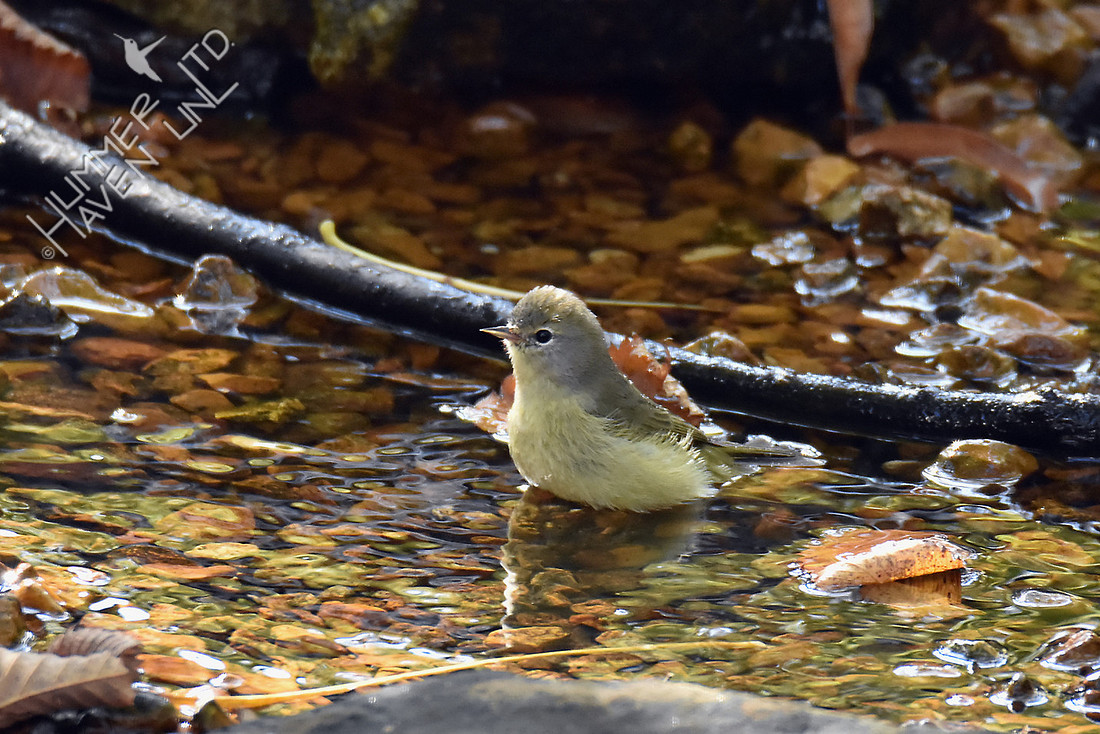
Well, it's time to say bye-bye to October!

Trick or Treat!
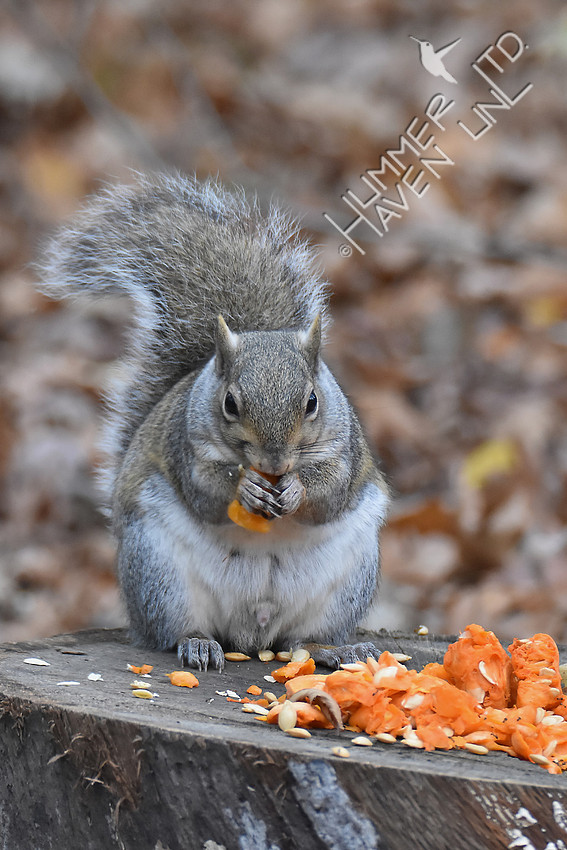
To see all the photos from the past week, begin here on this page:
http://hummerhavenunltd.com/p712853024/h3777fde5#h3777fde5
New arrivals for the season and Pied American Robin 10-24-16
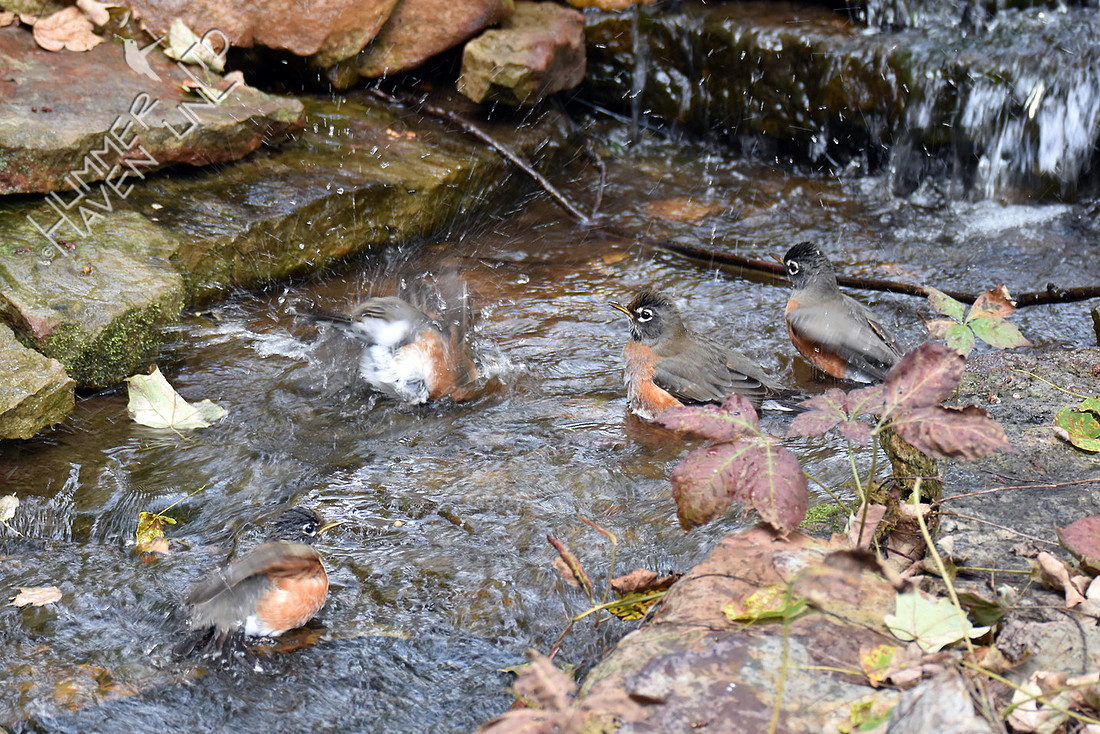
October days have brought in large flocks of Robins. The birds come in the late afternoon and squabble over every available watering hole. Here, they are in the stream bed at the pond.
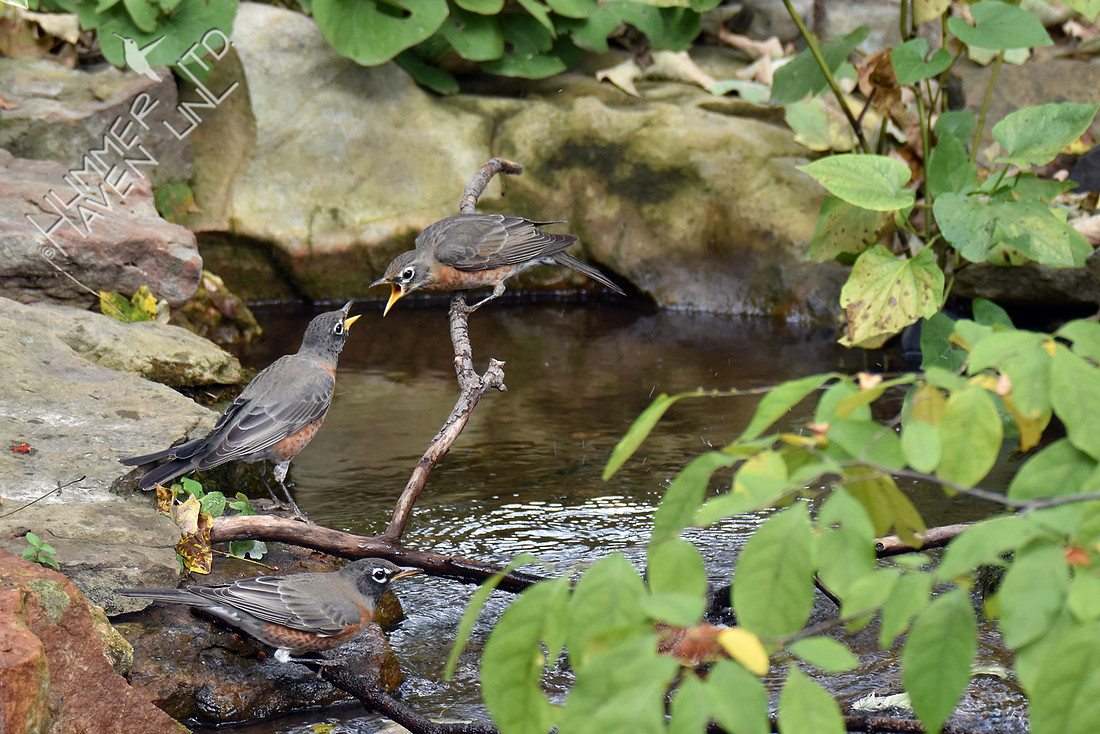
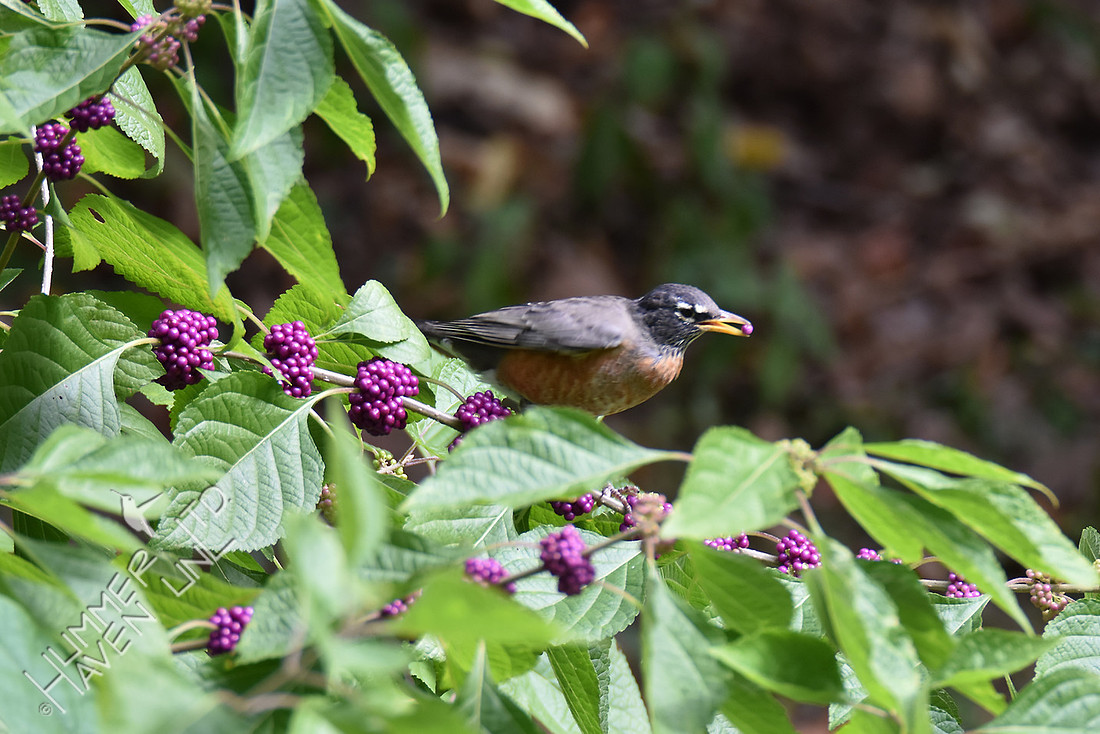
Along with Cardinals, they love to eat the berries on the American Beautyberry (Callicarpa americana) shrubs that are fully laden right now.
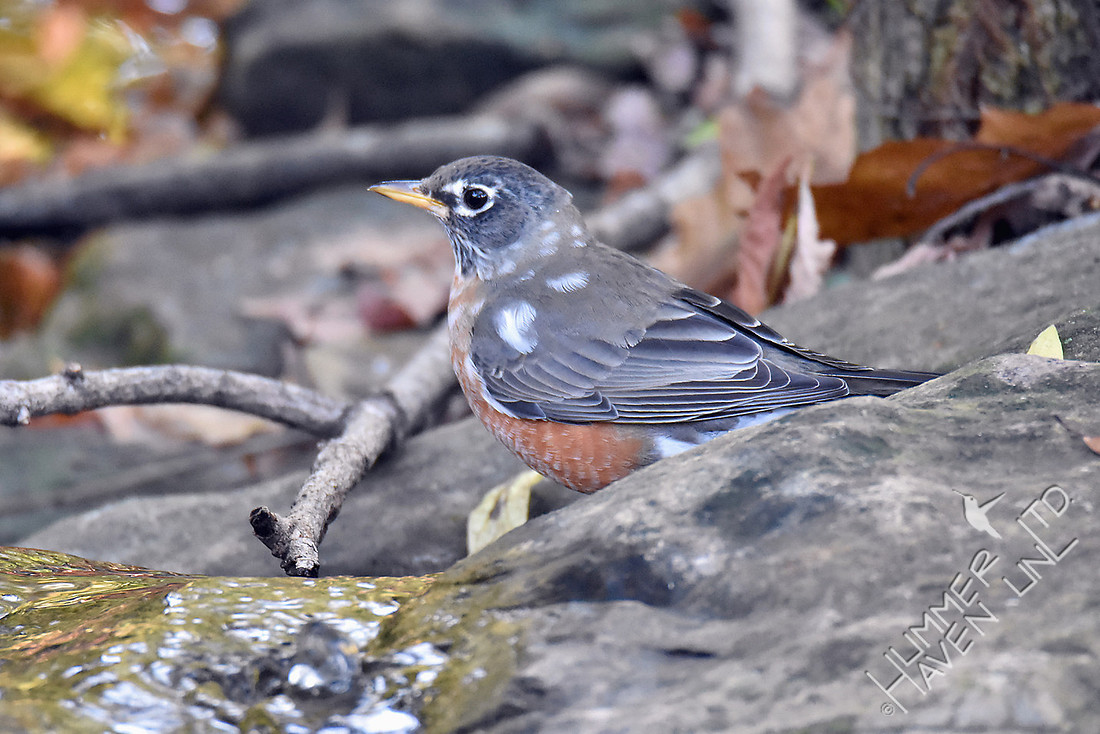
Watching robins can get a little monotonous. Yesterday, I perked up when I realized this one was different. It was 'pied' with patchy white feathering.
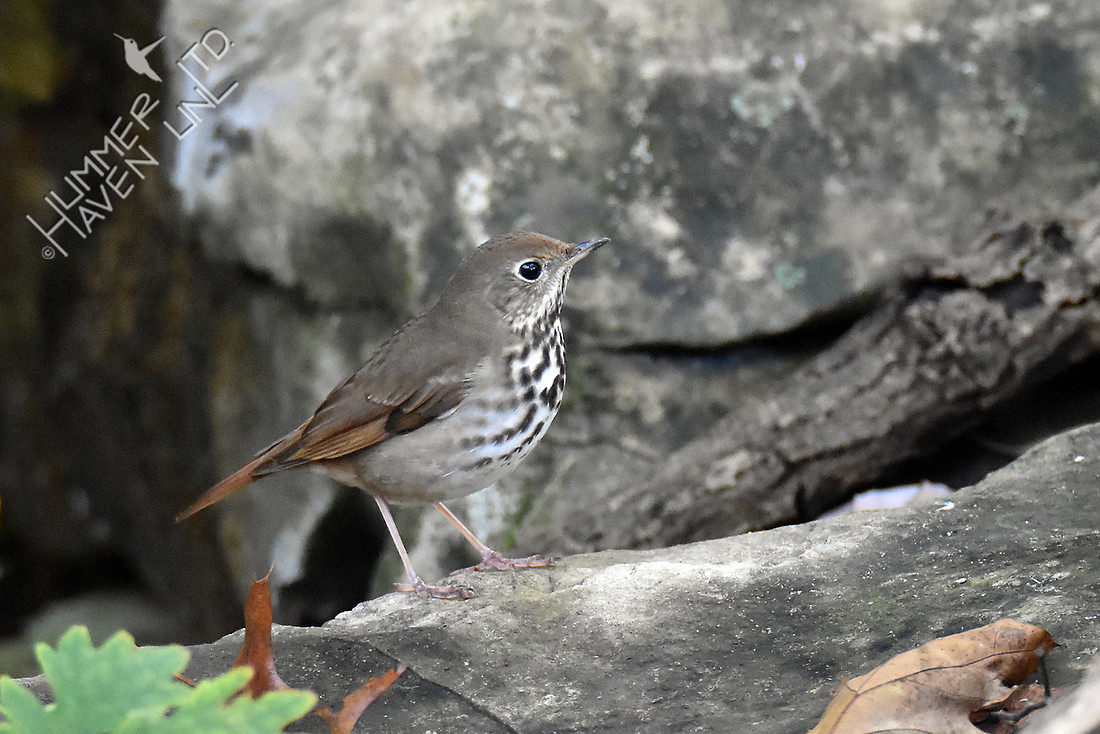
A Hermit Thrush was in with the flock of robins but the smaller bird had no chance of competing with them to bathe.
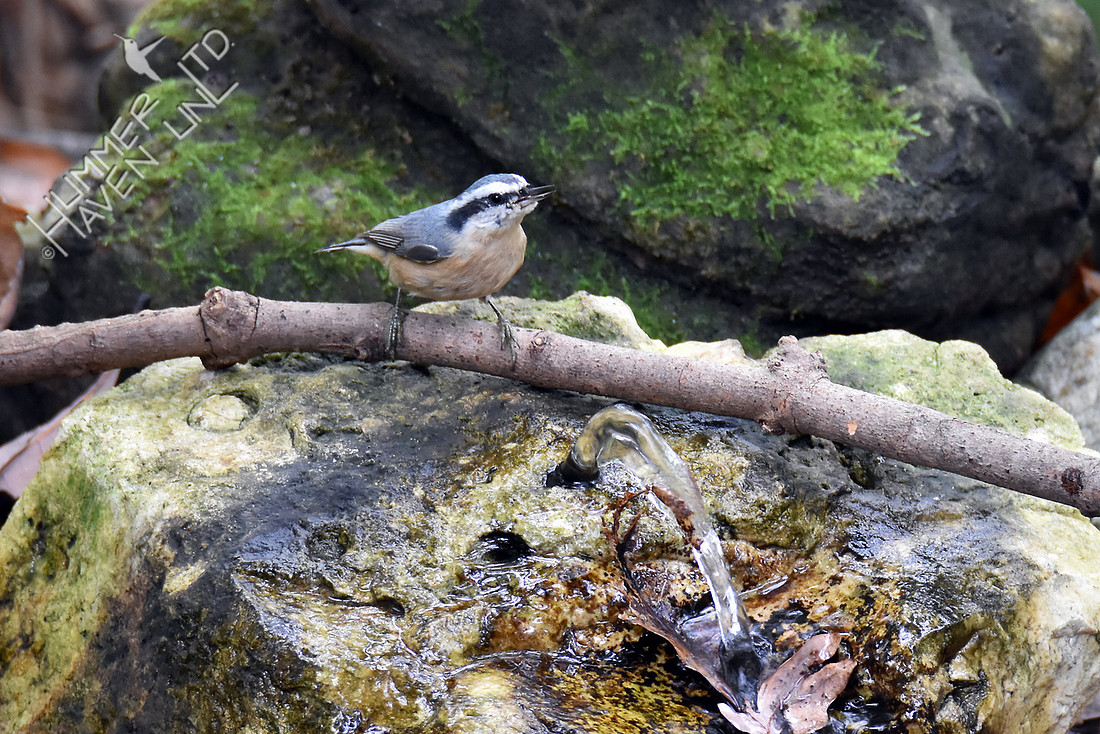
On Monday, 10/10/16 this Red-breasted Nuthatch came in several times to drink. I haven't seen one since then, but trust they will come back.
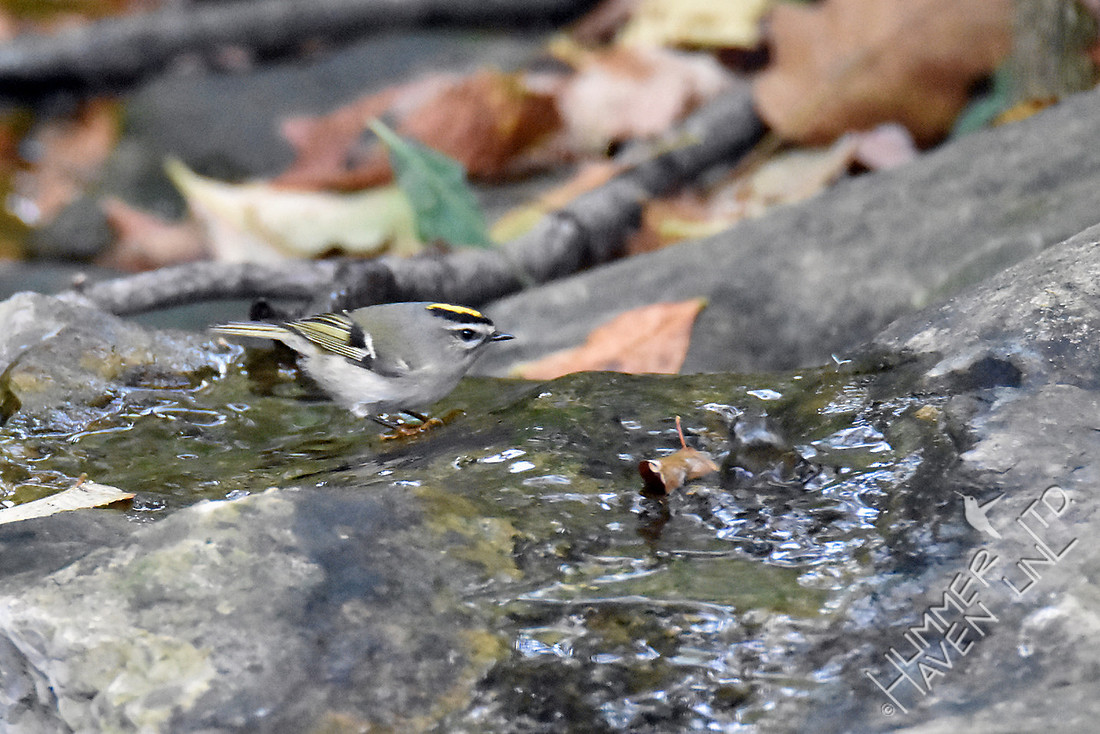
Tiny Golden-crowned Kinglets have returned. They are frenetic feeders and will drop in at the bubbler when it's quiet for a quick drink.
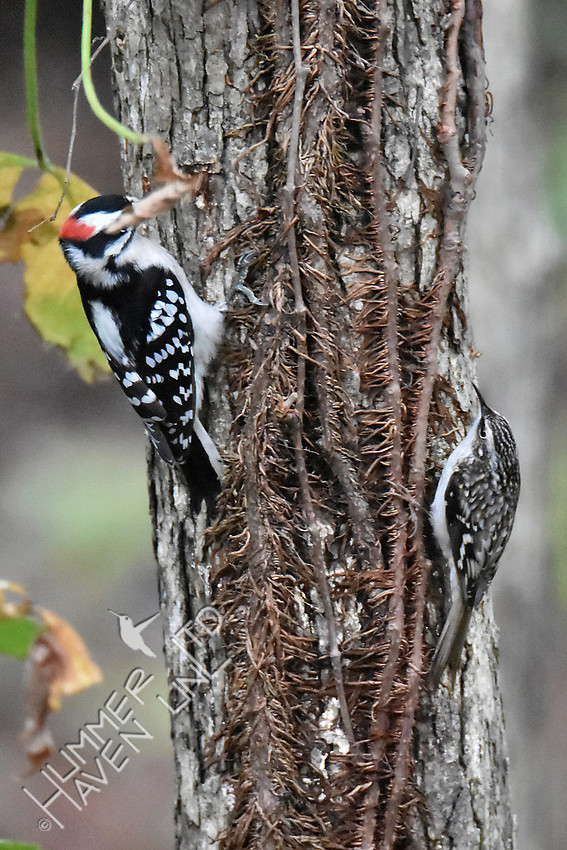
The first Brown Creeper of fall showed up on 10/20/16. Here, it has 'frozen' near a Downy Woodpecker on a small oak after hearing the alarm calls of Blue Jays and a Red-bellied Woodpecker.
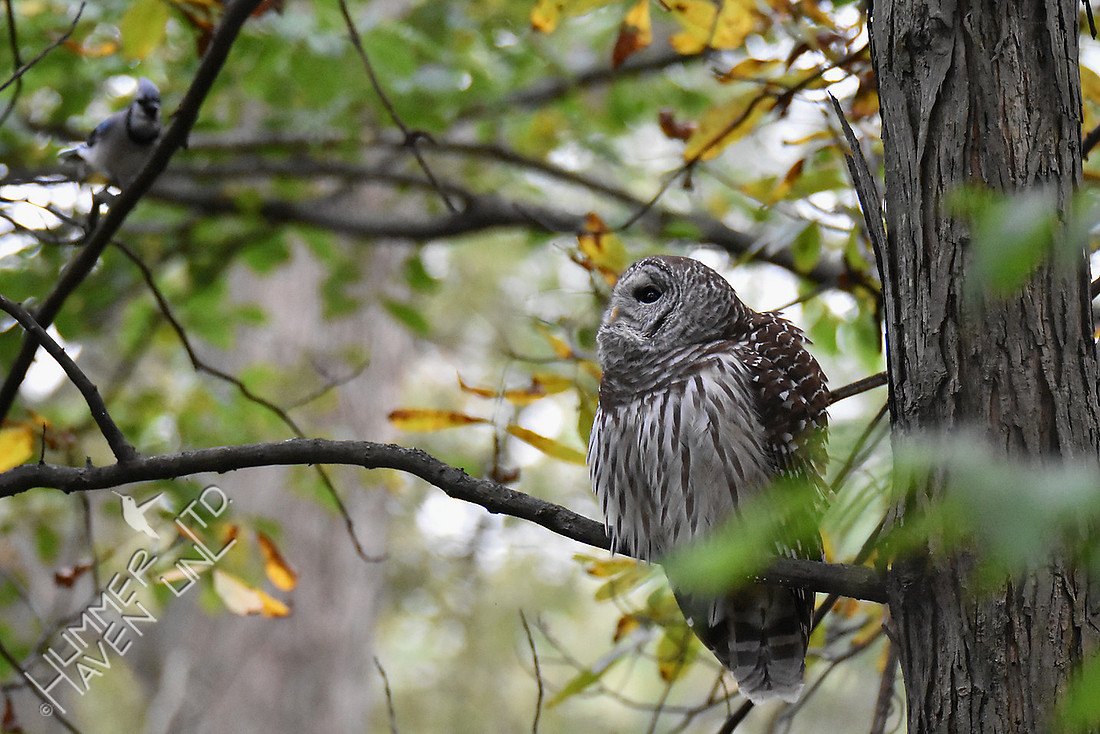
The reason for the 'freezin' was one of the Barred Owls that had flown into the woodland.
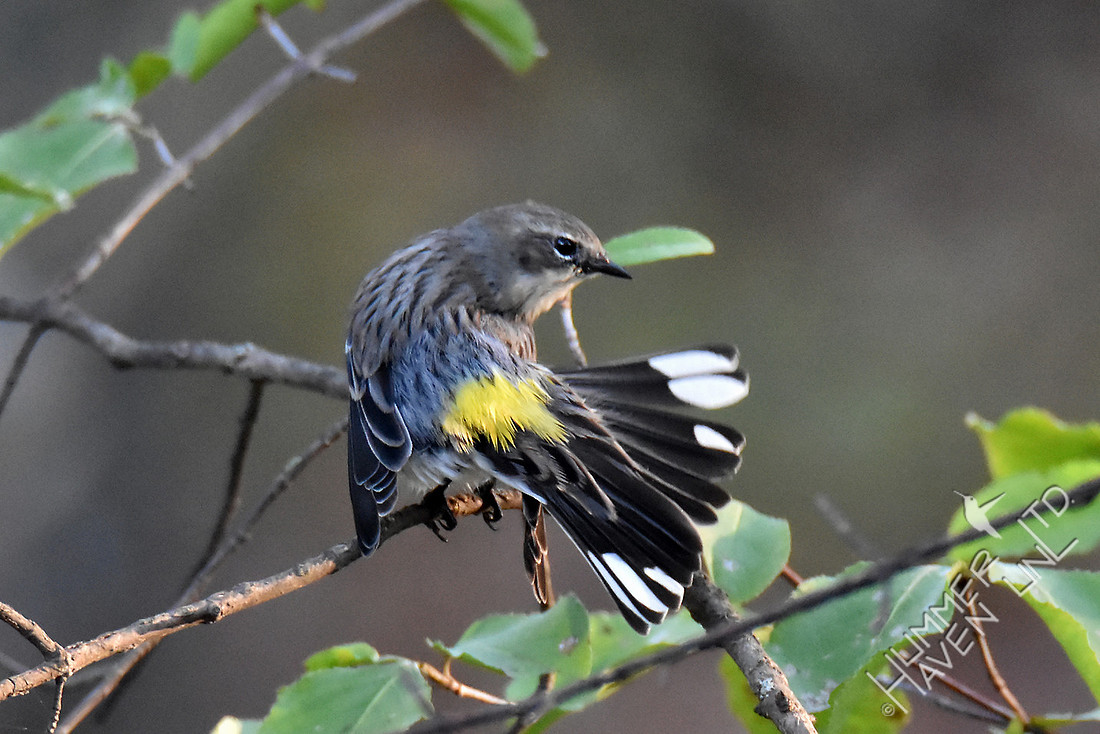
Yellow-rumped Warblers have also returned and will be here through the winter. Yesterday, this one preened after a quick splash, showing off its trademark in transitional plumage.
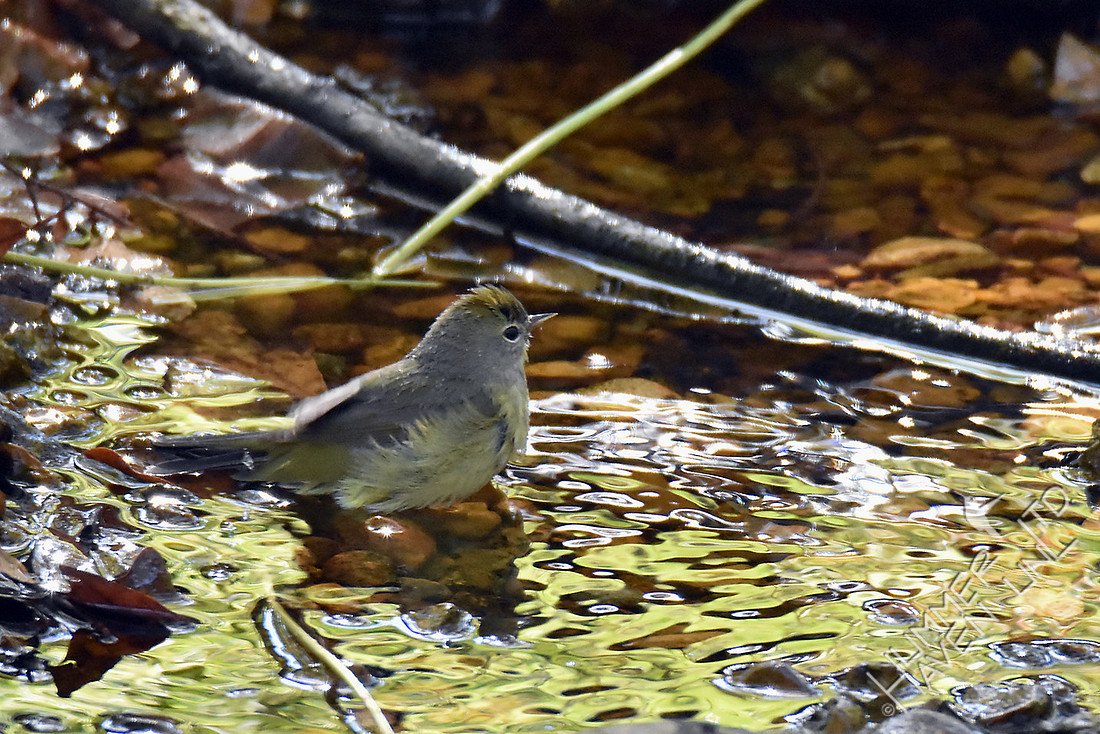
There were several Orange-crowned warblers here on Saturday, 10/22/16. Some of them will winter over in the southern states, while others move on to Central America.
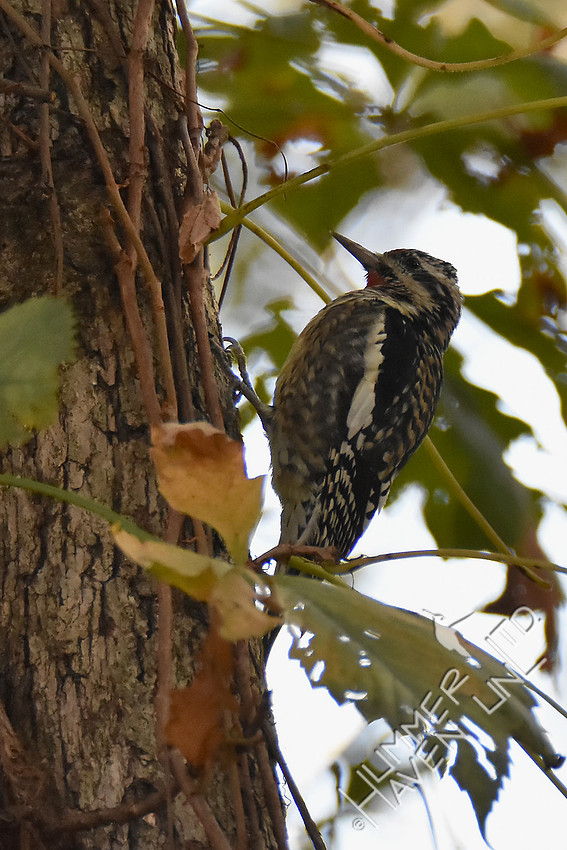
Another bird that is a resident in the winter is the Yellow-bellied Sapsucker. This is a young male still looking a bit ragged.
There have been other events, like the sighting of 80 or more Greater White-fronted Geese flying over in squadron fashion and the little mangey fox hopping up onto the deck right outside the door where I was standing before disappearing into the woodland. I guess you'll have to imagine those!
You are welcome to check the gallery any time, I try to keep it up to date in between posts.
To see all 50 photos in the 2016 Birds gallery since 10/8/16, you can start here:
http://hummerhavenunltd.com/p712853024/h450d22a#h450d22a