


Welcome to our blog!
It's all about our discoveries in our private Shady Oaks Sanctuary for birds, pollinators and wildlife. We gauge our success by the diversity of species we observe and document with our photography.
We hope you are inspired to create your own refuge!
Warblers and migrants continue to move through 10-8-16
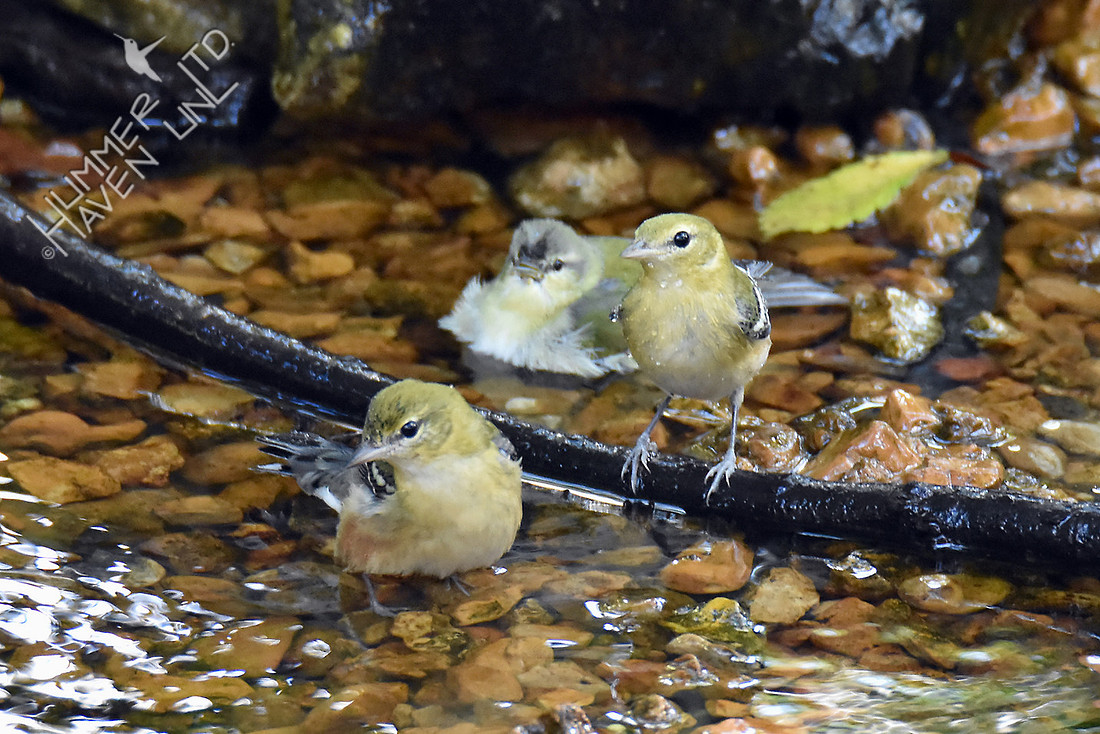
It has been a busy week here at the Bubbler. Warblers continue to come in at different times of the day, particularly noon until dusk. There have been Magnolia, Chestnut-sided, Nashville, Tennessee, Black-throated Green and Bay-breasted Warblers. Here is a favorite from Thursday, 10/6/16 with two Bay-breasted Warblers and a Tennessee in the background.
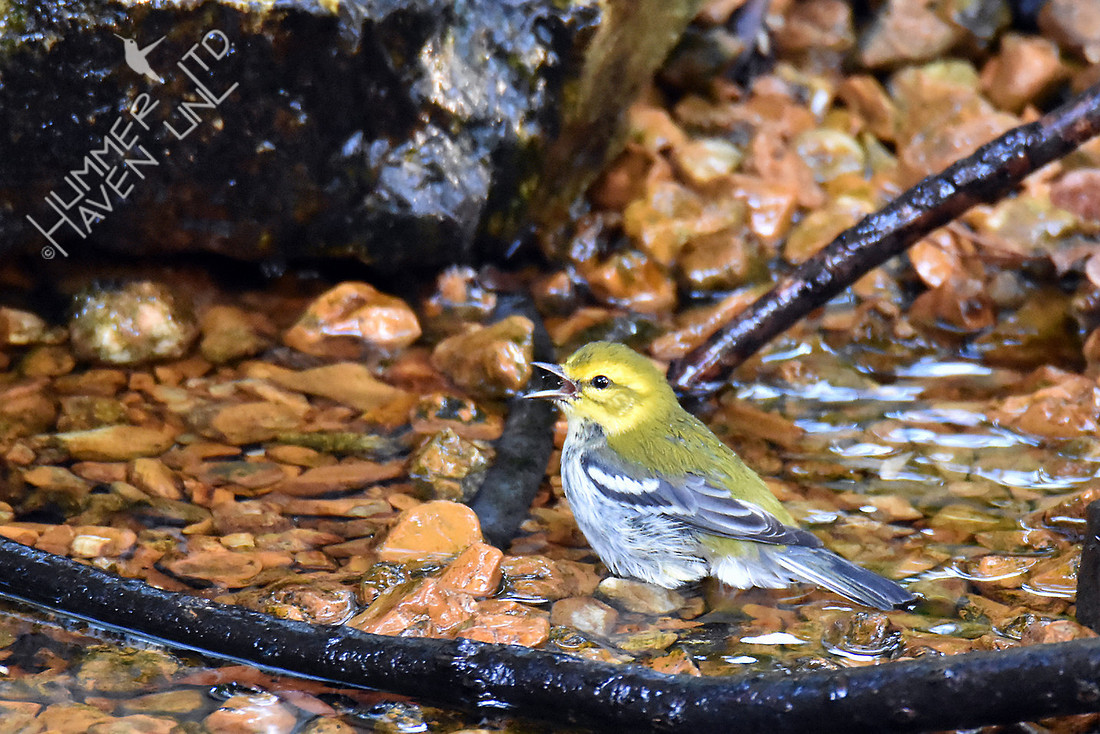
Something about this Black-throated Green caught my eye as I took the photo. Can you see the tiny beads of water that seem to be inside the mouth of the bird?
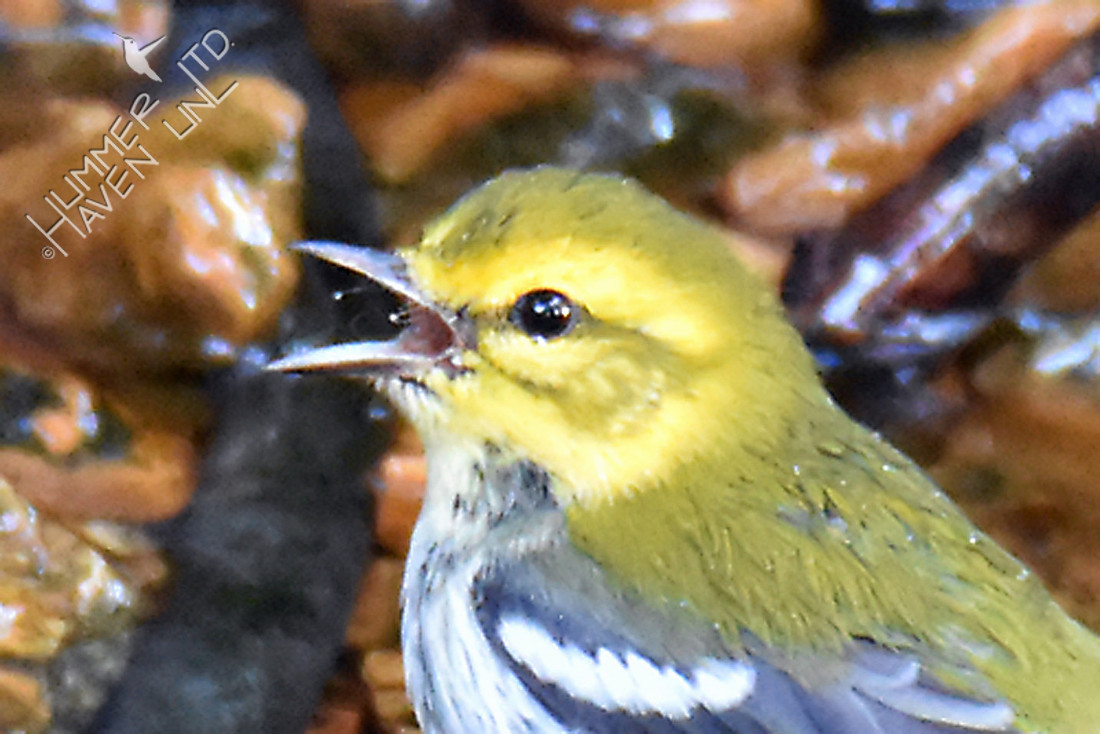
As I magnified the photo, I could see that the water droplets were actually on the ends of the "rictal bristles". These are specialized feathers that are stiff, pin-like and help the bird sense or capture prey. They are spaced evenly at the base of the bill and similar to whiskers. They are a bit more obvious in birds like the American Redstart, but many birds that pursue insects have them.
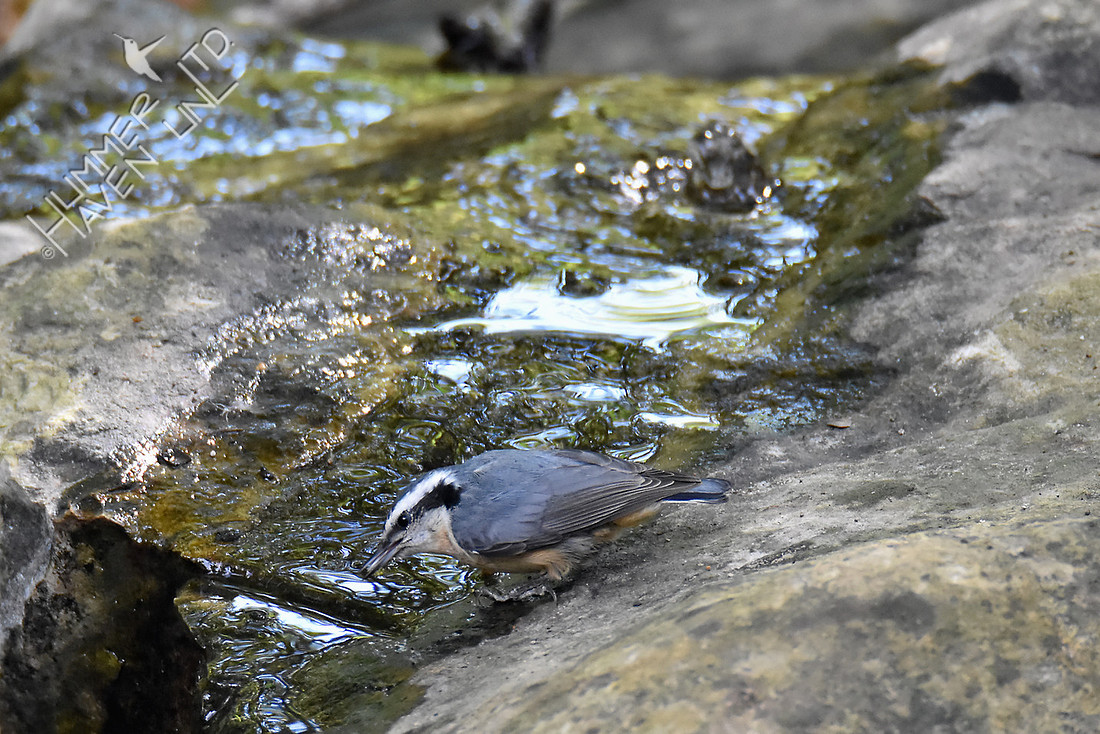
Another Red-breasted Nuthatch came in yesterday to drink several times.
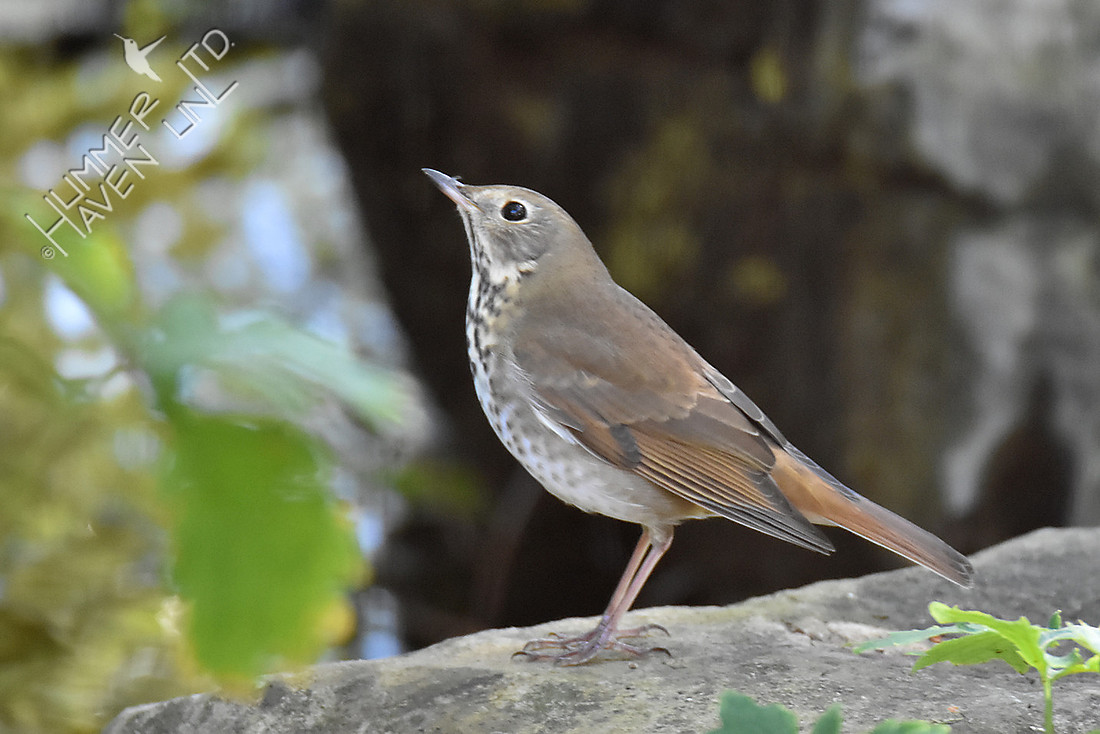
And today, our first Hermit Thrush of the season returned late in the afternoon.
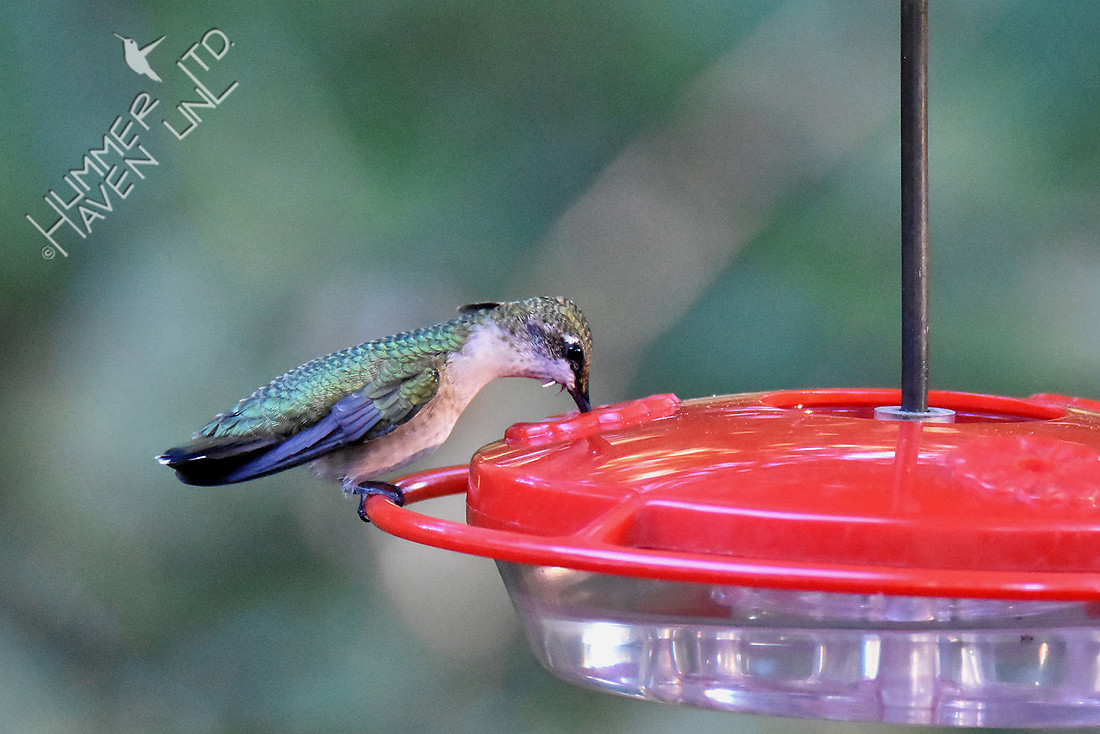
Though numbers have dropped, we do still have ruby-throated hummingbirds coming in to fatten up on their way south.
To view all the photos since 10/4/16, begin here in the 2016 Birds gallery:
http://hummerhavenunltd.com/p712853024/h25c9b633#h31b240fd
Warbler Fest! 10-2-16
Yesterday began very quietly, due to the presence of this Coopers Hawk for several hours. It would change locations and sit for an hour at a time with an occasional "Kek, kek, kek." Not a bird would come out of hiding or make a peep.

A couple warblers dropped by, but soon skedaddled. About 4:10 p.m., all was soon chaotic with many birds feeding in the pond cypress and nearby oaks. I saw a single Blue-winged Warbler, many Black-throated Greens and Tennessees. A few started coming to the Bubbler and the flurry of activity continued until 4:40. Wow...it got crazy!
Here's one example with five species: From top left, Carolina Chickadee, Nashville, Tennessee, Chestnut-sided and Black-throated Green Warblers.

To view all the photos from yesterday, start here!
http://hummerhavenunltd.com/p712853024/h35e65ad2#h35e65ad2
October update 10-2-16
There have been good days and ho-hum days since the last blog post. But the cool fronts lately have been bringing in migrants. On Friday, activity started early in the morning with a female Summer Tanager checking out the bubbler. (This photo was taken in very low light conditions.)

And a Black-throated Green Warbler took a quick bath on the Bubbler rock and then spent time foraging.


And, there has been a tiny bird around that we always love to see, a Red-breasted Nuthatch. It has been several years since we've seen one and this is an 'irruption' year for them. We hope to see them all winter. This one has been coming in regularly to get sips of water. Listen for their distinctive 'toy horn' call!
https://www.allaboutbirds.org/guide/Red-breasted_Nuthatch/sounds


Yesterday afternoon about 5:00 p.m. a large influx of sixty or so American Robins came in with the winds from the northwest. Along with them came both Scarlet and Summer Tanagers. They were getting baths at the pond in the stream bed.


This Scarlet waited its turn in the sugar maple above.

A female Summer Tanager approached cautiously. This is a new species at the pond, #79.

The robins usually dominate the water features when they come in such numbers, but this bird warned off the robin.

Then she turned only to be challenged by the waiting Scarlet Tanager!

A truce was declared.

And, it was the Scarlet's turn.


These birds are well camouflaged with the falling maple leaves.
Other notable news is that a mink was caught on the Bubbler cam early Saturday morning at 2:37 and again last night about 10:20 pm. Here are the two short clips. (The Bubbler pond got a cleaning in between.)
This is the first mink we've seen here since June 23, 2015. Here's that blog post from last year with photos:
http://hummerhavenunltd.com/blog/2015/6/st-louis-native-plant-garden-tour-and-mink-update
Another critter that we haven't seen in a while is the little mangey fox. I had begun to wonder if it made it through the summer when it came to the Bubbler on 9-20-16. It looks ghost-like but still alive.
And that's all for now. I think today could be a busy migrant day!
Migrants and the Lawrence's Warbler - the one that got away 9-3-16
A good cold front pushed in on Tuesday, bringing us .76" of much needed rain. It also brought in warblers! About 8:30 on Wednesday morning, a warbler was foraging in the oak right off the deck just above eye level, not even 10 feet out from the window. A young hummingbird was hassling it. Wow, I was surprised to see it and confirmed with binoculars - a hybrid Lawrence's Warbler. It looked like a female Golden-winged Warbler with a complete wash of soft yellow over it and deep yellow wing bars. Plate 3 in Peterson's Warblers shows it at bottom right, but this bird was not as sooty as that drawing. I watched it in the oak, then it moved to a rough-leaved dogwood. I grabbed the camera to go out and then watched as it just went deeper into the thicket. I have not seen this bird again and did not get a photo of it, and believe me, I tried. There are many variations of Blue-winged X Golden-winged hybrid birds. The Lawrence's Warbler is the rarer type because it is a backcross. This phenomenon is explained a bit more here:
So, yes. It got away. Sightings like this really keep me interested in birds!! We just never know what might pop in, especially during migration. I am just glad the bird found our yard and was able to find food here. There were other birds here on Wednesday, like this Orange-crowned Warbler and a normal looking female Golden-winged Warbler.

Use your imagination and put a soft yellow wash of color all over this bird - that's what the Lawrence's Warbler looked like.

It was a real feeding frenzy with these birds working feverishly to find caterpillars to fuel them on to the south. On Thursday, more showed up. There were several Black-throated Green warblers.

A Black and White Warbler found insects in the bark of this snag.

A first year American Redstart checked out the bubbler.

A Magnolia Warbler foraged in this Spicebush.

This Bay-breasted Warbler was in a small elm, a favorite tree for migrants to find food on.

A Chestnut-sided Warbler finally got a chance to bathe later in the afternoon.

There are more migrants still to come! To see all the photos of birds since the last post, look in the 2016 Birds gallery beginning here:
http://hummerhavenunltd.com/p712853024/h17d3e0b9#h3e09b668
Monarchs, hummingbirds and first seasonal migrants 8-25-16
The garden has been busy with many types of pollinators. Swallowtails and other butterflies like cabbage whites and skippers have been on the Sweet Coneflower (Rudbeckia submentosa).


I occasionally see a Monarch at one, but they still prefer the Eastern Blazingstar (Liatris scariosa) and the Marsh Milkweed (Asclepias incarnata).


I've been seeing 1-4 Monarchs each day. The Monarchs have lots of competition at these plants, including this large Yellow or Northern Golden Bumblebee (Bombus fervidus). This is the first year I've realized that they were in the garden and they are a bit more aggressive than the smaller bumblebees. They will chase a Monarch off of a flower. They are also on the IUCN Redlist as Vulnerable (VU) due to loss of habitat.
http://www.iucnredlist.org/details/21215132/0

The Ruby-throated Hummingbirds have their preferred flowers, too. This juvenile was interested in the Rose Mallow (Hibiscus lasiocarpus). The bird was not approaching the open blooms. Instead, it was piercing the flower buds to get directly into the nectaries.


It was fascinating to watch. On Sunday morning, the temperatures were delightful. The cool front had arrived and it was 59.9 degrees. We were just finishing Dan's pancakes in the gazebo when I saw a male Canada Warbler working among the branches in the thicket. It was my first sighting of the species this year, making it bird #101 for 2016. A bit later this young American Redstart investigated the bubbler, fluttering about with its fanned out tail feathers.


There were at least two female Canada Warblers in the mix.


Later, I had finished in the kitchen, dried my hands and looked out to see the male Canada Warbler in the bubbler. I missed getting a good photo, but the Bubbler Cam showed that the bird had been in for almost 3 minutes. I was glad to know the bird had been comfortable getting in there.
The Carolina Wrens apparently have another brood of nestlings that they are feeding. One of the adults assured them with little sounds as it popped up and down on the top of the sculpture in the garden. Now, the heat has returned but fall isn't too far away. It's hard to believe that we've lost an hour and a half of daylight hours since the Summer Solstice!
