


Welcome to our blog!
It's all about our discoveries in our private Shady Oaks Sanctuary for birds, pollinators and wildlife. We gauge our success by the diversity of species we observe and document with our photography.
We hope you are inspired to create your own refuge!
Thoughts on Silence
"In order to see the birds it is necessary to become a part of the silence."
Robert Lynd, 1879-1949
"Silence is an endangered species."
Gordon Hempton, international acoustic ecologist
In late December, Dan shared a podcast with me that featured an interview with Gordon Hempton by Krista Tippet in her public radio series, On Being. What exactly is silence? Hempton defines real quiet as presence — not an absence of sound, but an absence of noise. I think that is exactly what Robert Lynd meant. There is much more to this idea, though. According to Hempton and his research, through millennia, our species needed to be able to hear birds at great distances because as it turns out, good habitat for birds is good habitat for humans.
Give yourself a treat, put on stereo headphones and enjoy this interview: Silence and the presence of everything
This is Gordon's personal website with samples of his recordings: http://www.soundtracker.com
Now, back to listening for birds...
January ice storm!
The forecast was dire - three days of intermittent freezing rain and significant ice accumulations. The birds seemed to sense the changes in the air and were already busy ahead of the storm on Monday, January 9. A tiny bird caught my eye, moving speedily along branches, even upside down to find larvae to sustain it.

The mystery bird was a Golden-crowned Kinglet and I was lucky to see it and get any photos at all. I had seen one on December 31, 2016, perhaps the very same bird. It is an uncommon bird here in winter.

We added a new finch feeder near the garden and the Buttonbushes. The American Goldfinches were on it very quickly. They like the mix of nyjer seed and sunflower chips. We placed it in that protected location because they forage in the garden, eat the Buttonbush seeds and then take refuge in these areas as well. Despite the windy day, we reached a high count of 21 goldfinches on Tuesday, January 10.

A large flock of American Robins and European Starlings came in to find food and to bathe the same day. The robins are very wary of the scrappy starlings, whose sharply pointed beaks can maim them.


I saw a young buck run through the woods about 8:30 a.m. on Wednesday, January 11. The next morning, six does were in the garden and near the pond, shown in these Pond Cam photos.


So, the highly anticipated freezing rain began on Friday, January 13. Feeders were busy all day as ice accumulated on the feeders, branches, walkways and roads, not to mention birds' tails! Even a Red-tailed Hawk could not shake it all off.


Since this feeder got very wet, we brought it in to dry it out. We preheated the oven to 200 degrees, turned it off and put the seed in a tray and left it in the oven for about 30 minutes to dry the seed. We refilled the feeder and put it back out on a hanger with a dome this time. It is important to keep the seed from getting moldy.
Yesterday morning as the ice began to melt, the intrepid little Carolina Wren sang his heart out, letting me know that SPRING cannot be too far away! We have gained 21 minutes of daylight - can't you feel it?
To see all the photos from the past week, check the gallery: 2017 Birds at Shady Oaks

2017 has begun!
Happy and Healthy New Year to all!
Our 'natural year' has already had a few surprises in the first week. On December 31, I was amazed to see a Golden-crowned Kinglet pop in to try to get a drink at the bubbler. It was there only seconds, but I was able to confirm it with binoculars. I hoped it would return on January 1, but instead there was a Ruby-crowned Kinglet that did the same thing before a squirrel spooked it. There were 21 species on the first day of the year, including a Brown Creeper. There have been 1 or 2 creepers every day thus far.

Winter days give me the opportunity to see a lot of the usual suspects, like Northern Cardinals. The females vary quite a bit in coloration, some in much richer shades than others, and some more tan or gray.


Tuesday, January 3, started out foggy and even misty at times. But the birds were still out in good numbers. It was in the mid-forties in the morning and temperatures dropped off during the day. I watched birds closely until about 9:30, when Dan and I had to take care of some matters. We returned and I checked the cameras only to find that a Great Blue Heron had dropped in to check the pond while we were away! There was also a lone Rusty Blackbird caught on the Bubbler Cam. I re-found the Rusty Blackbird as it checked out the bubbler area, but dipped on seeing the Great Blue.

On Wednesday, January 4, Red-tailed Hawk and Yellow-bellied Sapsuckers were added to the year list. There have been 3 sapsuckers seen since then- 2 males who chase each other and a scruffy female that showed up at the Bubbler on Friday, January 6.


We had an inch and a half of snow on Thursday. Some birds are content to eat the snow when they get thirsty, but birds have been busy at the Bubbler and the Fountain, too. An American Robin, Dark-eyed Junco and American Goldfinch are just a few of the constant stream of visitors.


Here is a video with the Great Blue Heron heading to the pond (it comes in on the left side), the Rusty Blackbird and the Red Fox.
To see all the photos from this first week, take a look at the new gallery: 2017 Birds at Shady Oaks
Merry Christmas Eve! 12-24-16
We celebrated our anniversary recently by returning to one of our favorite places, Sanibel Island, Florida. Sanibel is known for sandy beaches, sea shells and as one of the top ten birding locations in the country. It is home to 245 species of birds in the Ding Darling National Wildlife Refuge, which makes up a good part of the island, as you can see on this map:
https://www.fws.gov/refuge/JN_Ding_Darling/map.html
On December 4, 2016, our first day into the refuge, the tide was low and wading birds were very active. We stopped at the Mangrove Overlook and were helping a man and two women from Orlando to identify a few of the birds. We saw an adult Yellow-crowned Night Heron in the distance that they asked about and then right over us flew an adult Bald Eagle. We moved on to the Tower Overlook and I said to Dan he might get some interesting shots if we went up into the Tower. (I had decided to just use my binoculars and bird that day.) The Orlando group had stayed down along the drive, but soon joined us to ask about a couple birds. "Oh, that's a young Yellow-crowned Night Heron walking along the shore," I said. Then, the man asked, "Well, what was that other bird following behind it, the stripe-y one?" The red mangroves had concealed the bird from our higher vantage point. I stood at the railing, looking down, shaking my head and trying to think what 'stripe-y' bird he might have seen. Then, I saw movement! "Is that your bird?" I asked. "Yes!" We watched the bird creeping along a mangrove branch. Then it hopped down to hunt in the water and I saw the barred flanks, the 'stripes' the man had seen. It took me a few seconds to put the pieces together because I had never seen this bird at Ding before, but had seen it in other coastal marshes. "Gosh, that's a Clapper Rail!" I exclaimed, and Dan stepped in to get these photos of this secretive bird.
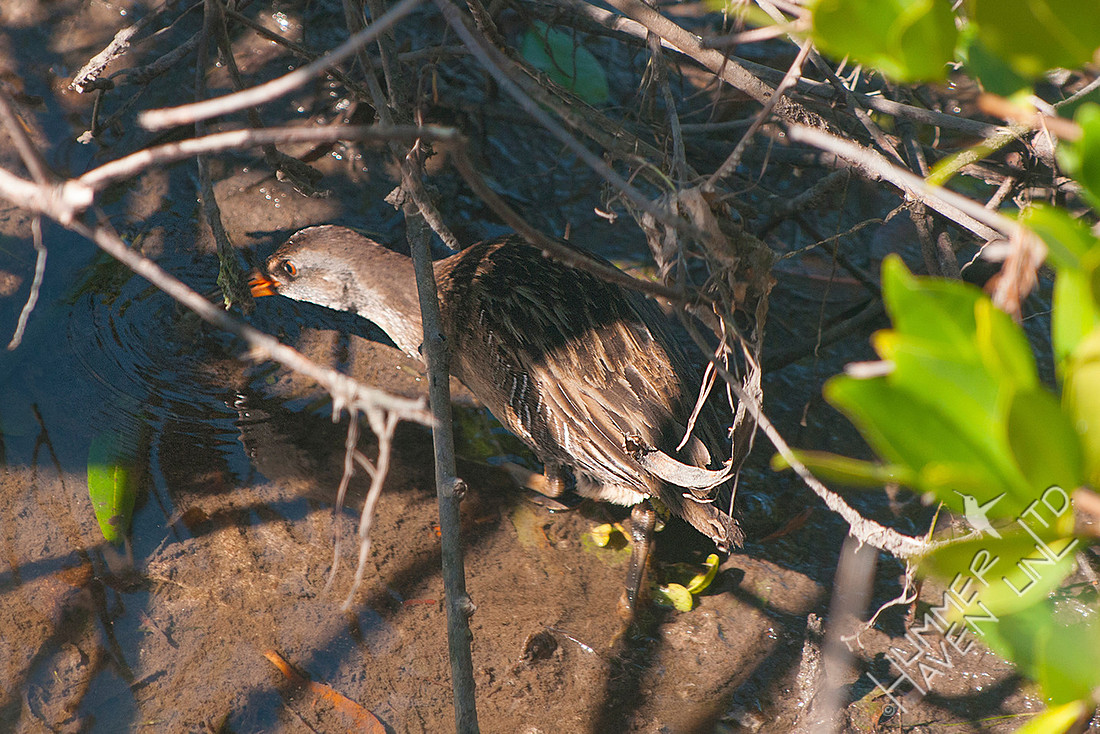
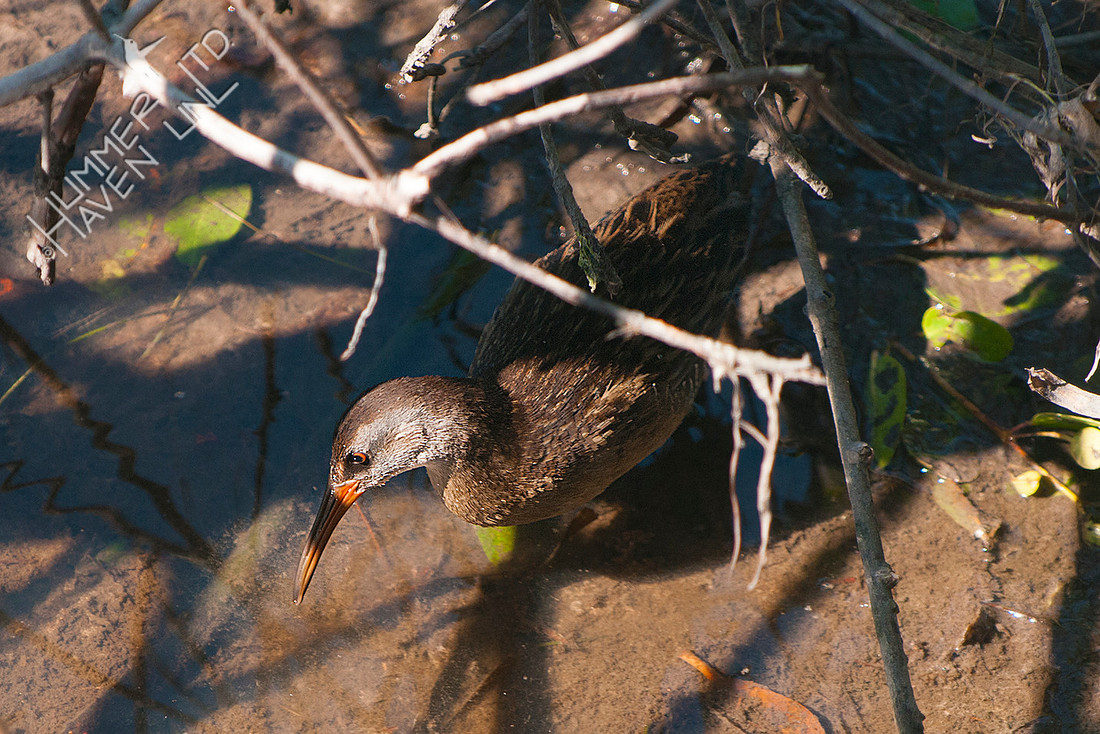
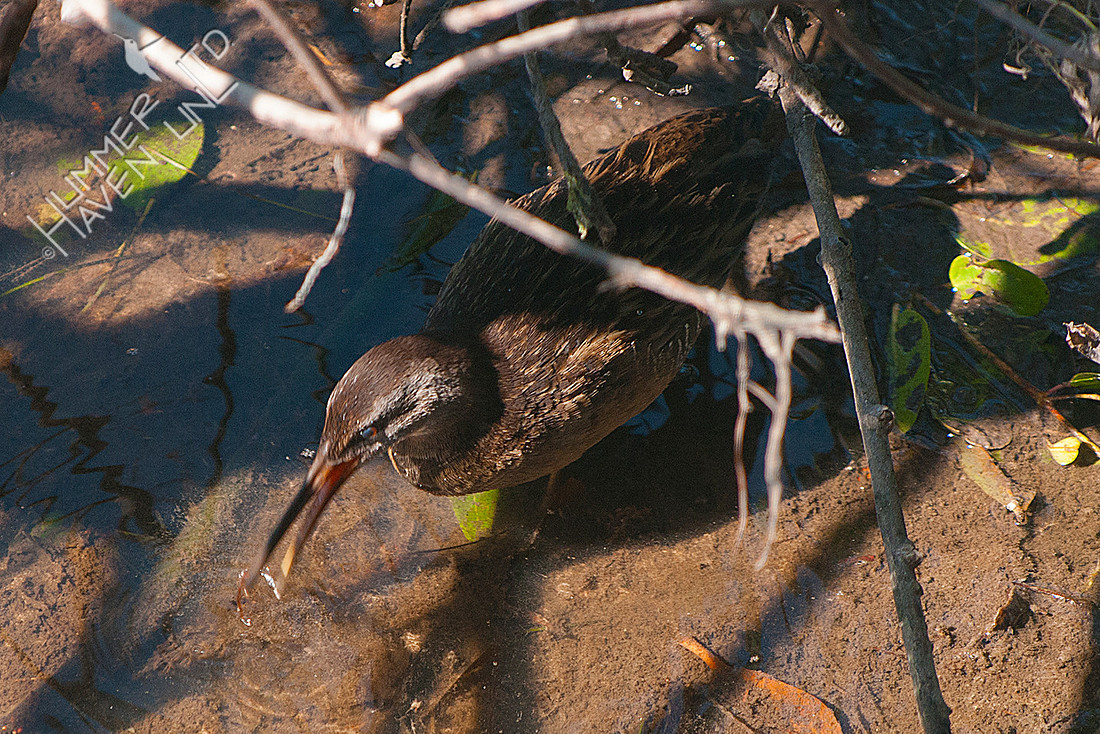
The informative sign on the deck also had a QR code to the Bird Checklist, I downloaded it and saw that yes, Clapper Rails are coded "o" for occasional, seen only a few times in the season. We got back to the Visitors Center and reported the sighting and showed them Dan's photos. The volunteer/birder said it was a "Good spot!" The birds are there, but so difficult to see as they move through the mangroves and come out in the open rarely. We were extremely lucky and we give the man from Orlando full credit for first seeing this bird! The card for the Clapper Rail was added to the sightings list at the Visitor's Center.
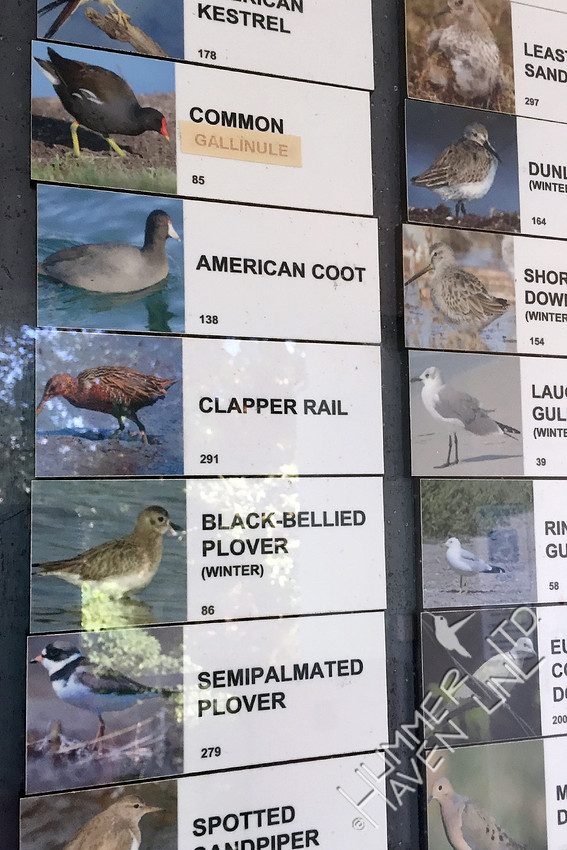
The full checklist for Ding Darling National Wildlife Refuge can be downloaded from this page:
https://www.fws.gov/refuge/JN_Ding_Darling/wildlife_and_habitat/birds/
To read more about the Clapper Rail:
https://www.allaboutbirds.org/guide/Clapper_Rail/id
We saw many more species in the refuge and on the beach. We are adding photos to the gallery as we go through them all. If you want to take a look at the whole gallery use this link:
2016 December on Sanibel Island
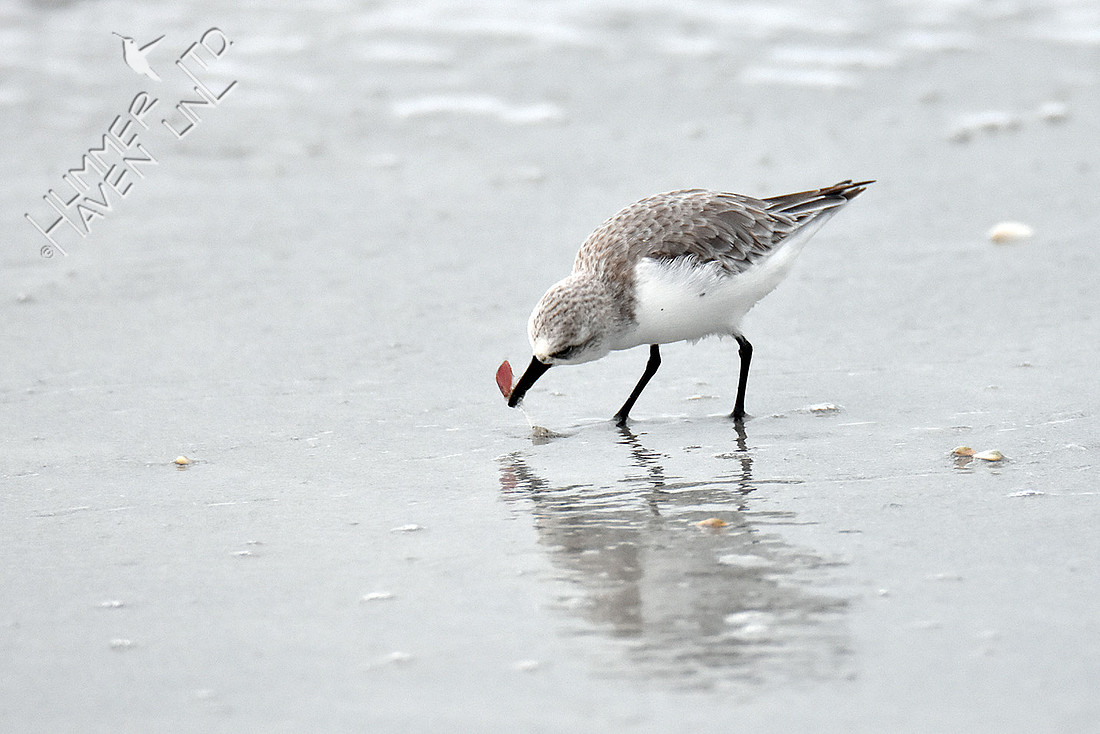
Here are a few photos. A Sanderling feeds on the creature in a Coquina shell.
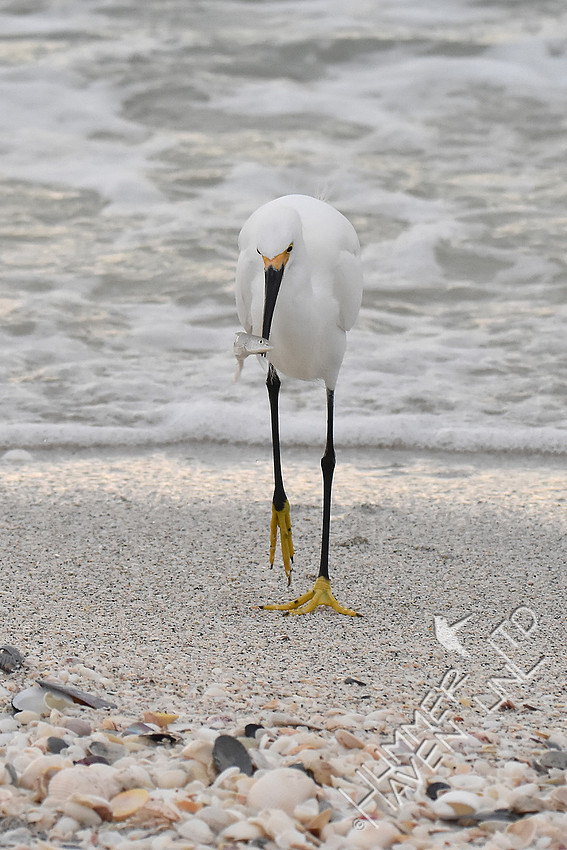
A Snowy Egret was on the beach fishing several mornings.
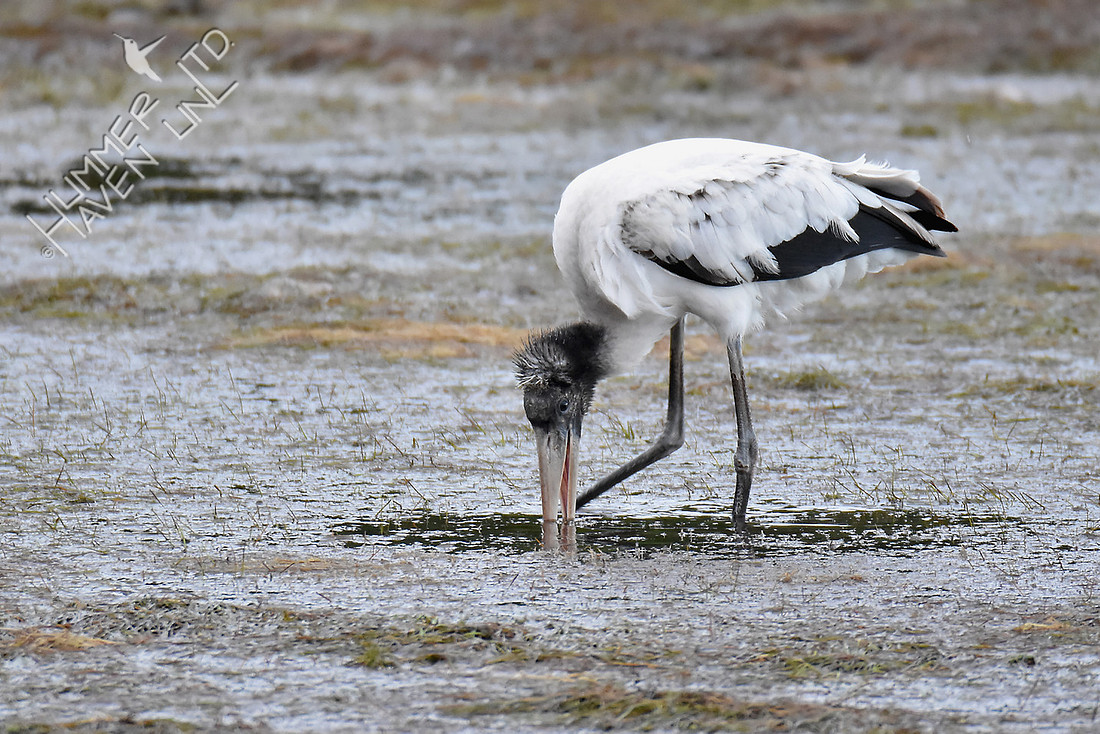
A juvenile Wood Stork moved its bill through the brackish water and stirred with its foot to find food.
A mixed flock of White Ibis, Snowy Egrets and a single Roseate Spoonbill work in a Refuge pool late one afternoon.
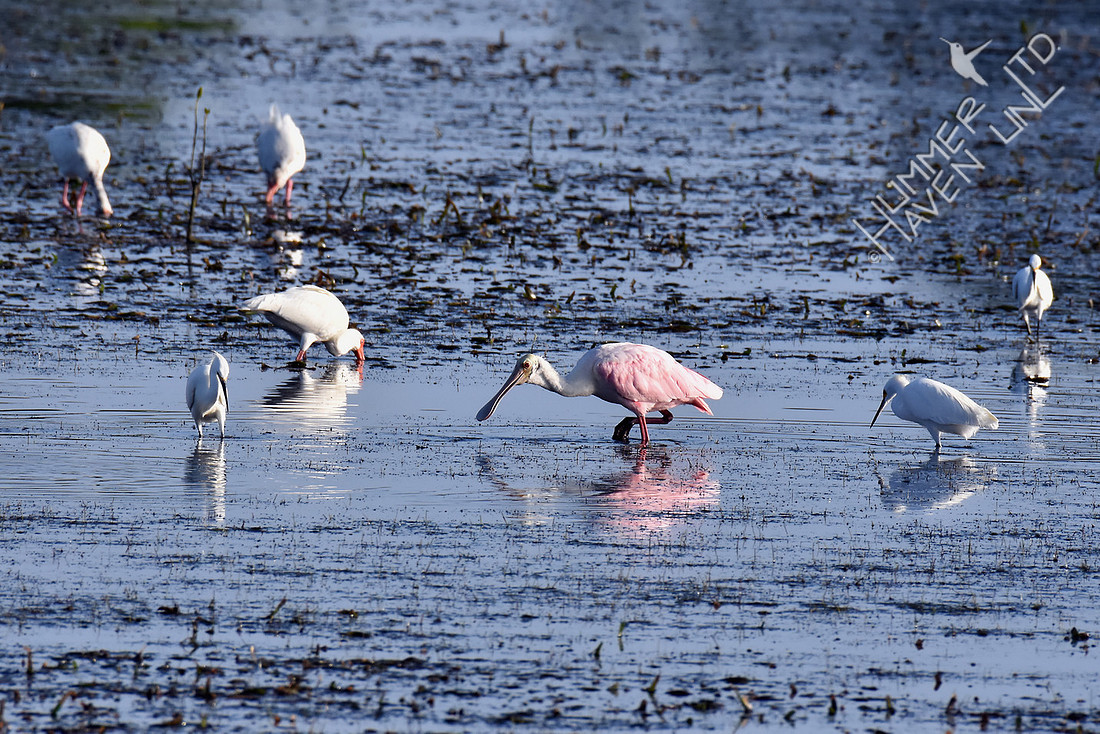
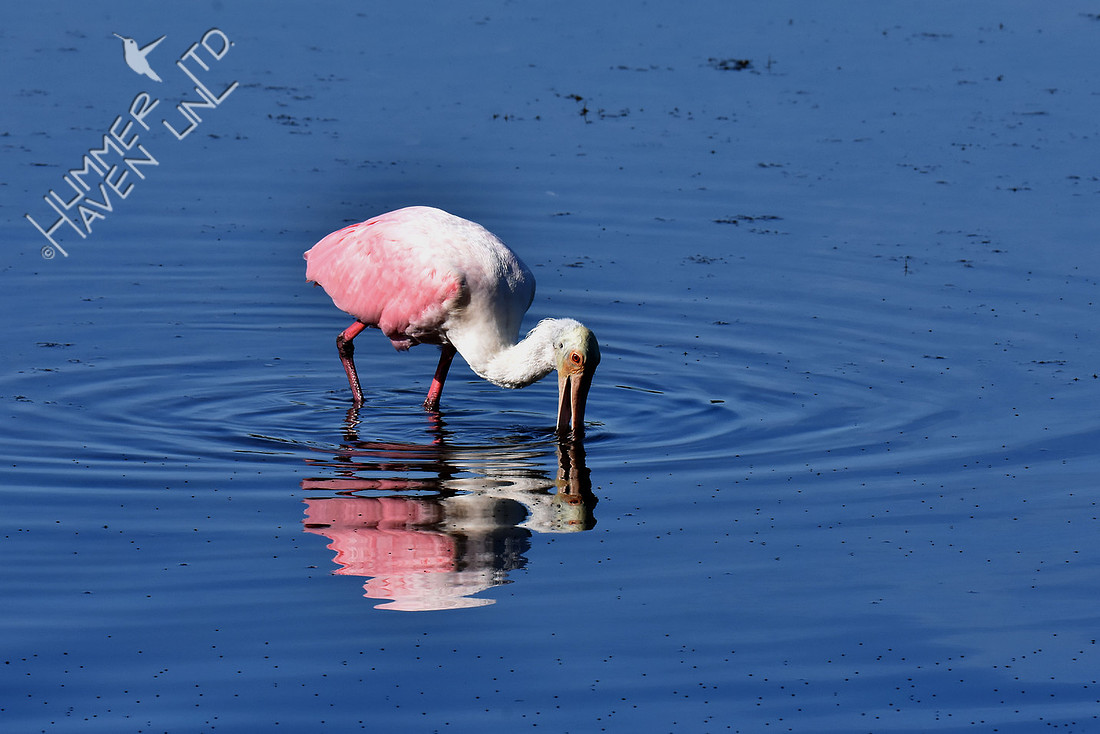
This Roseate Spoonbill was closer to the shoreline of a tidal pool.
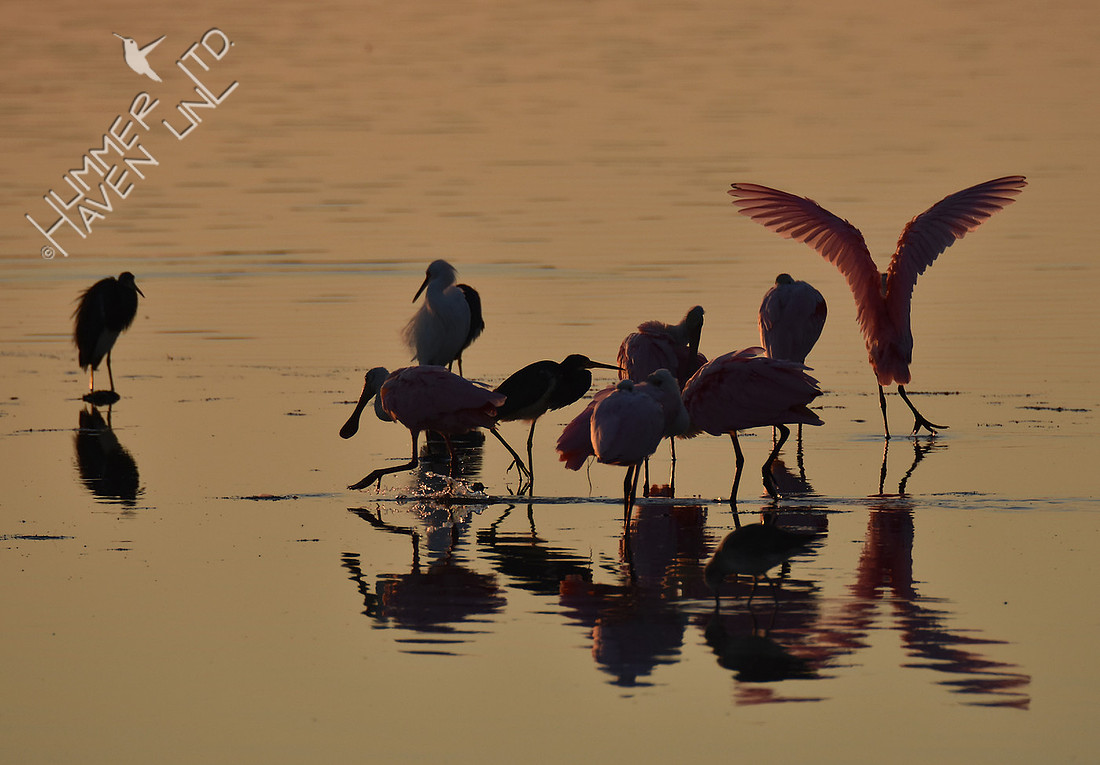
Sunset silhouettes this mixed flock of egrets and Roseate Spoonbills.
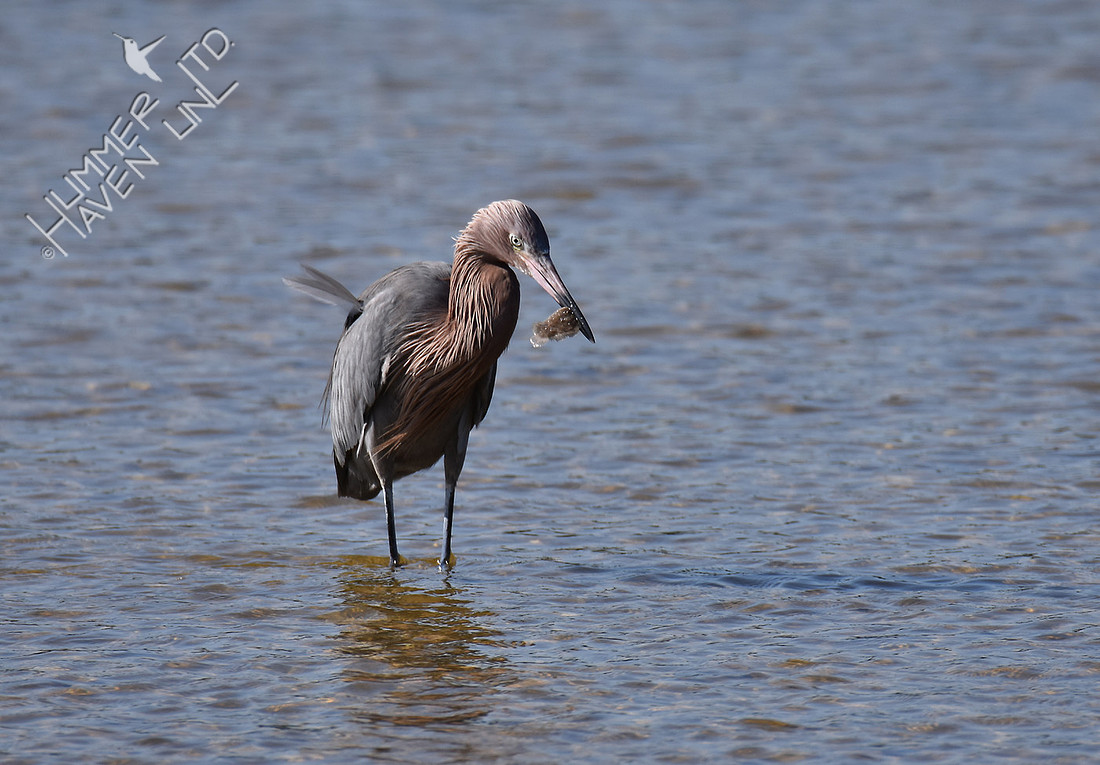
A Reddish Egret caught a small fish.
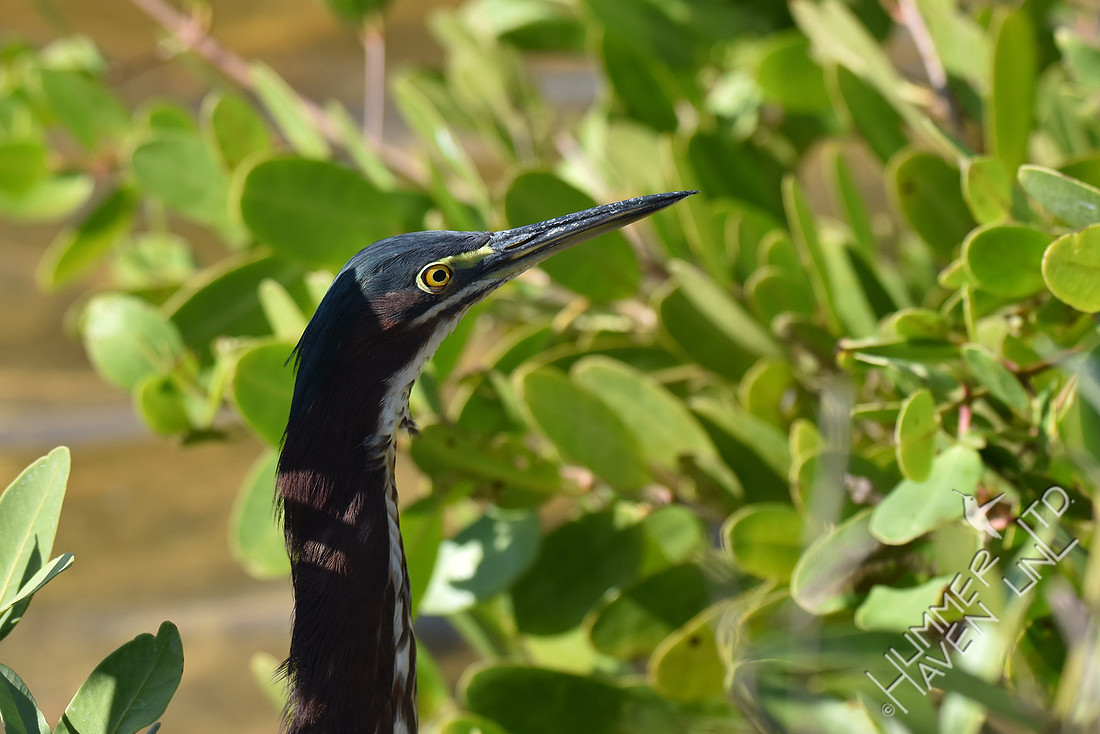
A Green Heron landed right in front of us as it was being chased by another.
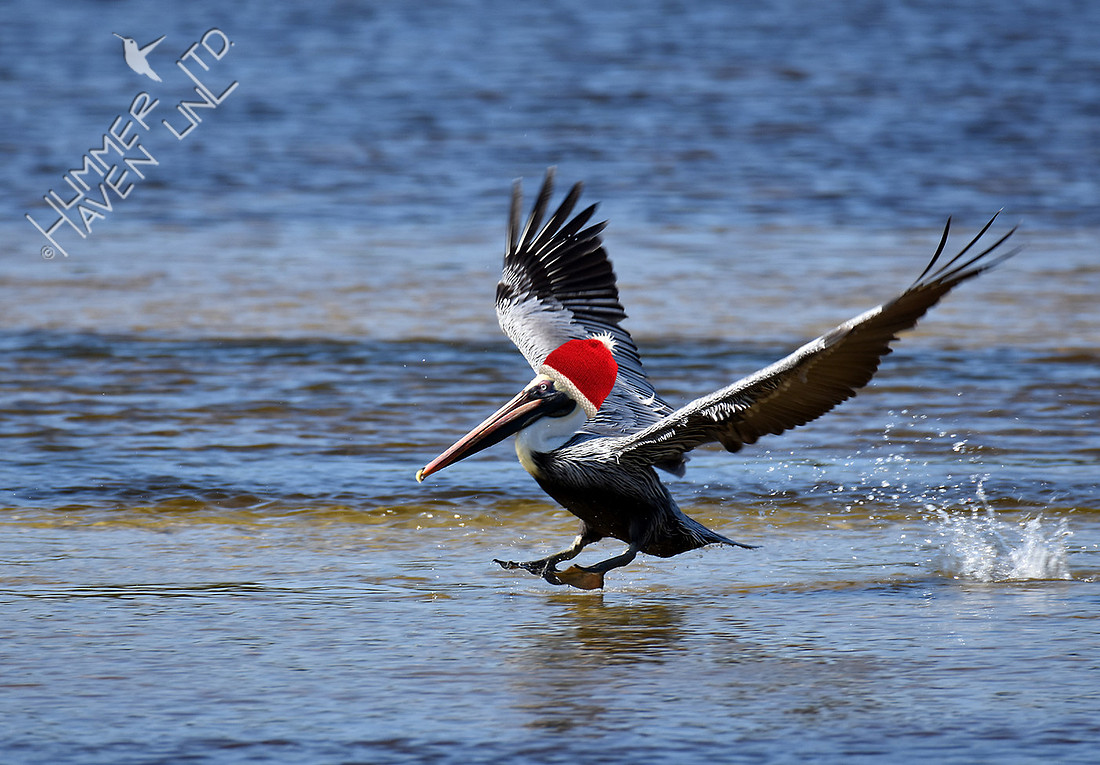
There was one other rare bird we saw, this Brown Pelican, subspecies Ruficapilla, ho ho ho!
It was fun to get away for a short southward migration. We enjoyed special times with our dear friends, saw beautiful birds and other creatures. We fully experienced the cold weather upon our return but now take heart in knowing the Solstice is past and days will be growing longer. However you may celebrate the holidays, we share with you this last image. It is the decorated window of Moonbeams in Downtown Kirkwood, one of my very favorite shops.

Happy Holidays ~ We wish you Joy and Peace!
Margy and Dan
Bubbler Water Features for Birds - Part Two - Pondless Bubbler
The following article was originally printed in The Gateway Gardener Magazine in March, 2012. Our friend, Robert Weaver, is the editor of this St. Louis area magazine. We collaborated with Robert on the installation of the Pondless Bubbler and the instructional video. Here is a link to the video to preview the construction process. The second video shows a filter modification that Robert did about a year after the initial installation. We include the modification in these revised instructions and have additional photos at the end of this post. Both systems require maintenance, as mentioned in Part One on the Bubbler Pond and Basin. You may find some tips in these videos that would be helpful in constructing either water feature.
https://www.youtube.com/watch?v=nUld39nkbuM
Build a Pondless Bubbler for Birds
by
Margy & Dan Terpstra
March, 2012

One of the most rewarding aspects of having a garden is the joyous presence of birds. A surefire way to keep them coming into view all year long is to provide fresh moving water. It doesn’t take ‘Niagara Falls’ to get their attention. Their survival depends on water and they are tuned into the trickling, gurgling sounds they might hear at a natural spring or stream. Once a bird finds a safe place that provides cover, food, and water, he will not only remember it, but will pass this information along genetically to his offspring!
We’ve had great success in attracting many species of birds with a small bubbler pond we put in eleven years ago – 108 to date. It’s in our woodland, surrounded by native plants. Recently, we helped Robert Weaver, editor of The Gateway Gardener, build this small pondless bubbler. It’s in his garden, easily viewed from his office window. There are small trees, shrubs and perennials nearby for the birds to take cover in and it looks naturally placed. The bubbler also fits in a relatively small area and is less costly than a pond.
Robert acquired all the necessary components and once we began construction, the new bubbler was up and running within 4 hours. It will operate all year, even on the coldest days because the heater we chose comes on automatically when the water temperature drops to 35 degrees F.
List of Materials: (for an approximately 5 ft. diameter pondless bubbler):
- Attractive ‘bubbler’ rock – approximately 8 - 10 inches thick (look for a rock with a natural depression in the top and channels for the water to run down)
- Pond liner - 10’ x 12’ (40 mil thick) (Thinner material is available, but not recommended)
- 5 Gallon Bucket with lid – clean and chemical free
- 1 Gallon sturdy plastic bucket with lid to house the pump inside the 5 gallon bucket (This ‘fix’ was added and does not appear in the video)
- Landscape fabric- 18” x 36” piece to wrap around the bucket and another smaller piece to wrap the 1 gallon bucket that holds the pump
- Duct tape (to hold landscape fabric in place while securing hardware cloth)
- 1/4” or 3/8” mesh hardware cloth- 18” x 40” piece to wrap around the bucket over the landscape fabric
- Sheet metal screws - 6 - #8 x 1/2”
- Nylon “zip” tie - 6” (or other suitable non-deteriorating tie)
- Small fountain pump rated around 170 GPH
- Deicer or Pond heater - thermostatically controlled, plastic safe, and rated between 300 and 1250 watts (warmer climates may get by without a heater; if your ground doesn’t freeze in the winter, then a heater isn’t required)
- Tubing - 3 to 5 ft. of ½” I.D. black tubing to run from pump up through the bubbler rock
- One brick to set the pump bucket on - this raises it and also helps to keep small debris out
- Lava rock - approximately 1 cu. ft. to fill around the bucket for the “bio-filter”
- River Gravel in two sizes: Most material suppliers grade gravel by size. Look for what may be called 3/4” gravel for the smaller size and 1-1/2” for the larger size. Get twice as much 3/4 as 1-1/2. (You’ll need approximately 8 - 12 cu. ft. of gravel or 800 - 1200 lbs.)
- A ‘magic’ perching branch
Tools Needed:
- Heavy duty Hammer Drill
- 5/8"-3/4” dia. X 12” Masonry Bit (to drill hole through bubbler rock)
- 3/8” or 1/2” Drill
- Hole Saw(s): 7/8”, 1-1/4”, & 1-1/2” diameter
- Tin snips (to cut hardware cloth)
- Scissors (to cut landscape fabric and pond liner)
- Screwdriver
- Shovel
- 2’ Spirit level and 4’ - 6’ straight 2x4 (or 4’ - 5’ level and no board) to check level of bubbler edge
Step-by-Step Construction:
Note: The pump and heater require electricity so you will need to have an outdoor electrical outlet that is protected by a GFCI (ground-fault circuit interrupt) circuit. Most local codes require professional installation by a licensed electrician. The cords on the pump and heater are often only around 10 feet long so plan accordingly. Check with local building authority and/or neighborhood organization for other rules that may apply to the installation.
Prepare the “bubbler” rock and buckets:
- Use the hammer drill to drill a hole straight through the chosen bubbler rock. You can determine where the hole should be by placing the rock in the orientation you plan to have it and trickling some water from a watering can or pitcher onto the rock where the hole is to be drilled. See how the water runs off the rock and adjust the location to give a nice flow off of the rock.
- Prepare the buckets by drilling a series of 1½” dia. holes around the outside in a pattern of 3 rows of 5 holes each in the 5 gallon and 2 rows of 4 holes in the 1 gallon. Drill two holes in the bucket lids; one 7/8” hole for the tubing and one 1¼” hole for the electrical cord(s).
- Wrap the 5 gallon bucket in landscape fabric and secure side seam and bottom folds with duct tape.
- Cover the wrapped bucket with the hardware cloth, cut out around the bucket handles to fit, overlap the ends and secure with sheet metal screws at several places around the bucket.
Prepare the hole:
- At the chosen bubbler site, dig a hole approximately twice the diameter of the bucket and a few inches deeper than the bucket’s height.
- Remove more soil to make a ledge around the hole approx. 5 ft. in diameter and a few inches deep, sloping toward the hole.
- Build up a 3”- 4” high berm at the perimeter of the excavated area to help keep debris from washing into the bubbler basin.
- Position the bucket in the hole to check that the top is about 3” - 4” below the top of the berm. Also check that the perimeter is level across the entire basin area using a spirit level and straight 2x4.
- Remove bucket.
- Lay the pond liner across the excavated area and carefully work it down into the hole. There will be quite a bit of overlap in the material as you work it into the hole. Stand in the hole and work the material around the edges until it lays reasonably flat with the folds evenly distributed. The liner should cover the berm and extend a few inches beyond it.
Note: Wait until everything is in place before doing a final trim of the liner.
Complete the assembly:
- Place the bucket in the lined hole. Put in the pump with tubing attached and fill the bucket and hole with water just to the top of the bucket. Plug in and test the pump, adjusting the flow control so that the water spouts up 3” above the end of the tube when held at the height of the “bubbler” rock.
- Take the pump with tubing attached and place it inside the 1 gallon bucket. Wrap a piece of landscape fabric around small bucket and pull it up around the cord and tubing. Secure the fabric around the cord and tubing with a nylon “zip” tie. (This protects the pump from any silt that may get through the other filter fabric and should allow a longer interval between cleanings) Place the brick inside the large bucket and put the pump bucket on top of it.
- Place the heater in the bucket where it will float above the pump. Feed the plugs and tubing through the holes in the lid. Secure the lid. Stuff a small piece of landscape fabric into the cord and tubing holes to keep gravel and debris out.
- Surround the bucket evenly with the lava rock. Be sure it comes up above the holes in the side of the bucket. The lava rock creates the biological filter.
- Place larger gravel on top of lava rock. Lower the bubbler rock over the tubing and position it where desired on top of the bucket. It’s also OK to place the “bubbler” rock to one side of the bucket and run the tubing through the gravel and then up through the rock.
- Make sure the tubing isn’t kinked under the rock. This may make access to the pump a bit easier if needed. Add smaller gravel under the bubbler rock until it’s at the level you want it. Fill the rest of the basin with a mixture of the two sizes of gravel up to the top of the berm.
- Add water to fill the basin. Decide where you want a “spillway” and make an “overflow” spot in the berm where the water will run out when it rains.
- Contour the gravel to make a few puddle areas for the birds to bathe in.
- Distribute mulch around the perimeter of the bubbler basin, covering the edge of the liner and up to the edge of the gravel.
- Position your “magic” branch where the birds can perch to check out the water and watch the birds come in!
Maintenance:
Water should be added as needed even in the winter. We highly recommend adding only natural microbial products such as Microbe-Lift Autumn/Winter Prep in cold seasons and Microbe-Lift/PL in the warmer seasons. They create a cleaner environment for the pondless bubbler, helping to break down the buildup of bird droppings and dead leaves. If algae becomes a problem, use their Oxy-Pond Cleaner. If the flow seems weak, first try to back-flush the tubing with a garden hose. If that doesn’t help, the pump will need to be pulled, checked and cleaned.
For information on how a biological filter works and Microbe-Lift products, see their website at www.microbe-lift.com
Never add chlorine bleach. However, a few ounces of 3% hydrogen peroxide added once or twice a month helps oxygenate the water.

Two more videos to show some of the birds that visited the Weavers' Bubbler in the first 48 hours and a week later.
https://www.youtube.com/watch?v=k2O8t0_d6zo
https://www.youtube.com/watch?v=Xh58Dd55ivQ
Here are a couple photos showing another type of small bucket bought at Lowe's to be used for the pump and filter modification.


Another idea that we have seen would be to use a strong, crate-like structure called Eco-Blox within the basin to be able to hold more water and allow for more beneficial bacteria within the basin itself. The pump bucket would sit next to it and they both would then be covered with gravel and be hidden. Here's a link:
http://www.123ponds.com/ecoblox.html
We have seen other styles of Pondless Water Features, some done professionally. This Pondless type can be done in a smaller space since the finished size is about 5 feet in diameter. If you add the Eco-Blox, it will need to be a bit larger. We hope we've given you enough information to consider a water feature for the birds in your specific yard situation. We wish you success and the birds will thank you!