


Welcome to our blog!
It's all about our discoveries in our private Shady Oaks Sanctuary for birds, pollinators and wildlife. We gauge our success by the diversity of species we observe and document with our photography.
We hope you are inspired to create your own refuge!
Summertime! 7-19-17
The heat is on! We have lost 20 minutes of daylight since the Summer Solstice last month, but that fact sure hasn't lessened the temperatures. To help out the birds, we added a new dripper to an old birdbath and it has been getting a lot of attention.

A young American Robin investigated it, took a bath and then took a nap one hot afternoon.


Tufted Timice and Chickadees come to get a sip at the little spouts on both dripper baths.

Water is a precious commodity in this heat for birds, animals and insects, like bees, too.

So, you still haven't gotten around to adding a dripper to your birdbath? It's really not difficult to do. You can get the tubing and fittings from a 'big box' store if you're a DIY type or buy a kit. Here's the scoop from an old blog post:
The doe and fawn were in the woodland before 7 a.m. last Wednesday morning, 7/12/17. Perhaps that is where they had spent the night. Their noses touched as they greeted each other. The day would prove to be the hottest of the year so far at 101.8 degrees here.

Some well-timed rain brought in a bit cooler air and the nectar seemed to call to the pollinators. Butterflies are 'local foodies' and focus on the most productive blooms to nectar on at a given point in the season. An Eastern Tiger Swallowtail passed up the buttonbush, which was juicy and sweet the week before, knowing the purple coneflower (Echinacea purpurea) was now at its peak.


The bumblebees and even tiny ants were coming in to feed.


The next day at noon was much the same, with lots of activity. A Silver-spotted Skipper finally took a moment to rest on a bloom.

The Eastern Tiger Swallowtail was back amidst the sea of coneflowers, flitting about.

The tiger also tried the meadow phlox (Pholx maculata).

Like a drunken sailor, it kept returning to the coneflowers. It went deeper into the garden and as I took this image, a flash of orange appeared in front of my lens.

It was a Monarch, the first of the summer, a very fresh looking male! I sent in my report with this photo to Journey North: Journey North


A Spicebush Swallowtail soon joined the parade of butterflies. It was such a nice summer day.

A nice surprise this past week was catching a short video of a frisky, healthy fox as it pranced through the area of the bubbler. It comes in on the upper left.
On Monday morning about 6 a.m., a ghostly figure moved through the woods. It was mostly interested in finding insects in the leaf litter and didn't pay much attention to me. The opossum moved under a spicebush a bit closer and looked up, then moseyed along its way.

Later on in the garden, I noticed an insect I had not seen before. The best i.d. I could find was that it is a type of Spear-winged Fly, Lonchoptera species. If any of you naturalists or entomologists know this one, it would be nice to complete its identification. And, I have no idea what it is carrying, either!

An annual cicada was moving about and landed on a Marsh Milkweed (Asclepias incarnata) stalk.

The Ruby-throated Hummingbirds have been chasing each other about and this female sipped some nectar at the Black and Blue Salvia. It is not a native plant but it is a good nectar source with high sugar content.

In the evenings, we watch the American Robins come in and feast on the Roughleaf Dogwood (Cornus drummondii) berries, another source of sweet moisture for hungry birds. Even the young ones have figured out how to perch and reach for them.

Temperatures will be beastly over the next four days, topping 100 degrees with high heat indices in the humidity. It's summertime in St. Louis!
Babes! 7-8-17
The summer brings evidence of new life with lots of mouths to feed. I returned to the yard with the hummingbird nest on June 22. The birds were very active and feeding well.

Due to some rain and windy conditions, I was not able to go back for five days. The homeowner told me on that morning that the chicks were 'beating each other up' and one was exercising its wings vigorously on the edge of the nest with just a toe holding on. When I arrived a couple hours later, both birds were apparently...gone.

The female came in and seemed to be checking the nest. The bird just rearranged some down and flew off, returned in a few minutes and did the same thing. We listened for peeping and looked on other branches, but did not see the chicks anywhere.

After a while, we confirmed that the nest was indeed empty. By our calculations, it was day 15 but perhaps we were mistaken. The earliest that chicks usually fledge is on day 18. What happened to the birds is a mystery since no one witnessed their departure. Young chicks are vulnerable and can become a meal for other larger birds, small mammals and even the larger non-native praying mantises. We were left to hope for the best for these two little ruby-throats.
Here's one link on the non-native praying mantis: Chinese Praying Mantis preys on Ruby-throats

Back in our Shady Oaks yard, we're still seeing both male and female Ruby-throated Hummingbirds. These two males were tanking up one afternoon, sharing somewhat tentatively at the same feeder.

A young American Robin enjoyed the dripper bath on a hot day. It has been a very popular place.

This Eastern Wood Pewee was fly-catching right off the deck around noon on June 29. I could hear it calling over my head later as I weeded on the path to the Bubbler. It might still be feeding young.

On Monday, June 26, this Northern Cardinal found an annual cicada to pre-digest for its brood.

It flew to the nearby viburnum then across the pond and up to its nest.

I think it's in this area, it is so well concealed in the Coral Trumpet Honeysuckle (Lonicera sempervirens) on the arbor.

We had been hearing the chicks peeping while we were in the gazebo having a few meals. The 4th of July became Independence Day for the chicks! This one flew from the viburnum about 25 feet to the cypress! Wide-eyed, it was taking in this big new world as the male brought in a morsel and gently fed it.


The woodpecker group has had a good spring, too. This young Red-bellied Woodpecker has already been in the Bubbler Basin to bathe.

Baby birds of all sizes certainly look like their prehistoric ancestors!

The Downy Woodpeckers have at least one young bird that is on its own now. The juveniles have red on the tops of their heads for quite a while.

Pollinators have been busy in the garden. An unidentified fly was attracted to the Leather Flower vine (Clematis versicolor).

Honeybees and bumblebees have been all over the 'White Dome' Hydrangea nativar (Hydrangea arborescens x White Dome).

The lacily frilled Wild Bergamot or native Beebalm (Monarda fistulosa) is very attractive to bees, too.

Buttonbush (Cephalanthus occidentalis) brings in all kinds of pollinators, including Eastern Tiger Swallowtails.

A species of dragonfly newly identified in our yard is this Swamp Darner, a female. Typical to its description, it was in the shade hanging out on the moisture-loving Buttonbush (Cephalanthus occidentalis).

This is the second year that we've seen the beautiful damselfly named the Ebony Jewelwing. It likes to land on plants near the riffles in the stream bed like the Virginia Creeper (Parthenocissus quinquefolia) and then retire to trees to rest overnight.

The Familiar Bluets were found mating in the stream bed. I've already seen some of their young tenerals nearby.

Today, I saw at least 4 Blue Dashers chasing each other about the pond and displaying to each other. This one shows the 'obelisk position'.

More babes to come, no doubt about it!
It's the Longest Day - Summer Solstice 6-21-17
Since the Winter Solstice six months ago, we have gained five hours and twenty-one minutes of daylight.
Enjoy this longest day!
It has been rather eventful in surprising ways since the last post. The first water lily bloom was opening when I fed the fish last Tuesday morning.
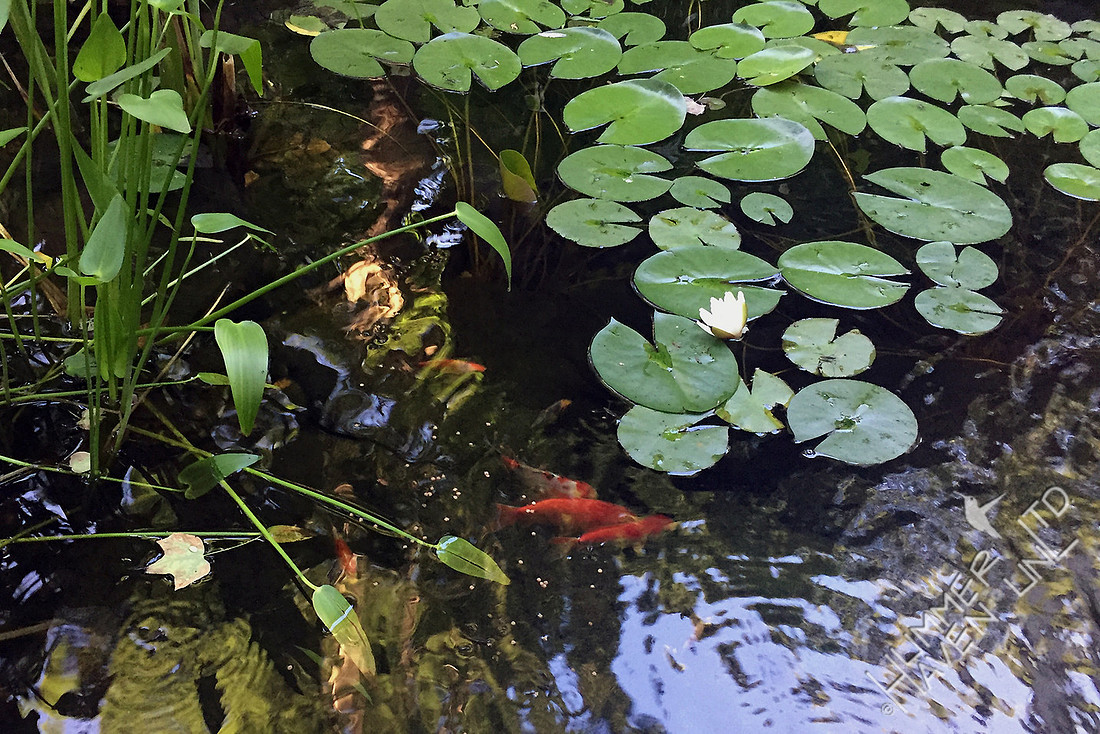
It was so hot and dry the next day that I finished early in the garden and came inside to do some chores. I looked out the window about 3:00 and the water lilies looked like they had been pushed aside. Curious, I checked the Pond Cam and I found this.
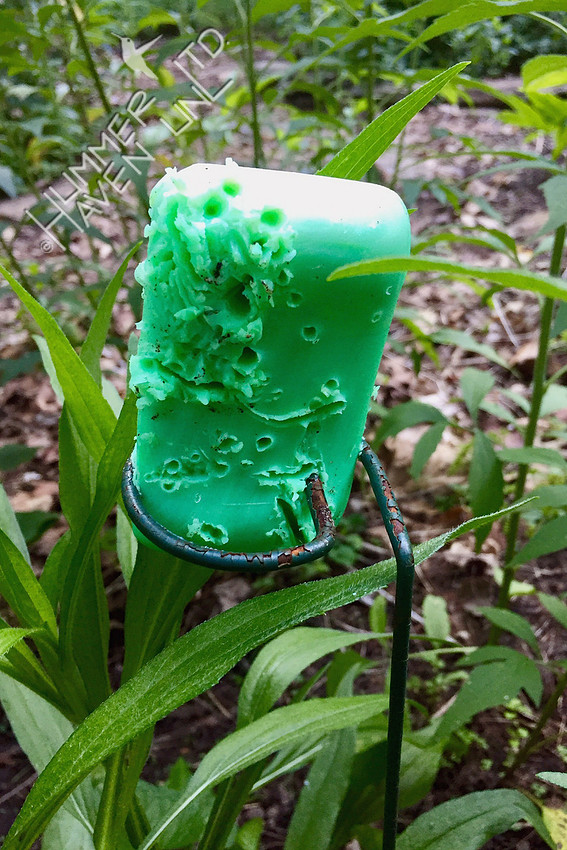
I had missed seeing the doe by minutes! Since I had put a granular deer deterrent around the perimeter of the garden, the deer had not been feeding in there so much. I also added bars of Irish Spring soap on stakes since they don't care for strong smells. However, one of the bars had gotten chewed up, probably by a raccoon. It lasted like this for one more day, then disappeared. Crazy!
Last Friday morning, my neighbor Peggy texted me about a discovery she found in a low spot in her yard with tall grass. I went over with my camera. It all made perfect sense now.
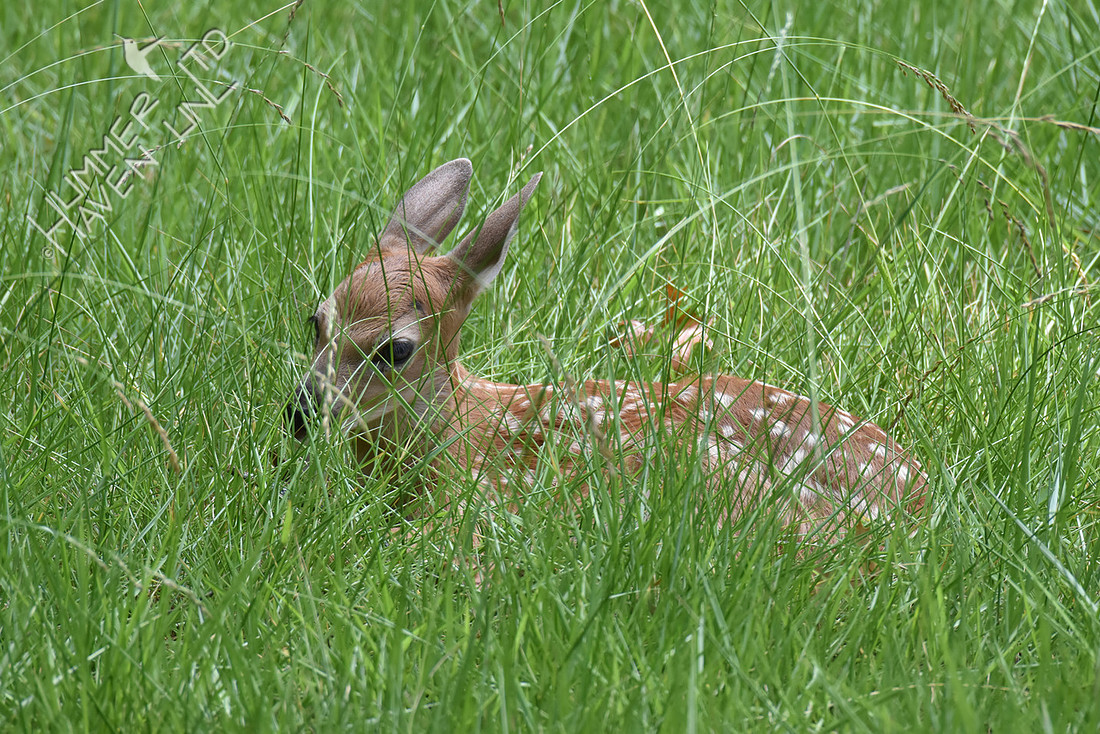
Who can blame a mother for caring for her young? The spotted fawns are too darned cute at this stage. The truth is that the deer population is no longer naturally controlled. Too many factors have upset that balance. There are usually twins, but sometimes a doe will have just one.
From there, I headed over to check on the Ruby-throated Hummingbird chicks. It was pretty hot and breezy. I had better luck getting video than stills. I slowed down the mid-section to 25% speed to study the feeding process. Amazing!
The female feeds the young a regurgitated slurry of tiny insects and nectar. Open a new page about it: Ruby-throat
We finally got over an inch of rain and that cool-down. I went back on Monday to check on the chicks again and they have grown. Here are a few images.
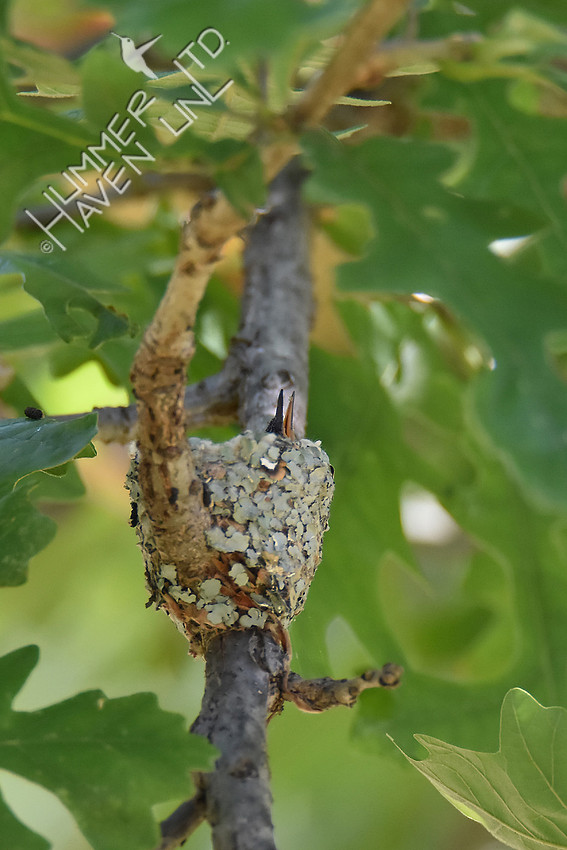
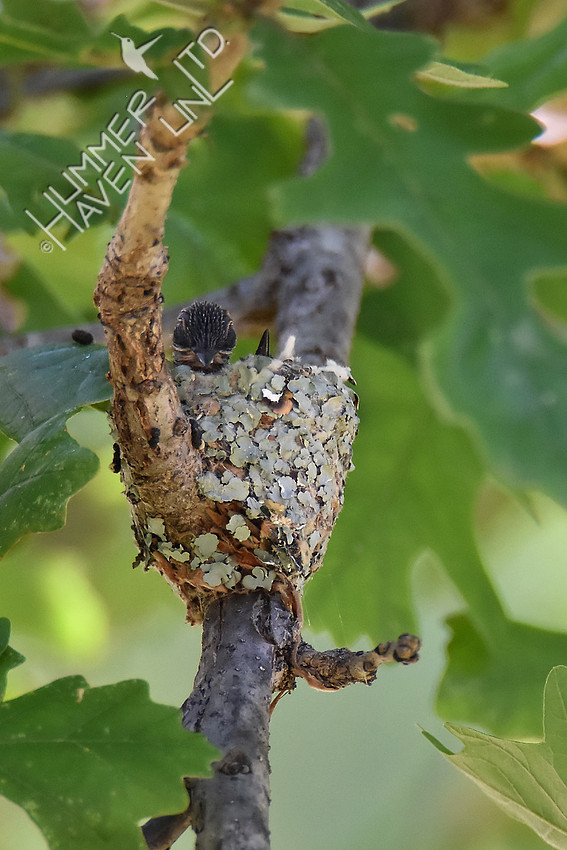
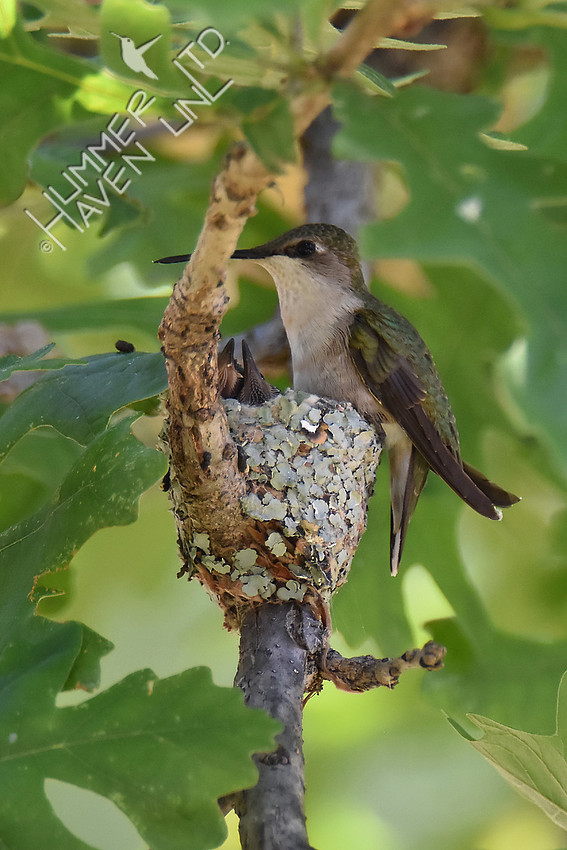
To view all of the Ruby-throated Hummingbird nest and chicks photos, look at this gallery: Ruby-throated Hummingbird Nest
On other fronts, the female Three-toed Box Turtle has been seen on different days. Hello! Here she was at my feet in the woodland as i went to fill the feeder.
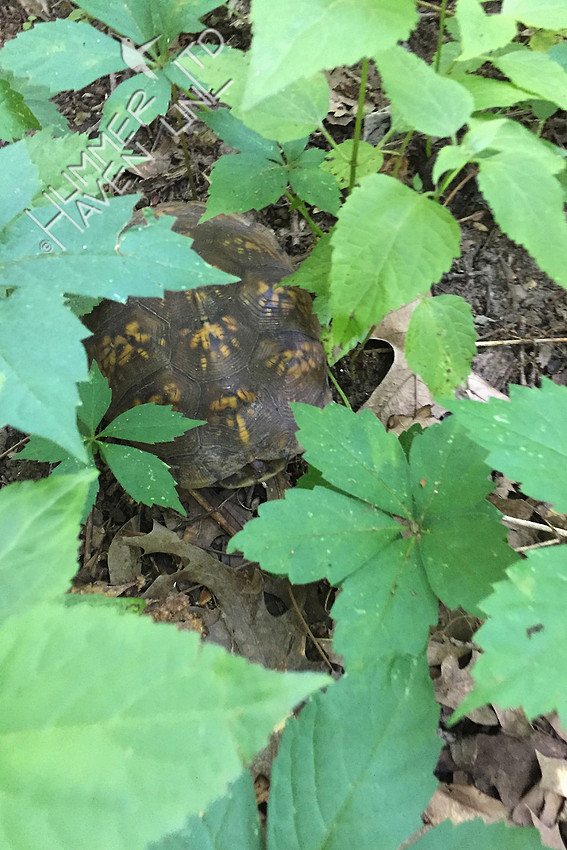
The Indian Pinks (Spigelia marilandica) were gorgeous the first week of June, they have pretty much finished now.
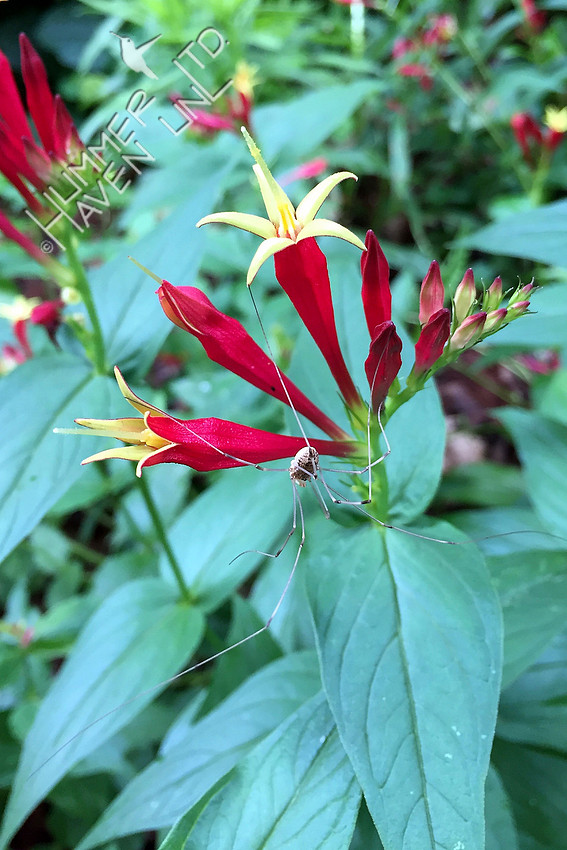
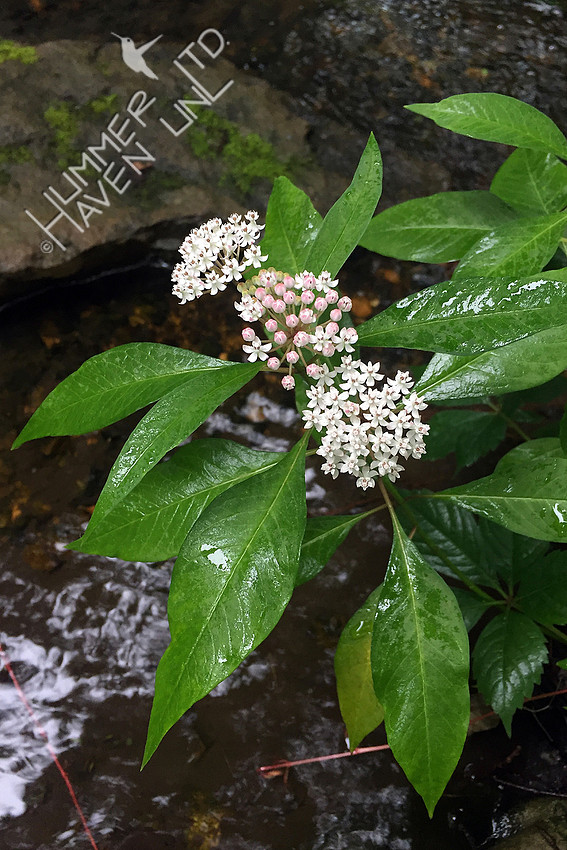
The aquatic milkweed (Asclepias perennis) is in bloom now in the stream bed of the large pond. It spent the winter in that same spot.
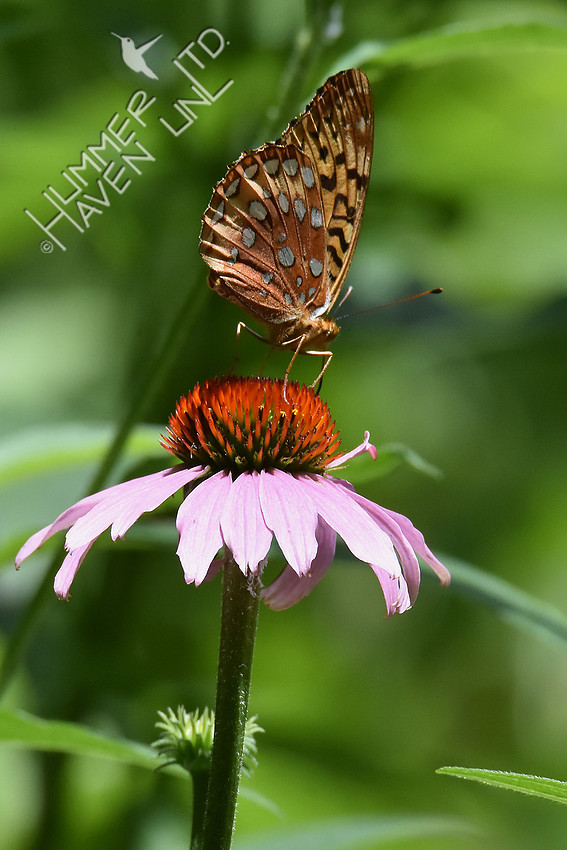
A very fresh looking Great Spangled Fritillary was seen nectaring at Purple Coneflower (Echinacea purpurea). The common blue violet (Viola sororia) is its host plant and we leave patches of violets to feed their caterpillars so we can see these beauties. Dr. Doug Tallamy, well known scientist and author of Bringing Nature Home, has said that these butterflies have all but disappeared in the Eastern part of the country because there are no longer any violets left for them or the 28 other species of butterflies that lay eggs on them.
Wishing you all birds, bees and butterflies this summer!
Birding with my head down 6/13/17
In early May when I was photographing birds daily, I was asked in an email by a former neighbor, "How do you get anything done????? Aren't you completely distracted in your thinking?????" I smiled and shared these questions with my dear friend whom I had infected with the birding bug years ago. These were her responses.
Answer to question 1: Who cares?
Answer to question 2: What? Oh, look at that bird over there!!!!
We shared a good laugh. Well, the piper must now be paid and days spent waiting for intermittent migrants, visiting family, reading Owl Babies to our blue-eyed boys and being otherwise engaged have turned to days spent working in the garden. So, I am birding with my head down early in the mornings and hearing many of the nesting birds. They are not as vocal as when they were setting up their territories, but still call a bit in between forays of finding food.
On Tuesday, 6/2/17 we dug up a small beautyberry and moved it to another spot. This left a depression in the soil behind the bench in the garden. A couple days later, I was in the gazebo eating lunch when the Brown Thrasher family flew down into the garden. There were four birds and they took turns dust-bathing in the area where the small plant had been. I enjoyed seeing them, having not heard much at all from the male since mid-May. The male then called to gather his brood and they flew off together up into the neighbor's oak trees. It was still a bit bittersweet not to get a photo of that kind of interaction. In fact, I've gotten very few photos of that species. The last time was in 2006! So, perhaps one can use his or her imagination and put these two images together.


Or not. I know, it's just not the same. A wise instructor once told me, "Well, you may not see that again, but you will see other things!" As luck would have it, I had just taken the bench photo when to my delight, a bird popped up from the garden. It was another nester, a Great Crested Flycatcher!

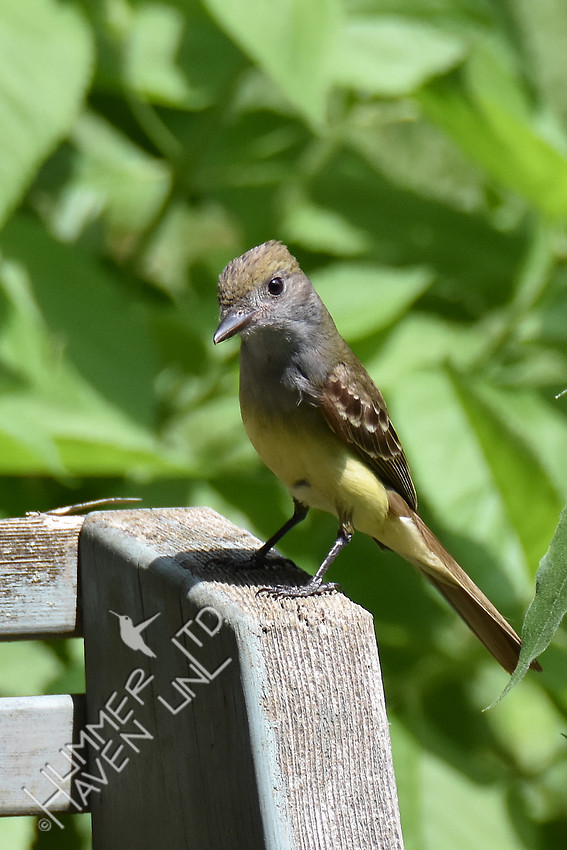

This species is usually found at the top of a tree calling, "Breeep, breeep, breeep!" I didn't expect to see this one foraging so low, but insects are found in every level of the canopy. I saw the bird again yesterday perched on the arbor and flying out and back catching insects. They have such beautiful and distinctive coloration, don't they?
There have been other opportunities in the last week to document nesters in friends' yards. I visited the first nest on Wednesday, 6/7/17. It is a Ruby-throated Hummingbird nest that is located just above eye level in a young Bur Oak (Quercus macrocarpa). The nest is spun with spider silk to stretch with growing chicks and camouflaged with bits of lichen. "The details of life are exquisite!" Have you found it? Look closely at the images to see the spider silk.


We're not sure when the bird laid eggs, but as of Monday 6/12/17, it had begun feeding two chicks. So, I went back today and despite the wind and a noisy garbage truck coming down the street as the female came in, I was able to get some images of her feeding the babes. This period of the nestling phase will last an average of 18-23 days, and up to another week longer.


I am very grateful to these folks for allowing me to witness this natural event and photograph the birds. Though we have 3 females coming in regularly to feed in our yard, they fly off in different directions and I have not located a nest closer by. I will be checking on these chicks as they continue to grow.
Open a new tab by clicking here to learn more about the bird and its nesting habits: Ruby-throated Hummingbird
This page gives even more descriptive information: Ruby-throated Hummingbird on hummingbirds.net
As soon as I got home after getting those initial photos last week, a second friend called to give me the particulars of the Red-shouldered Hawks' nest he could see from his deck. I went the next morning. The nest was in the largest crotch of an American Sycamore (Platanus occidentalis). These hawks prefer nesting near a water source and this tree was situated along the bank of a creek.

The three young hawks were just days from fledging and leaving the nest. One of the adults (its wing seen on the left side of the tree) brought in a small mammal for them to eat.

Studying the photos, I could confirm that the prey was a Short-tailed Shrew, smaller than a mouse. The young bird seemed pretty cautious about handling it.

The two young birds seemed to be waiting for it to stop moving before getting into their meal.

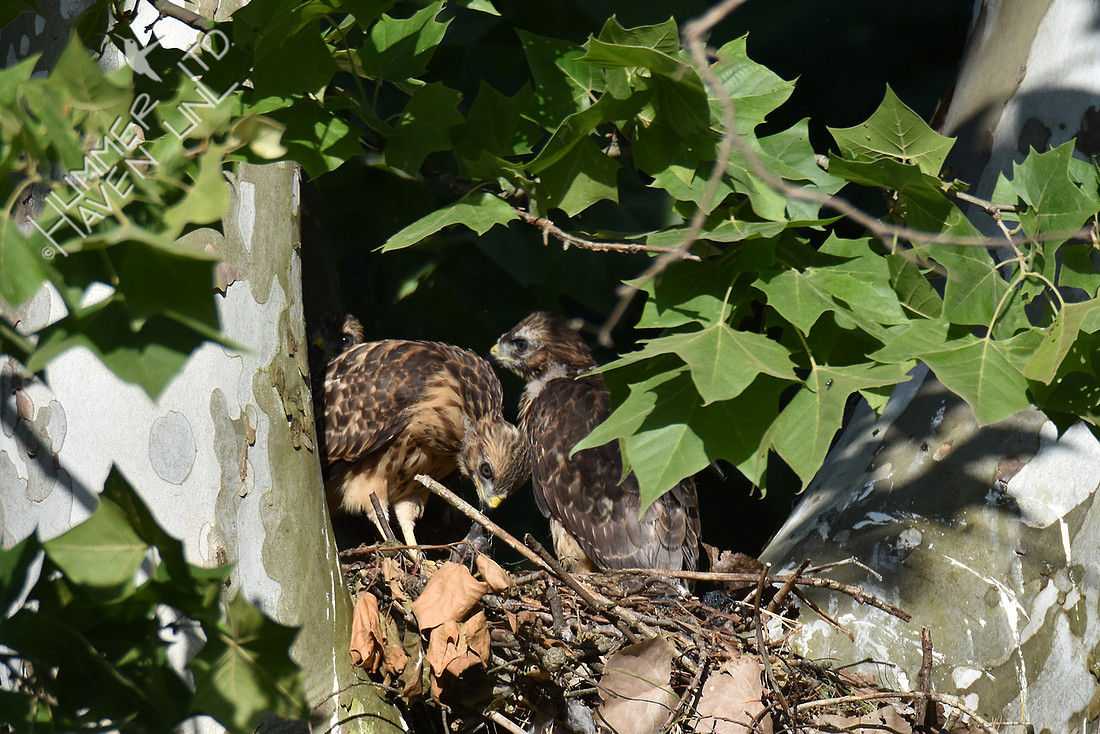
After a bit of research, i learned that the Short-tailed Shrew is the only mammal in North America with a poisonous bite! Perhaps that is why the young birds were a bit reticent.
Read more about the shrew and watch a National Geographic video at this link:
Here's the link with interesting details about the hawks: Red-shouldered Hawk
One last thing, the Sustainable Backyard Tour was last Sunday. I visited several gardens and always enjoy seeing the creative ways that people garden with native plants to help birds and pollinators, as well as re-use and re-cycle different things into fun yard art. Here are a few examples.
A two-acre prairie of native plants established in 1999.

Happy and productive bees return to their hives after work in the prairie garden.

A female Eastern Tiger Swallowtail nectars on Orange Butterflyweed (Asclepias tuberosa) in the prairie garden.

Driftwood that has all been cut by beavers near the Missouri River was collected and painted by the gardener-artist in another native garden.

A galvanized re-cycled boy was found climbing a tree!

Rain and a cool down is in the forecast and it can't come soon enough for me!
Migration update 5-19-17
There have been a few more sightings in the last week, though this has not been a typical spring migration here. Many birds I usually can count on have not shown themselves and I think the storms had an impact on their movements.
The Ruby-throated Hummingbirds have been active and there are two females that come frequently to the flowers and feeders.

A Gray-cheeked Thrush was seen, well-camouflaged in the rocky, leaf-strewn swale.

A female Blackburnian Warbler was a delight to see at the Bubbler on Friday, 5/12/17.

A striking Canada Warbler soon followed. This is one of the most deeply marked birds I've ever photographed.

A fledgling American Robin discovered the Bubble and played in it!

On Mother's Day, I had just decided to go inside when I saw movement in the corner of the Bubbler Basin. The first Magnolia Warbler of the year had quietly slipped in.

On Thursday, 5/18/17 several young male American Redstarts showed at the Bubbler together. The following three images show first year males in different states of transition to the adult plumage. They begin with black feathers on their faces, the last bird is nearly there.


Finally, a first year male Chestnut-sided Warbler showed up. I usually have so many of this species that I'm telling them they'd better get going. Not this year, this is the only one that came to the Bubbler of the three individuals I had seen.

A bit later, a female American Redstart fluttered down, fan tailed. At least, I think this is a female since the bird is not showing distinctly black feathering yet.

A young Northern Cardinal also found its way to get a drink. It's heartening to see nesting success.

For all the photos since the last blog post, open this page: Photos beginning 5/10/17