


Welcome to our blog!
It's all about our discoveries in our private Shady Oaks Sanctuary for birds, pollinators and wildlife. We gauge our success by the diversity of species we observe and document with our photography.
We hope you are inspired to create your own refuge!
Summer days 8-2-16
Our summer has been eventful and it's hard for me to believe that nearly a month has passed since my last post! We've lost 41 minutes of daylight and I still have yet to see a Monarch. Well, let's try to catch up...
The female red-bellied woodpecker continued to care for its charge in July.

The young bird began to find insects on its own, this one was concealed under the bark near the branch.

It was a daily ritual to use the branch as their feeding perch.

One night, during a heavy rain, the branch came down. It had been there over twenty years, serving this purpose. I discovered this the next morning and wondered how the birds would respond.

The female grabbed some suet for the youngster.

They adjusted rather quickly to the loss by using a higher branch and the tree trunk instead.

Let's take this to the next step. What do birds do when large trees they depend upon are removed, where do they go when whole woodlands are cleared to make way for new McMansions or another parking lot? It takes a long time for trees to mature, to be so full of function and value. It is far too easy to cut them down. Plant more oak trees!
One morning, I was preparing for family to arrive while Dan photographed a different young buck in the woods. Its velvety antlers had their own signature pattern and this buck certainly seemed healthy.

The birds and the squirrels have been devouring the rough-leaf dogwood berries, a summer source of sweetness and moisture.

Some squirrels get very creative while trying to reach the outermost berries on the branches.

The water lilies have been blooming in the pond and toads are still singing on warm nights.

One day, a young male Northern flicker spent the better part of an hour finding ants and tiny grubs in this log by the gate.

As the young birds get their new plumage and begin to look like their parents, the parent birds are in different stages of molting. This Northern cardinal is certainly a baldpate, and seeing them at this time of year makes it easy to imagine their ancestral relationship with dinosaurs.

What a change from this April plumage! The bird will soon have new its new feathers and even put on up to 40% more downy feathers for the winter. We have many more hot and humid days to come before we think too much about winter, though. It's time for an iced coffee.

Babes in the Woods 7-3-16
We have a reprieve from the heat this weekend and rain to help with the deficit. Birds have been busy feeding young with lots of activity at the feeders with House Finches, Carolina Chickadees, Tufted Titmice, Downy Woodpeckers and a few more species showing up every day. I was delighted to see that the Red-bellied Woodpeckers brought in a fledgling to feed today. This pair had been ousted from their carefully made nest site by the European Starlings back in late March.
http://hummerhavenunltd.com/blog/2016/3/speaking-of-nests-camouflage-and-predators-on-3/28/16
They must have made another cavity and finally, they have succeeded! The birds have often used this particular branch as a prep table for the food, sometimes adding insects found in the holes. The female took seed from the one large feeder with an equal mix of black oil sunflower and safflower seed.


There was also a young Northern Cardinal out on its own today. It was finding some tiny seeds in the leaf litter, where it was well-camouflaged.

Two young Blue Jays were vying for the attention of their parents. One started investigating the suet feeder and decided to give some a try.

Last week, I was checking the Bubbler Cam videos as I usually do early in the morning. I was a bit surprised to see the size of this family at the bubbler.
These are busy, busy times in the woods right now. We heard a Wood Thrush on July 1 and it sang at least five times. I sure would love to see that it had a family, too. And another probable nester has been calling a lot in this cooler weather, an Acadian Flycatcher. It perched briefly today near the deck, so we both got a good look. It is the largest and greenest of the North American Empidonax group of flycatchers, with a distinctive eyering and yellowish wing bars.
Here's a link to read more about the bird and hear the explosive "peet-sah!" sound that the Acadian Flycatcher makes.
https://www.allaboutbirds.org/guide/Acadian_Flycatcher/sounds
We're in for a big return to the summer heat this week. Be sure to keep those hummingbird feeders clean and changed every 3 days!
Summer Solstice 6-20-16
Tonight at 5:34 p.m. CDT is the Summer Solstice which marks the northernmost sun for the year. It is the longest day and shortest night. Here is a bit more on things to notice today:
http://earthsky.org/tonight/solstice-brings-northernmost-sunset
A new species of damselfly showed up last week on Monday morning. It was an Ebony Jewelwing, striking in its iridescence. It stayed around the pond most of the day, but it hasn't been seen since then. Perhaps it is looking for a mate to bring back. (Rose-colored glasses are on.)

Great Spangled Fritillaries have been in the garden nectaring at the Purple Coneflowers (Echinacea purpurea).

We are still seeing both male and female Ruby-throated Hummingbirds. They're feeding mainly on insects but will take nectar. While we were weeding one day, we saw a female nectaring at these Indian Pinks (Spigelia marilandica) near the pond.

And almost every morning, a hummingbird visits this vining Leather Flower (Clematis versicolor) that is in a pot on the deck right outside the breakfast room window. I hope to get a photo one of these mornings. It's a lovely plant that climbs to about 8 feet and each flower holds a lot of nectar.

With the intense heat the past week and lack of rainfall, we've begun some supplemental watering. I do enjoy weeding right after a good soaking, listening to the birds and staying in the shade by the pond.
The Lizard's Tail (Saururus cernuus) is in full glory right now.

And the purple Pickerel Weed (Pontederia cordata) is blooming, too, attracting many bumblebees and the occasional hummingbird.

There have been a couple mornings when we've gone down to breakfast only to find the young, lame buck laying in the woodland back at the property line. The animal has a favorite spot picked out, perhaps to help him get up. These were taken from different angles on two days, 5-23-16 and 6-10-16.


We've watched him as he gets up. His front right leg has had an injury since he was a fawn. In a world with natural predators, he would have been easy prey. The buck was caught on the trail cam again a couple nights ago. His pattern of three heavy footprints is easy to spot where the ground is soft.

Earlier this month, my friend, Sue and I were invited to attend a workshop on Bird Identification and Conservation Biology out at Shaw Nature Reserve. We jumped at the opportunity and learned so much. In the very first class we discussed a diagnostic difference between Downy and Hairy Woodpeckers that I had not realized before. Usually, I will focus on the head and the bill. The Hairy Woodpecker has a distinctly longer bill in proportion to the head. But, when birds are moving around and maybe atypical in size, well, it can be a tough call. The new diagnostic detail is that Hairy Woodpeckers have clean, white outer tail feathers and Downy Woodpeckers have three black spots or small bars on their white outer tail feathers. Here are the Hairy Woodpeckers with their crisp white outer tail feathers.


And, here are Downy Woodpeckers with their barred outer tail feathers. The first photo is of a juvenile bird that still has a partial red cap on its head.


Not always easy to see, eh? Wow, I felt like a beginning birder again, excited to learn a new detail about a little bird that I see nearly every day! As they say, "The details of life are exquisite."
Happy Longest Day! May you also keep learning the new and wonderful details of life!
Thoughts on migration 5-26-15
"There is a kind of music in the patterns of bird migrations, a delicate rhythm that plays over the slow cycles of seasons, the orbits of planets, the raising of mountains. It is the rhythm of the Earth made plainly visible.
In many places, our modern lifestyle- with its time clocks and computers and automobiles and insulated, air-conditioned buildings and processed food-has isolated us from this rhythm. The ancient rhythms are there; they are a part of all of us. We understand them and follow them subconsciously, but too much of our lives now is separate from them, and we hear them only when we know what to listen for." David Allen Sibley - Ornithologist, Author, Artist
May. The very word conjures up the busy-ness of our lives this month of the year with never enough hours in a day, so much to be done inside and out. I promised myself that this year is my sabbatical and I would pay more attention to that delicate rhythm of migration. It's like the tides, never exactly the same from year to year. Yet, it always holds potential for surprise, something new, not seen before or perhaps not in a long, long while.
Ten years ago in 2006, I photographed this beautifully marked adult female Bay-breasted Warbler.
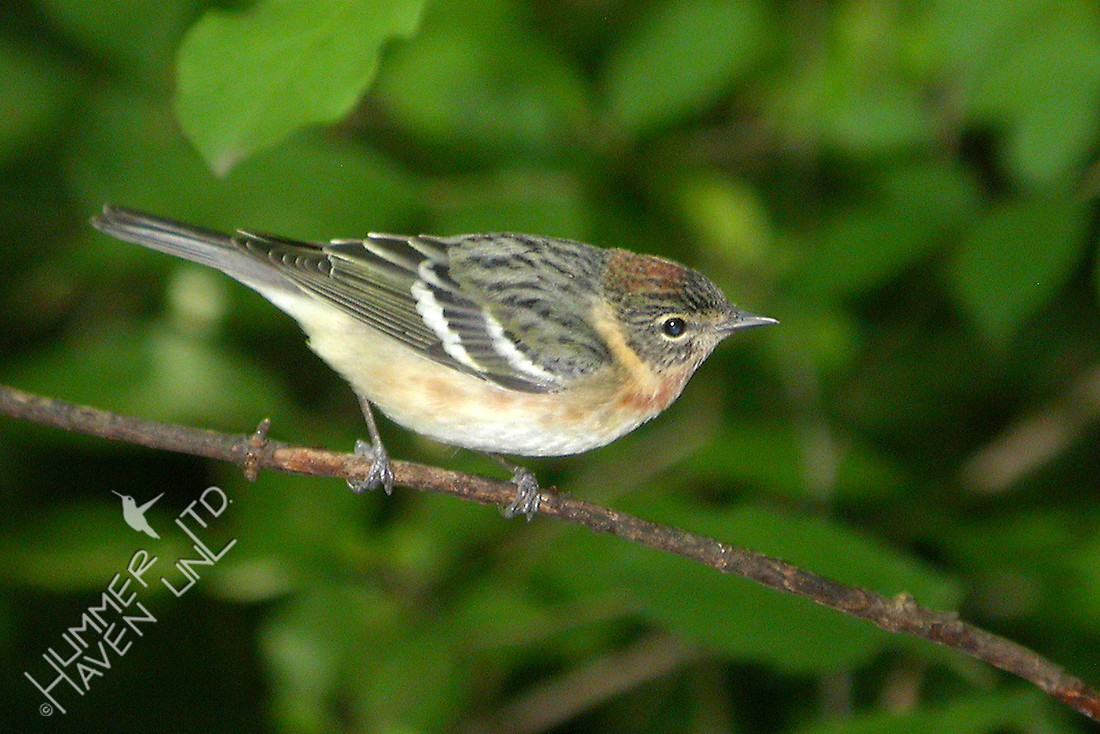
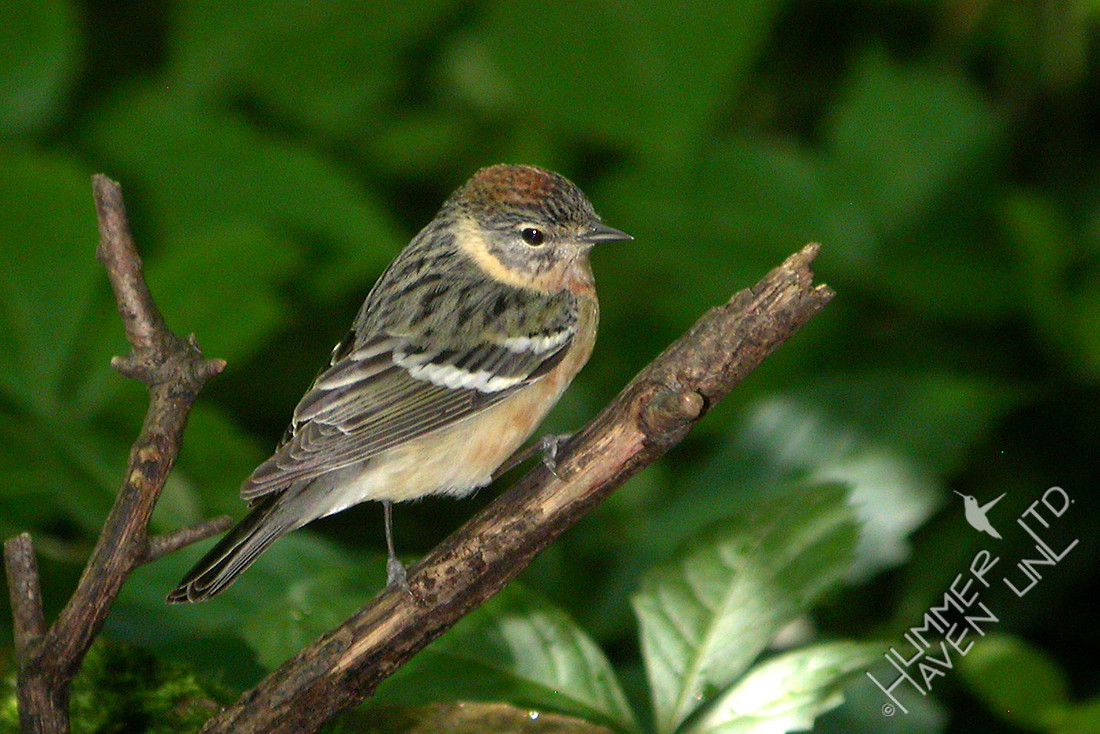
On May 20, I had a first spring female Bay-breasted Warbler come to the bubbler. This bird's plumage is much paler, yet definitely that of a Bay-breasted. It was a thrill to see this and be able to study the differences between them.
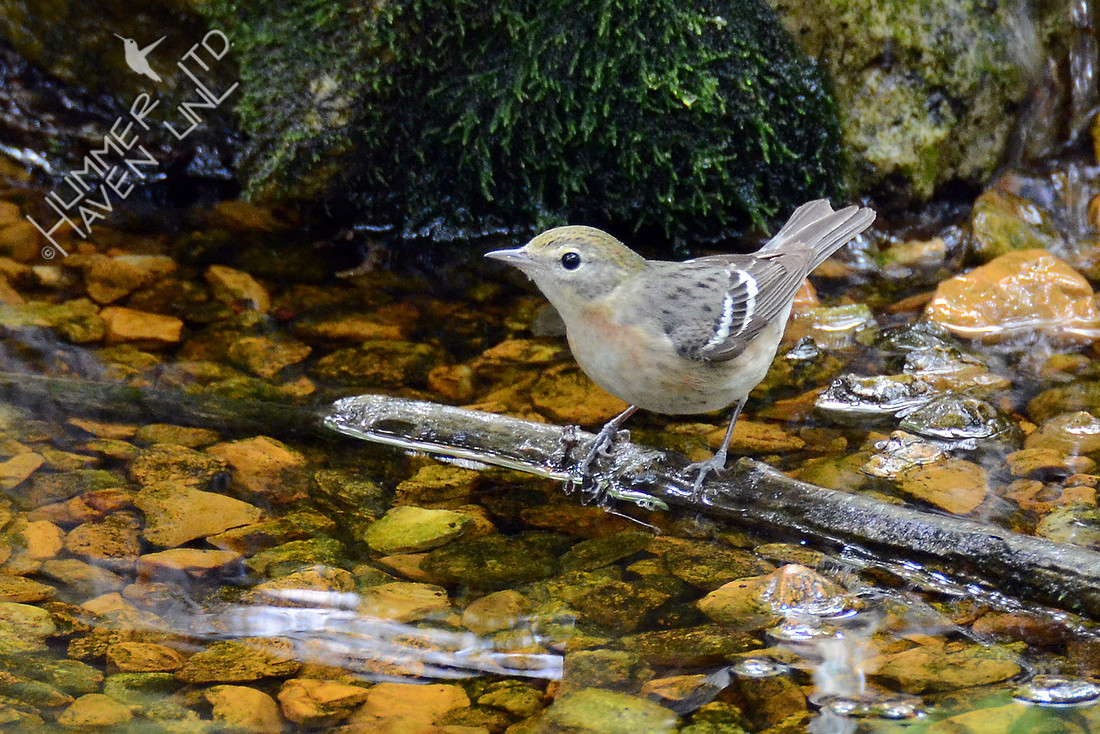
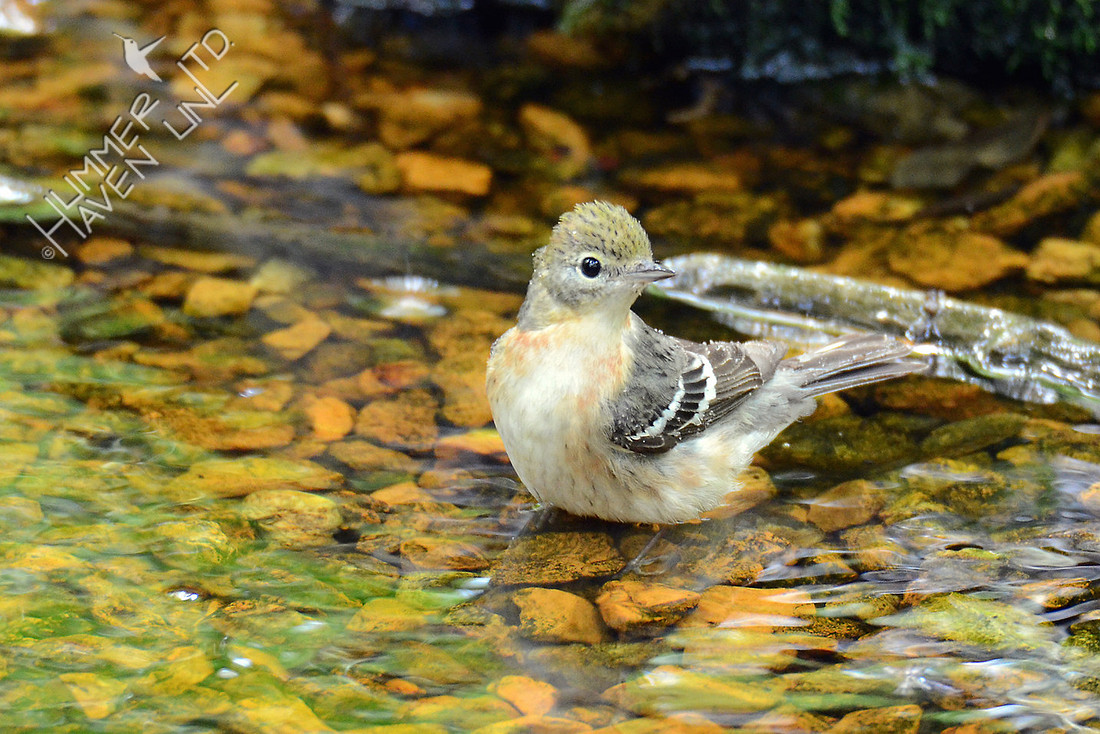
The spring plumage of the male is striking, one of my favorites to see. These photos are from 2010.
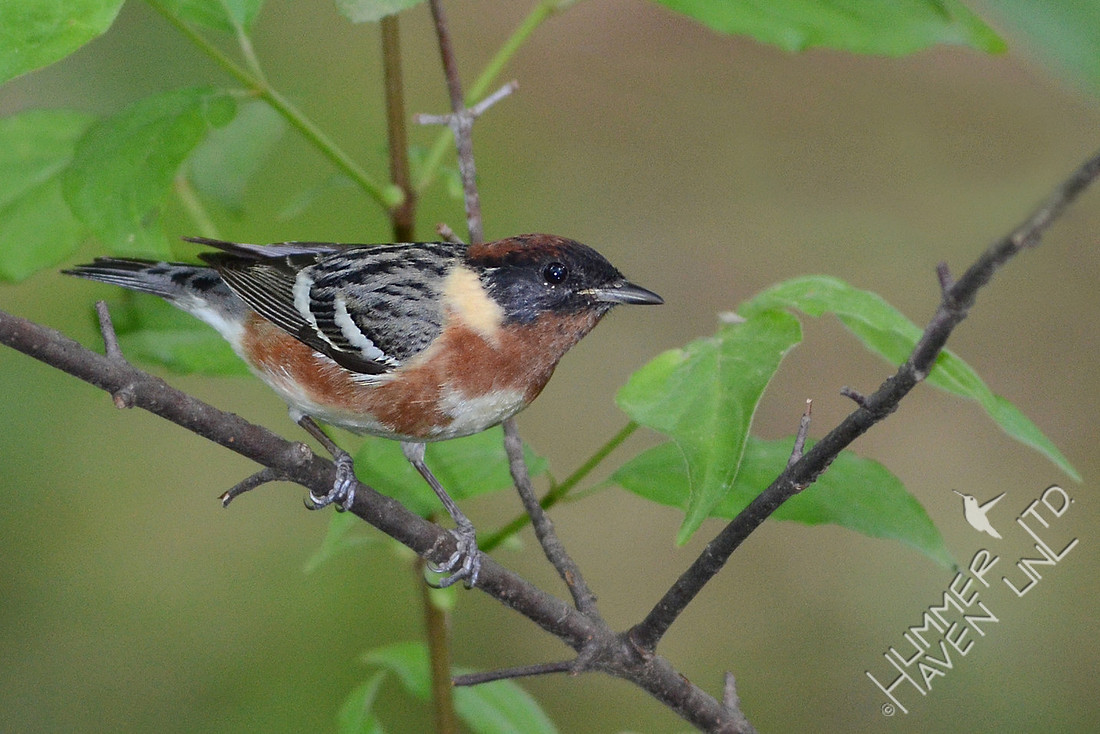
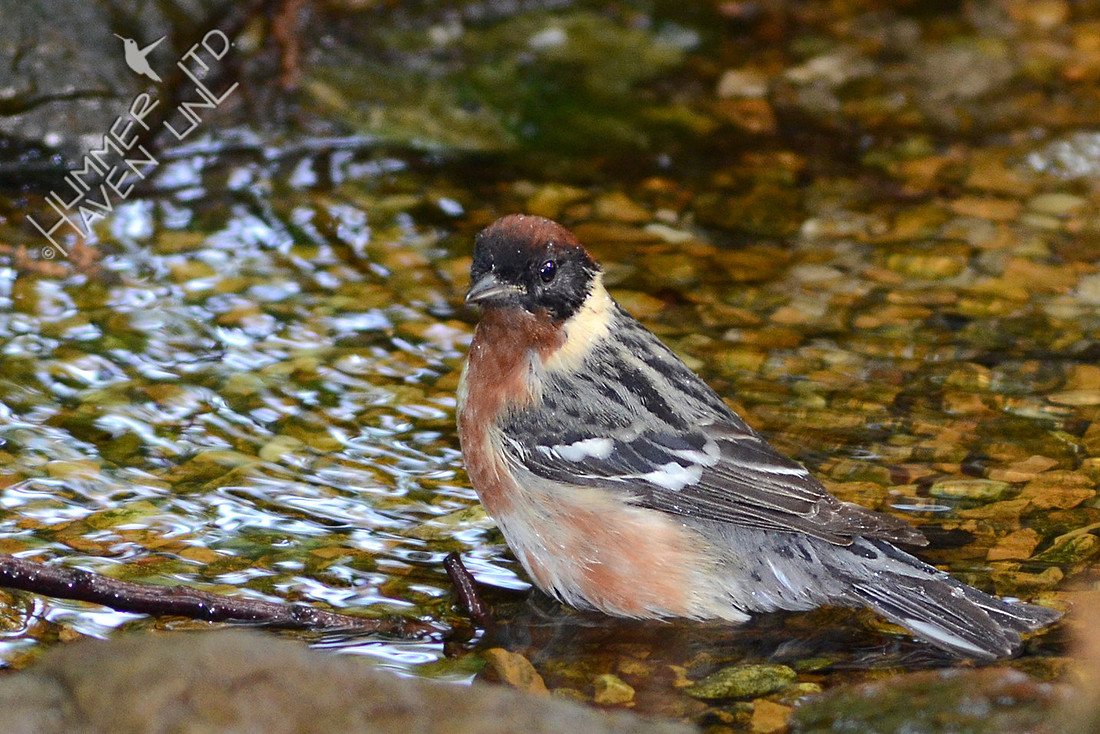
I did see a male on May 9, my highest count day of spring. It was my fourteenth warbler of the day. The thing is, I had given up and gone inside because of the overwhelming roar of turf warriors and their trusty steeds. Then, I turned and saw the bird, dashed back outside, hoping against hope to get a photo. I did.
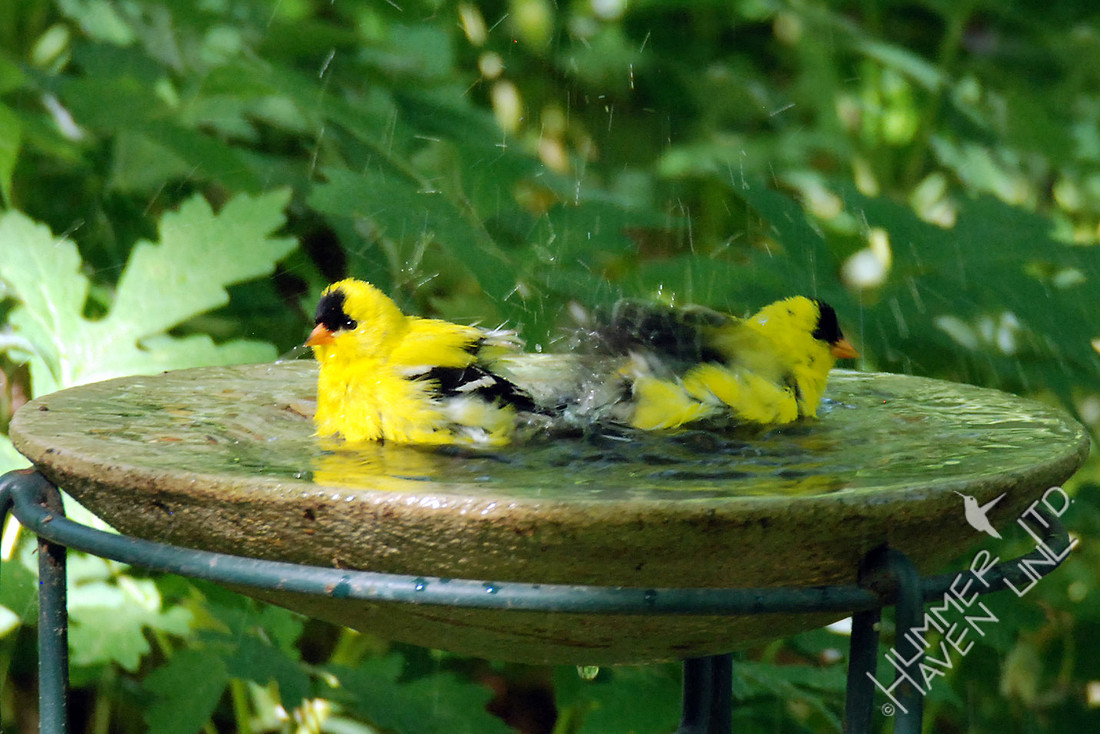
Ah, well, the rhythm was broken. Some days, that's just how it goes. Thankfully, something unexpected or funny soon happens to make it 'all better'. These two American Goldfinches decided to call a truce and just not look at each other because they wanted to bathe in the birdbath so badly.
The nesting cardinals have been busy raising two fledglings. The male is responsible for this one and has a caterpillar in his beak to give to it.
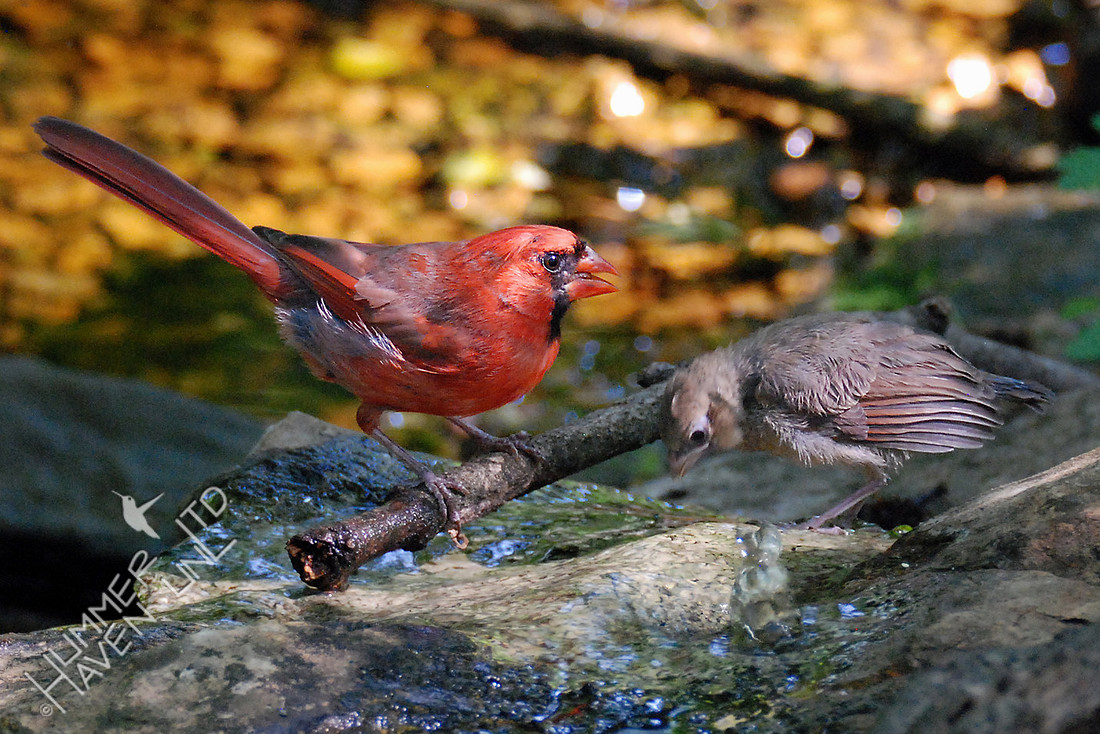
Sometimes, the chick stays in more cover, surrounded by leaves.
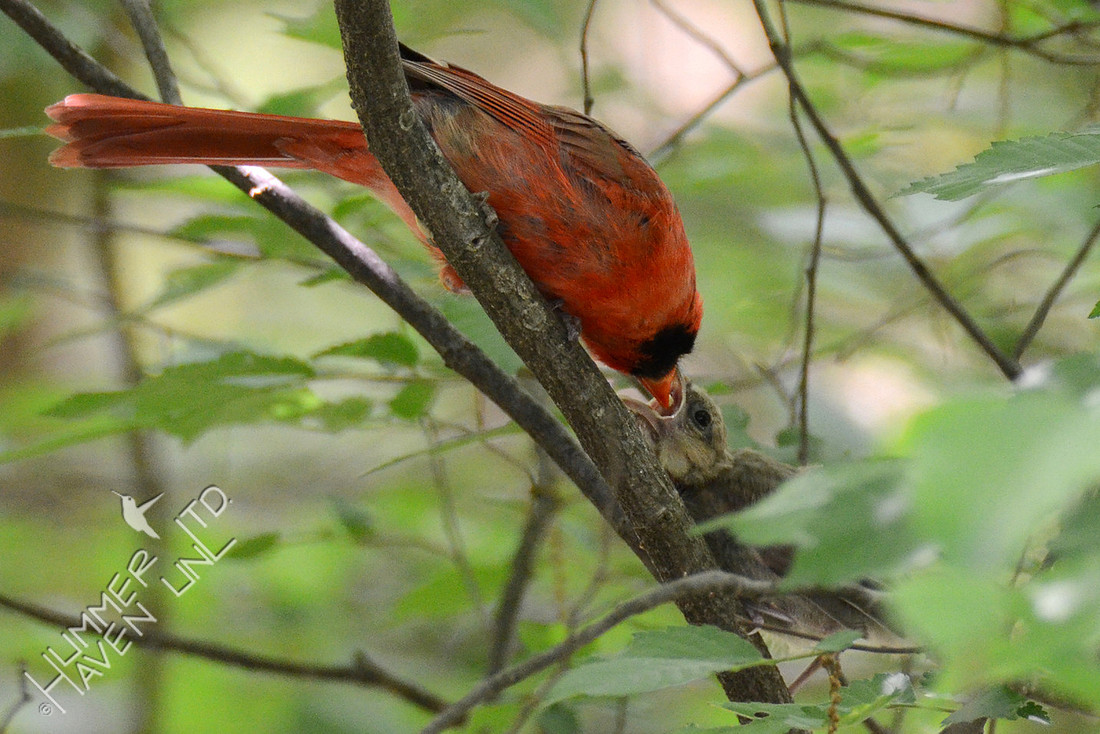
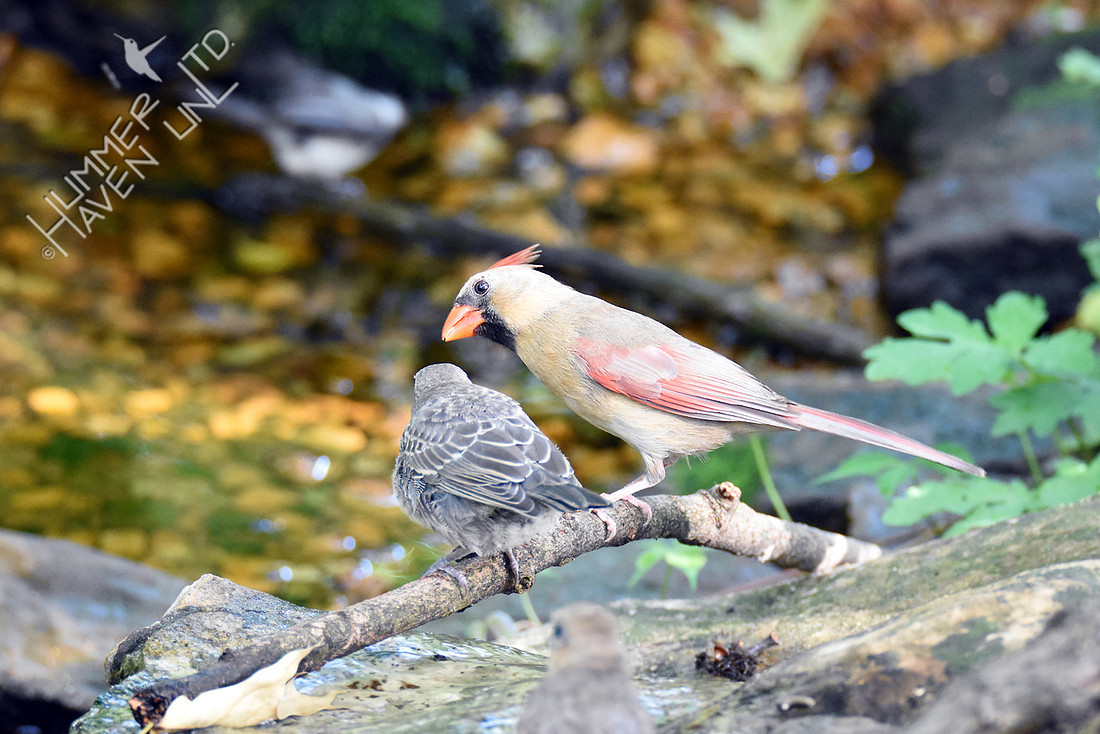
The fledgling in the background of the next photo is a Brown-headed Cowbird and the female Cardinal feeds that one. Yes, these two chicks are different species but were in the nest together. You can read more about Brown-headed Cowbirds and their nest-parasitism:
http://nestwatch.org/learn/general-bird-nest-info/brown-headed-cowbirds/
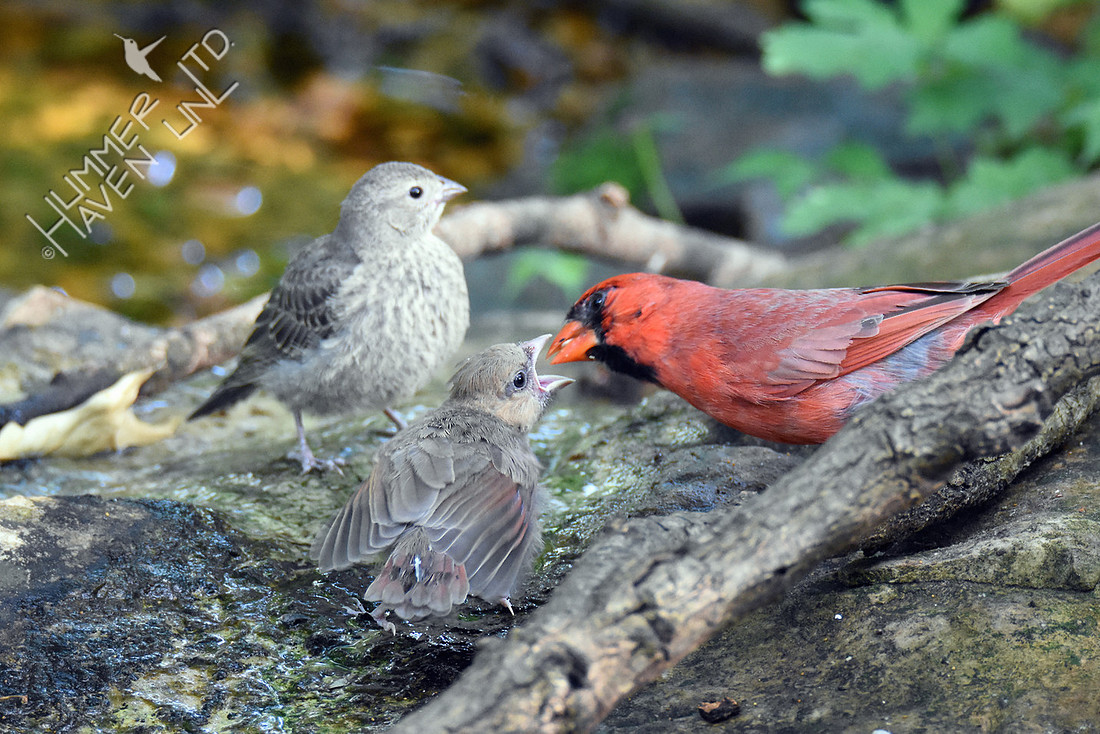
It looks like she found the same kind of tidbit as the male had for their own chick.
Under the full Flower Moon, the Barred Owls have been calling this week, at almost any time of day or night. We have yet to see if they are feeding some youngsters of their own. In the meantime, there's one more item I'd like to share. Our garden was recently featured in the online version of the Wild Ones Journal.
Here's the link to view it:
Simple Ways to Add Moving Water for Birds 5-18-16
It has been raining the past few days, but soon the heat will arrive and the birds will be wanting fresh water to drink and bathe in. One of the most effective ways to bring birds down from the treetops and into your view is to add moving water. Dappled sunlight sparkles on it when it moves and the sound really gets the attention of the birds.
There are many ways that adding movement to water can be accomplished. We have found that birds will use every water source available to them here. We have several types of water features for birds that are spread around our property for convenient access.
Here is a short video showing three of our water features: the original Bubbler rock, a small fountain and a dripper on a birdbath.
A water feature like the Bubbler can be done with pond liner material or a pre-formed pond as the base. It takes some time and effort to plan and install as it requires electricity for the pump and a de-icer. It also can be an expensive investment when a contractor does it for you. The Bubbler is our own design, simple and effective with the added basin area seen below. The area has filled in with native plants surrounding it and it feels like 'home' to the birds.
Perhaps you already have a Bubbler, either a pond or a pondless type. Are the birds coming down to use it? It is best to have the basin area only be about 2 1/2" - 3" deep at most. Moving the gravel around to make a smaller puddle area or two gives the birds some options. And, don't forget to have perches of different sizes available. Birds don't have good depth perception, so they need to grab onto a perch and get a close-up look before deeming it safe to get into the water.

We'll post more on Bubbler type water features later. For now, here are a couple simple ideas one can get ready in a jiffy if you're just beginning.
For a quick way to get some water moving, consider a fountain. I found a bowl and some decorative stone and added this small pump. A branch laid off to the side gives birds a perch to get a drink because the rocks and bowl may be slippery. The pump does require electricity and we added a timer to have it on only during the daytime. This one is on our front porch in the shade.


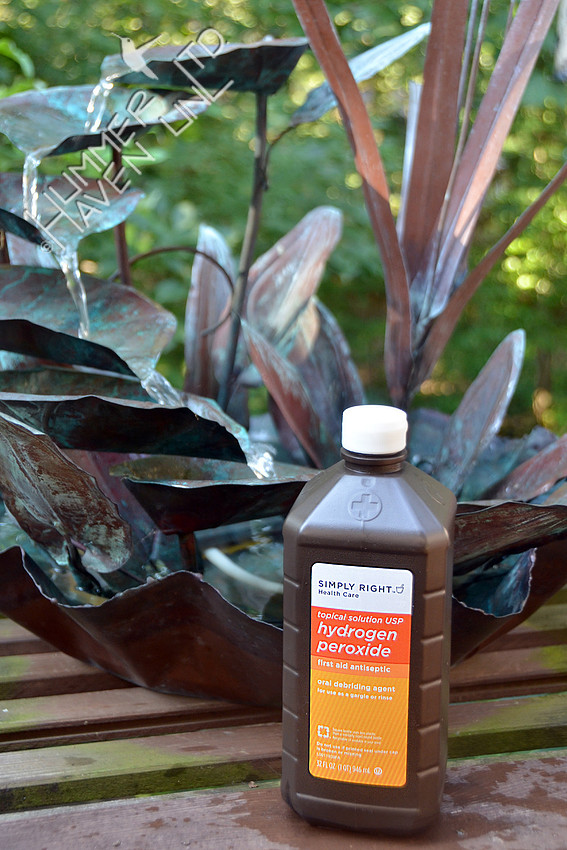
As for maintenance, we check the water level daily because the bowl must be adequately filled to keep the pump running. We disconnect everything and check the pump every week and flush out any debris as well. We also add 3% Hydrogen peroxide weekly, a couple ounces will do. Hydrogen peroxide is safe for us to use as a dental rinse and it's also safe for birds. It helps to oxygenate and sanitize the water. DO NOT use chlorine bleach!
Actually, the easiest way to add moving water may be to add a dripper to a birdbath. A dripper requires no electricity, just attach it to your spigot. We had some leftover tubing and Dan fashioned this one from the tubing along with an inline valve. I used some vinyl coated wire to attach it to a shepherd's hook type of stake. It's good to have plants that like a moist environment in the area under your birdbath, too. Native ostrich ferns (Matteucia struthiopteris), celandine poppies (Stylophorum diphyllum), wild ginger (Asarum canadense) and Virginia bluebells (Mertensia virginica) are in this shady bed that gets dappled sunlight.

Drippers are available through your local bird feeding supply stores and online. The kit should contain everything you need to attach it to your spigot with a "Y" valve. One website that we use and recommend is this one that carries Birds Choice products:
Here's a photo of another example.

You may have noticed that all of these are in shady areas. Keeping your water out of open sunny areas will minimize evaporation and keep it at a cooler temperature. It is also safer for the birds, they're not as vulnerable to hawks when they can dash into cover.
May you have many new avian visitors to your water feature!