


Welcome to our blog!
It's all about our discoveries in our private Shady Oaks Sanctuary for birds, pollinators and wildlife. We gauge our success by the diversity of species we observe and document with our photography.
We hope you are inspired to create your own refuge!
5-14-16 "In order to see the birds..."
"In order to see the birds, it is necessary to become part of the silence." Robert Lynd
This is one of my favorite quotes. Once I decided to sit silently, to sit still, I began to see so many more birds. It does not matter so much to me to see a certain number of birds, but to get what I call a "soul-satisfying view." Then, if I'm prepared and fortunate, I am able to capture some of these moments to share. It's so much easier to recall details when I've taken images of different species. One bird at a time, we learn. Some birds are more common than others. It's those that are less common that are harder to capture.
While I sit and listen, the songs of the birds tumble on top of each other, one ends on a note that starts another bird off. More coffee, please! For the last four mornings, I had been hearing a new arrival. I have barely gotten a glimpse of the bird, a Mourning Warbler. It is a skulker, it tends to stay hidden in cover while it forages. And, boy, do we have places for it to hide in. I was able to get this photo of one in 2006 and that may have to do for a while yet.
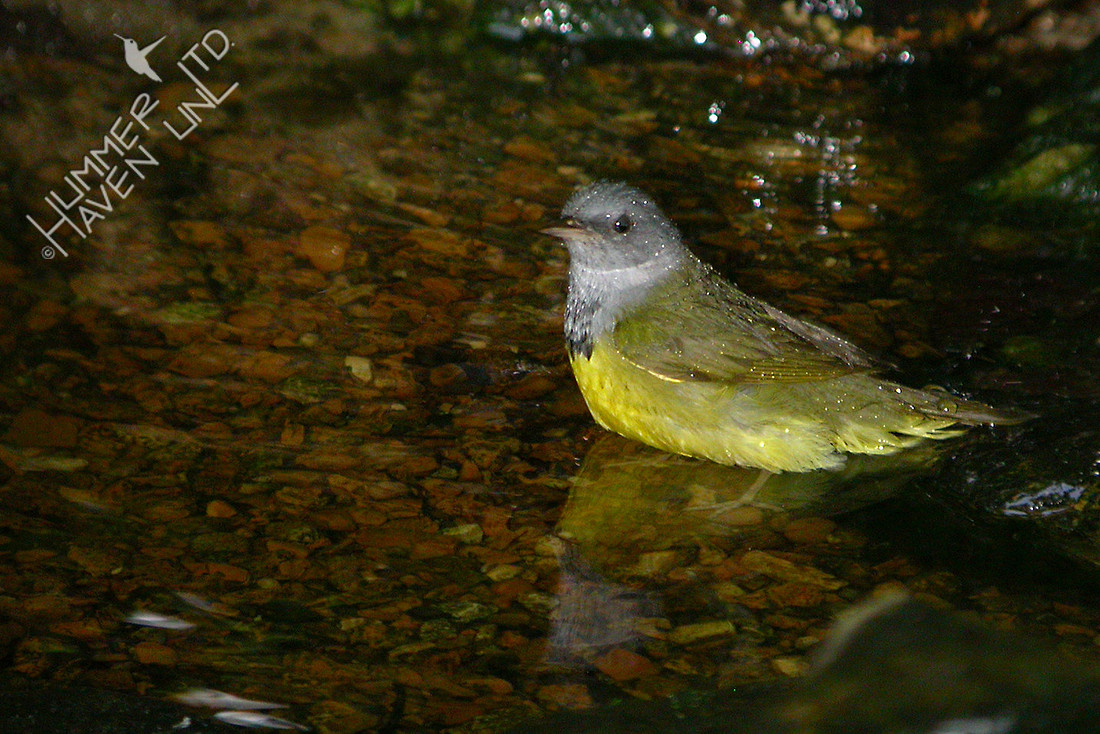
Mourning Warbler song: https://www.allaboutbirds.org/guide/Mourning_Warbler/sounds
Now, this morning at 6:20 a.m. I've heard another song, seven times or more, of a Connecticut Warbler. It is rare. As yet, I haven't been able to see it walking through the poppies. Yes, it walks. I'll keep trying. It's windy and only 46 degrees, one of those days. But, the details of life are exquisite! We all yearn for rare glimpses of beauty.
Connecticut Warbler song: https://www.allaboutbirds.org/guide/Connecticut_Warbler/sounds
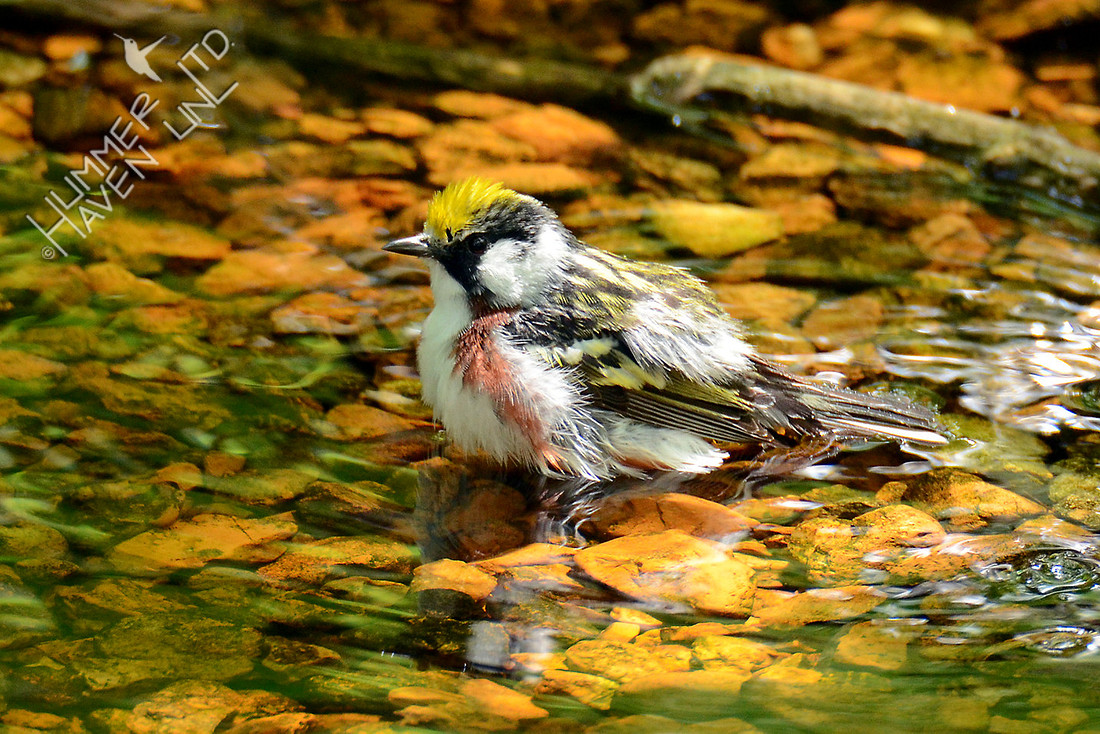
This is a Chestnut-sided Warbler from Tuesday, not so rare but still fine.
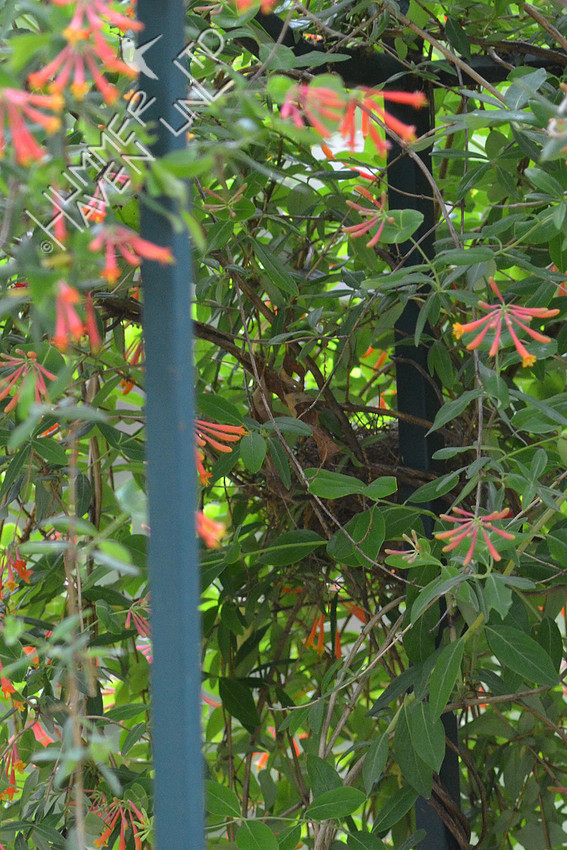
I noticed a pair of Northern Cardinals spending a lot of time near one of the arbors with Coral Trumpet Honeysuckle growing up on it. They started a nest about two weeks ago.
The very next day, the female began sitting in it. Yesterday, she was still entrenched. I have already seen another female Cardinal feeding a Brown-headed Cowbird nestling. I hope this couple fare better and will raise their own young.
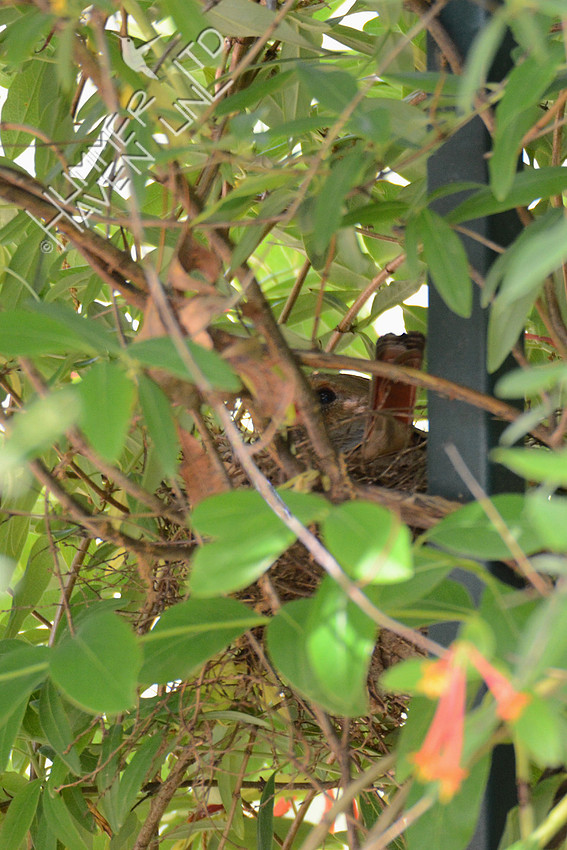
I found another fitting quote from 1923 by Robert Lynd about the nest. "There is nothing in which birds differ more from man than the way in which they can build and yet leave a landscape as it was before."
One of my big concerns has been the feral cat population, which has been rising in the neighborhood. I let this one know that it was not welcome to cross the property line by hissing and waving a large stick at it. It worked...this time.
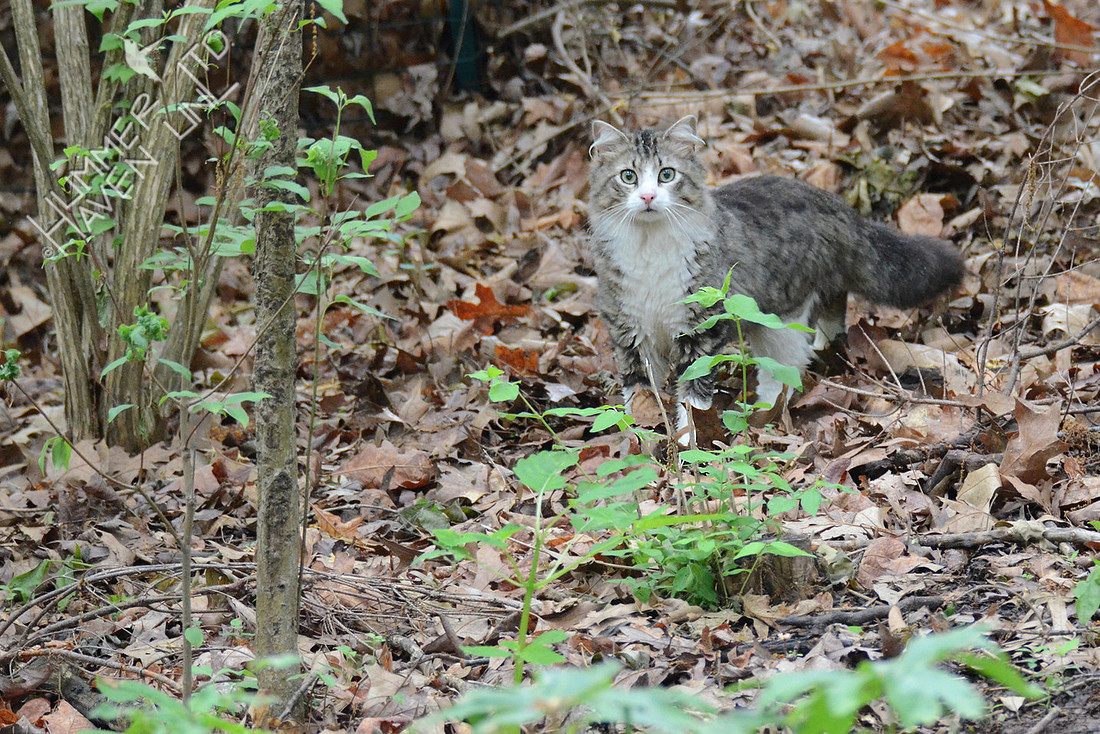
Between the migrants working in the leaf litter and young chicks hopping about, outdoor cats pose a terrific threat to our native birds. This research article estimates the number to be 500 million birds killed each year!
The Carolina Wrens have their young out learning to forage and this parent found a spider to feed one, calling as it held its prey.
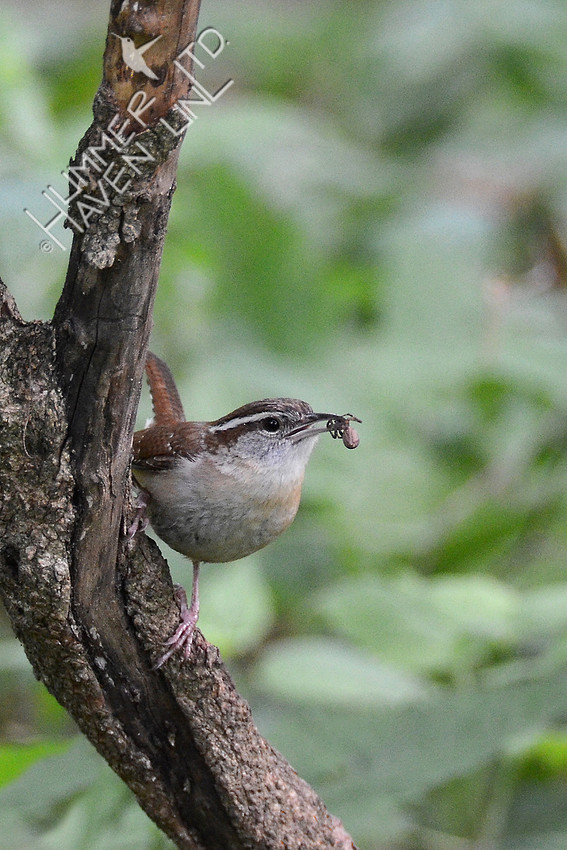
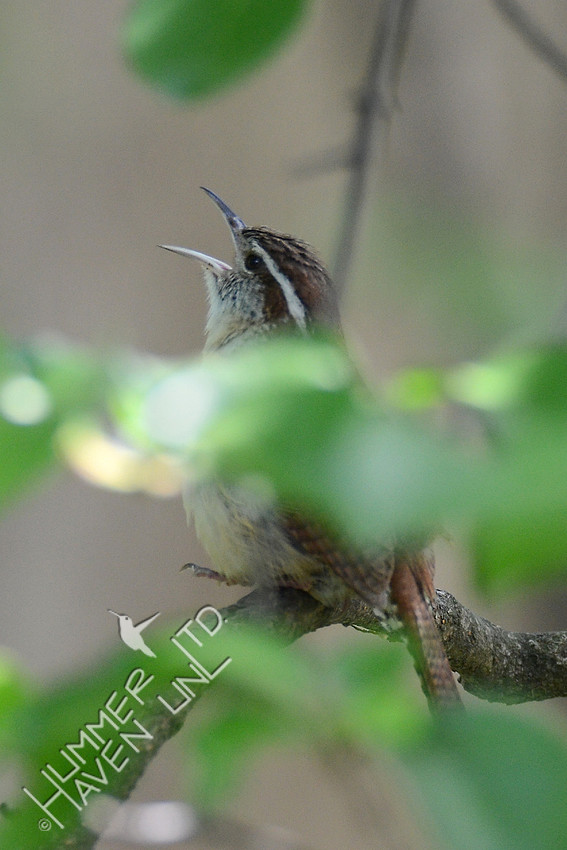
The proud papa was singing and for the day, life goes on.
Update on Migration 5-10-16
It has been a whirlwind here with beauties every day. Here are just a few highlights. Look for a lot more photos of these and other birds in the 2016 Birds gallery. All the warblers are duplicated in the 2016 Warblers gallery.
A stunning Golden-winged Warbler rested his weary little self on this perch.

A Blackpoll Warbler with his orangey legs and feet stopped in.

A young Scarlet Tanager thought long and hard about getting in. This bird isn't quite in his full scarlet suit yet.

An uncommon warbler stayed quite a while. It's a Blackburnian, aka the 'fire-throat'.

A Magnolia Warbler preened after a bath.

A Chestnut-sided Warbler eventually got in the basin.

A Black-throated Green Warbler calculated the access to the Bubbler.

It is truly the merry month of May! Check the galleries every two or three days for more photos and enjoy the show!
4-30-16 Migration in dribbles and the fox, etc.
Migration is happening in fits, starts and dribbles here. The winds were favorable from the south for a few days and then turned so the birds seemed to be circling the neighborhood. Action at the bubbler has been less after the rains, but we need the rain so I won't complain. Still, a few birds have shown themselves this last week of April.
Dan saw our first two Ruby-throated Hummingbirds on Friday night, April 15. I was able to catch one at the feeder near me on Thursday.

Another gorgeous migrant is the Scarlet Tanager. This male stayed in the trees, feeding on Thursday afternoon.

A Red-eyed Vireo came to the bubbler area that same day and splash-bathed early. It returned to pose a bit later.

Gray-cheeked Thrushes have returned and like all thrushes, they love to get in the water.

The Swainson's Thrushes are in the woods and one can hear their sharp 'whit' calls bounce from one bird to another like ping pong balls.

Yellow-rumped Warblers still come to the bubbler every day, if only to look. They certainly are pretty little birds.

The Carolina Chickadees were still feeding their nestlings on Friday. They must be huge by now at the rate they've been fed! One of the parents found a caterpillar on the Virginia Creeper to take to them.

I stood out in the rain this morning to watch and listen. The Chickadees must have fledged and left the nest box before I even got outside.
One of the foxes has been seen several times in the last week or so. I went out early last Sunday morning to turn on the dripper at a small birdbath in the east bed. I heard movement in the bed behind me and there was the fox, trotting through the bed and onto the path. It turned left towards me and then right as it continued south along the edge of the garden. It still looks to be quite healthy. Here is that clip in between two night-time clips from the bubbler cam.
Other arrivals this week have been Indigo Buntings, Summer Tanagers, Black-throated Green Warblers, Veery, Gray Catbird and Eastern Wood Pewee. The Gray Catbird was feeding in the swale at the south property line this afternoon.

I wasn't outside too long before another strong thunderstorm built up, dumping hail in loud measure and tearing leaves to shreds. The temperature dropped over ten degrees quickly.

I hope the weather calms down. More birds are on the way, it could get pretty interesting in the next couple weeks!
The more you look, the more you learn. 4/26/16
It is prime season for birdwatching and the more I observe birds here in our small sanctuary, the more amazing things I learn from them. There is a story behind every photo and I will share one special tale from my week. Some of the new migrants came to the bubbler, some popped in but not long enough to photograph...yet.
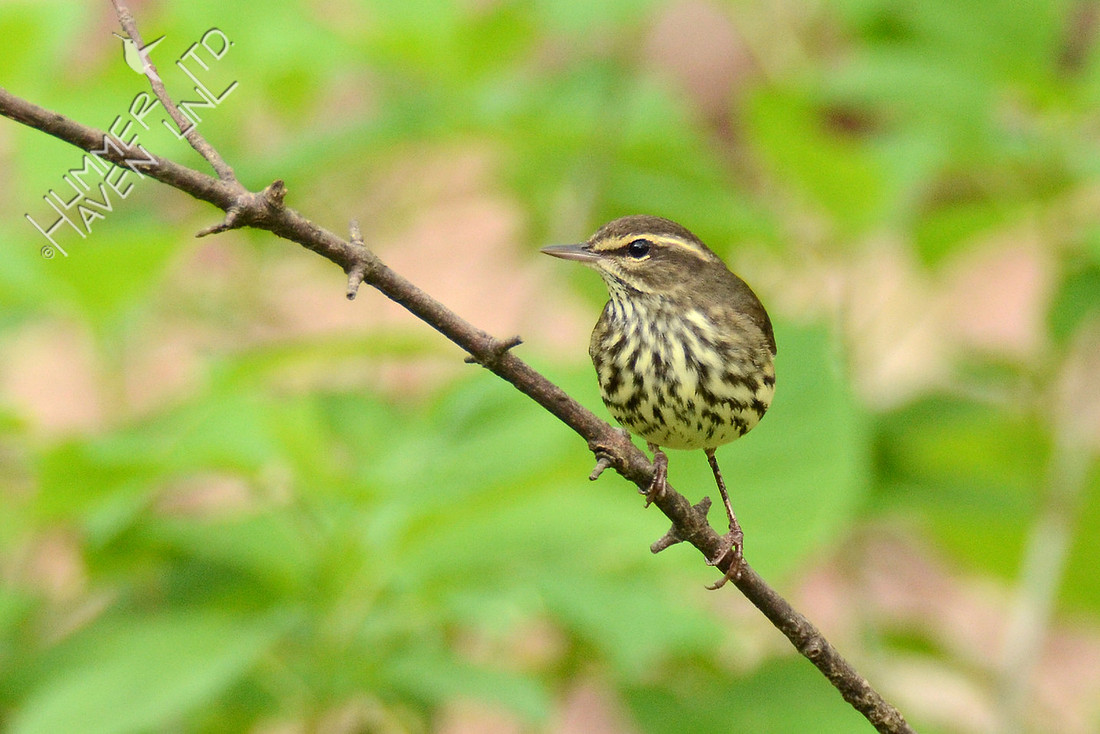
A Northern Waterthrush was singing and feeding in the swampy thicket on Wednesday, 4/20/16. The bird came up near the bubbler to check it out.
On Sunday, I had six new birds for the year and this Rose-breasted Grosbeak came down to bathe.

A Blue-headed Vireo showed up in the afternoon to splash-bathe from this perch.

A Tennessee Warbler got into the basin with two females, a House Finch and Northern Cardinal. The House Finch pecked at it a couple times as if to let the warbler know who was ahead of it in line.

On Monday, quite the opposite kind of tale began when the little lame White-throated Sparrow came in to bathe. We've talked about this bird. It has a bum leg but I've seen it finding food, flying into the Christmas tree brush pile for cover and coming often to the bubbler to drink or bathe. The bird is doing okay.

A little Nashville Warbler came down and entered at the edge, right near the sparrow.


What? The warbler seemed to ask the sparrow if it would maybe move over, just a bit. The sparrow rose up on its good right leg and took a hop to the left, giving the warbler enough room to bathe next to the sparrow. The warbler sang a little thank you.

They had a rousing good time together!

And the warbler continued his song of thanks. I was quite touched by this interaction between them and the little gift of space from the sparrow.
A Black and White Warbler showed up today. His 'squeaky wheel' song is one that I recognized right away, though the warbler fed for quite a while before coming to the bubbler.


It was soon time to pack up and come in before the thunderstorm arrived.
Nesting Carolina Chickadees and new migrants 4-20-16
Ten days have flown by and birds have been very busy here. The Carolina Chickadees continue to feed their nestlings. On Monday, 4/11, they were looking for tiny, tiny caterpillars like this one on a Blackhaw Viburnum.

Within a week, the youngsters have graduated to much bigger caterpillars!


One of the parents is usually close by, but not always. A new migrant checked out the nest on Monday 4/18. Like clockwork, the bird showed up again this year on the same date.

Yes, it's a House Wren. It didn't stay long, it checks out many different places to build a nest.

Phew, the adults were back and one had to wait to go inside.


Baby birds are hungry for this protein and like any babies, it's all about eating and pooping. The fecal sacs are carried far from the nest box and that is simply good housekeeping.

Other birds are busy with pair-bonding, like these Northern Cardinals. It's a pledge of commitment for the male to feed his mate.

Warblers are beginning to show up at the bubbler! There were several male Yellow-rumped Warblers on Tuesday 4/19. They overwinter here, and we'll be seeing them for a while before they move on north for the summer. They sure do brighten things up in their breeding plumage as they get ready to impress the females.


A new arrival, an Orange-crowned Warbler came in to investigate the area on Tuesday.

Warblers, like chickadees, are foliage gleaners and constantly search for caterpillars crawling along branches or hiding within leaf buds or curled leaves. According to Doug Tallamy's research, 96% of our terrestrial birds eat moth and butterfly caterpillars and feed them to their young. The moths and butterflies lay their eggs on native plants like the Blackhaw Viburnum, which supports 97 species of them.
http://www.bringingnaturehome.net/gardening-for-life.html
This Orange-crowned Warbler found a meal in a curled leaf on the Blackhaw Viburnum near the deck.

It is so much fun to see these beautiful birds returning!
