


Welcome to our blog!
It's all about our discoveries in our private Shady Oaks Sanctuary for birds, pollinators and wildlife. We gauge our success by the diversity of species we observe and document with our photography.
We hope you are inspired to create your own refuge!
3/1/16 Article in the April 2016 issue of BirdWatching Magazine
Last October, the national Wild Ones organization was contacted by BirdWatching magazine editor, Matt Mendenhall. In 2012 and 2014, Matt had written articles about yards that birds love and this time he wanted to feature yards belonging to Wild Ones members across the country. Our local chapter president, Ed Schmidt, asked us if he could forward our names for the article.
About Wild Ones:
We were honored to be chosen along with four other members from Seattle, WA, Syracuse, NY, San Angelo, TX, and Cincinnati, OH. The article is entitled, "Five Bird-Friendly Yards" and is in the April issue, now on news stands. The editor has also included links to our website and to the St. Louis Audubon Society's Bring Conservation Home program under "Tablet Extras".
Welcome to our website if you are a BirdWatching reader and have found us through the magazine!
I've been told that the entire issue will be available to enjoy online around the first of May. We'll be in the full swing of migration by then! I'll post the link when it is available.
I spent three days putting together information for Matt to use, and he chose these two photos to showcase our yard. Both of these were taken in June one year. This is a view looking south from the front yard.

This is a view of our Songbird and Butterfly Garden with purple and yellow coneflowers and butterfly weed in bloom.

A couple more photos were in the backup file. This one is of the Bubbler area in spring when the Virginia bluebells, celandine poppies and wild ginger are blooming.

This last photo holds a very special memory for me. In the instant I took it, I realized It summed up our efforts of nearly 20 years. This is what gardening with native plants is all about - attracting the insects that provide the highly nutritious food for our beautiful native birds, like this Prothonotary Warbler who found breakfast on a Blackhaw Viburnum!

We're so grateful for this opportunity to inspire others to take steps to help our native birds. By removing invasive plants, allowing dormant native plants to emerge and adding more native species with high wildlife value, we have enriched the lives of the birds and other creatures that come here as indeed, they have enriched ours!
Our list of bird species as of today, 3/1/16:
Yard (7/1996): 147 species + 1 hybrid
Warblers: 36 species + 1 hybrid
Bubbler (10/2000): 117 species + 1 hybrid
Warblers: 34 species+ 1 hybrid
Pond (9/2007): 75 species
Warblers: 16 species
A Southern storm on 2/24/16
A chill runs down my spine when I hear two words, "Southern storm". It means the potential is high for a lot of Gulf moisture and in February, that usually means snow. We woke to five inches of a heavy, wet blanket thoroughly coating each branch of every tree. And the winds were gusting up to 45 mph.
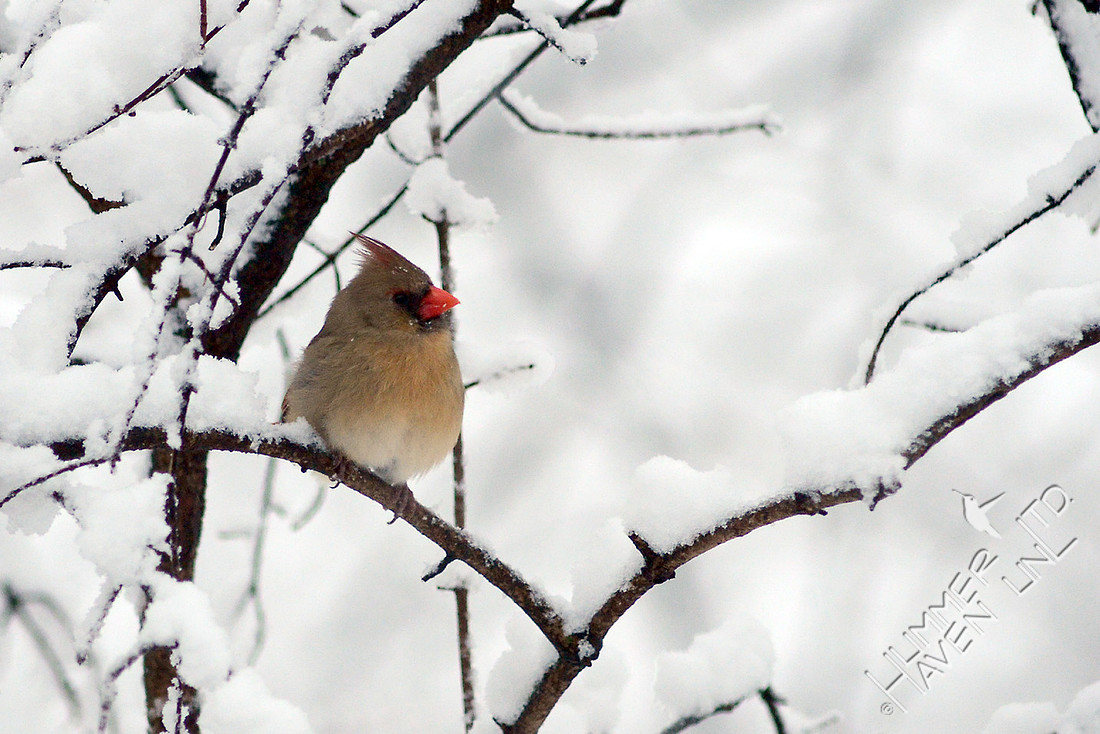
I had just photographed this cardinal when everything went dark and quiet. The power was out. It would be a long day. But the birds were determined to come in to the feeders despite the winds. Six Pine Siskins took turns waiting in the Rough-leaved Dogwood (Cornus drummondii) before going to the sock.
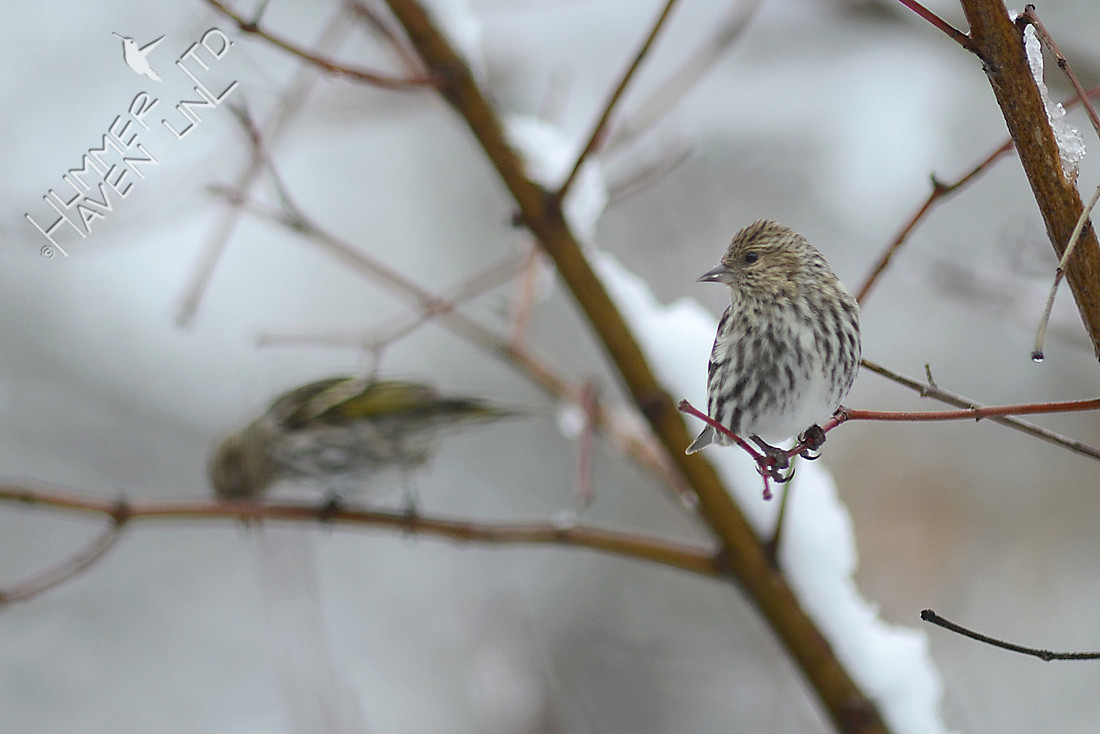
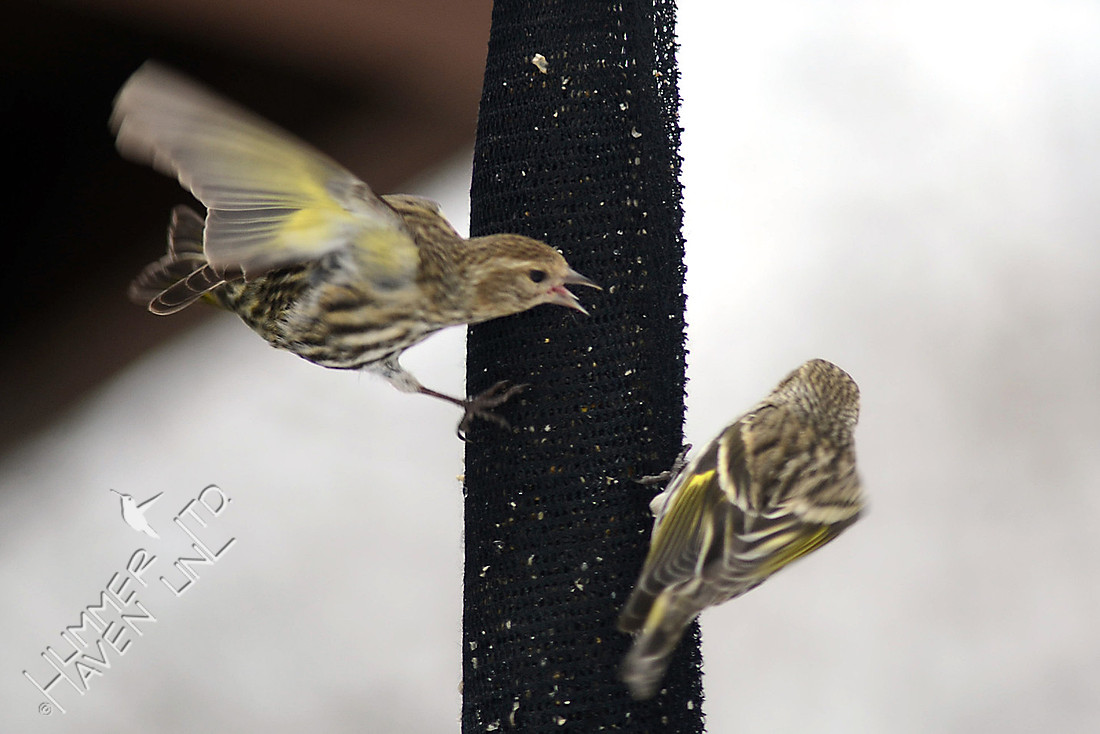
They were not always agreeable.
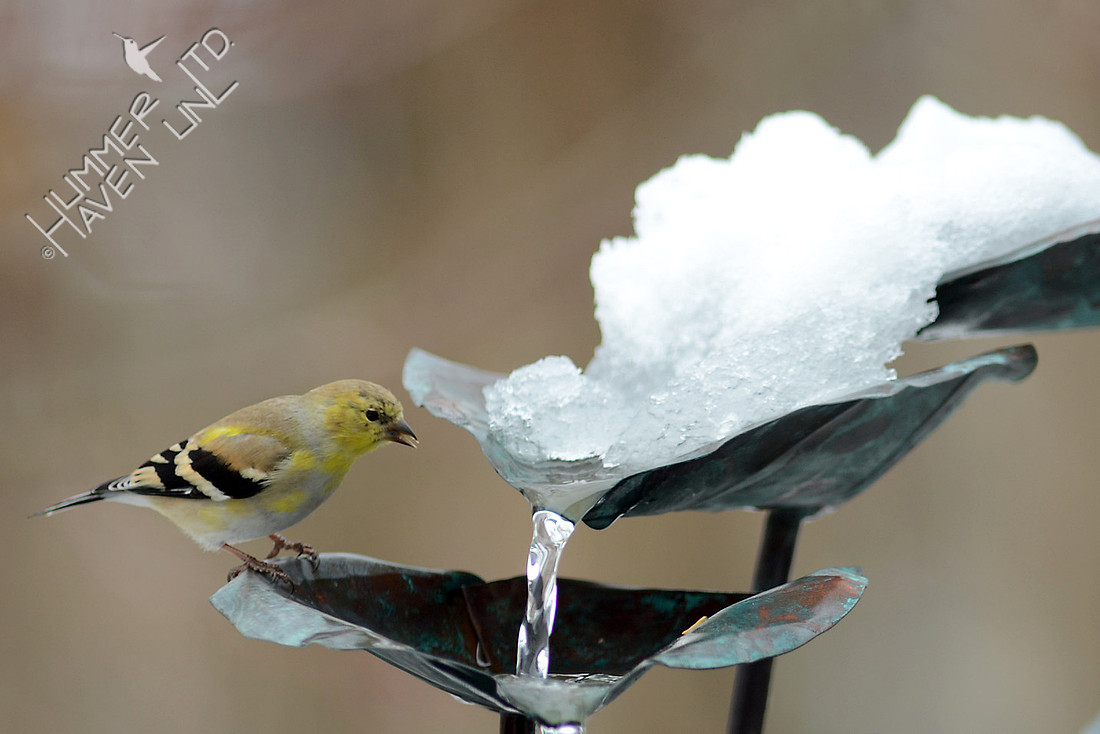
The American Goldfinches took turns, too. This male is beginning to get some brighter breeding plumage.
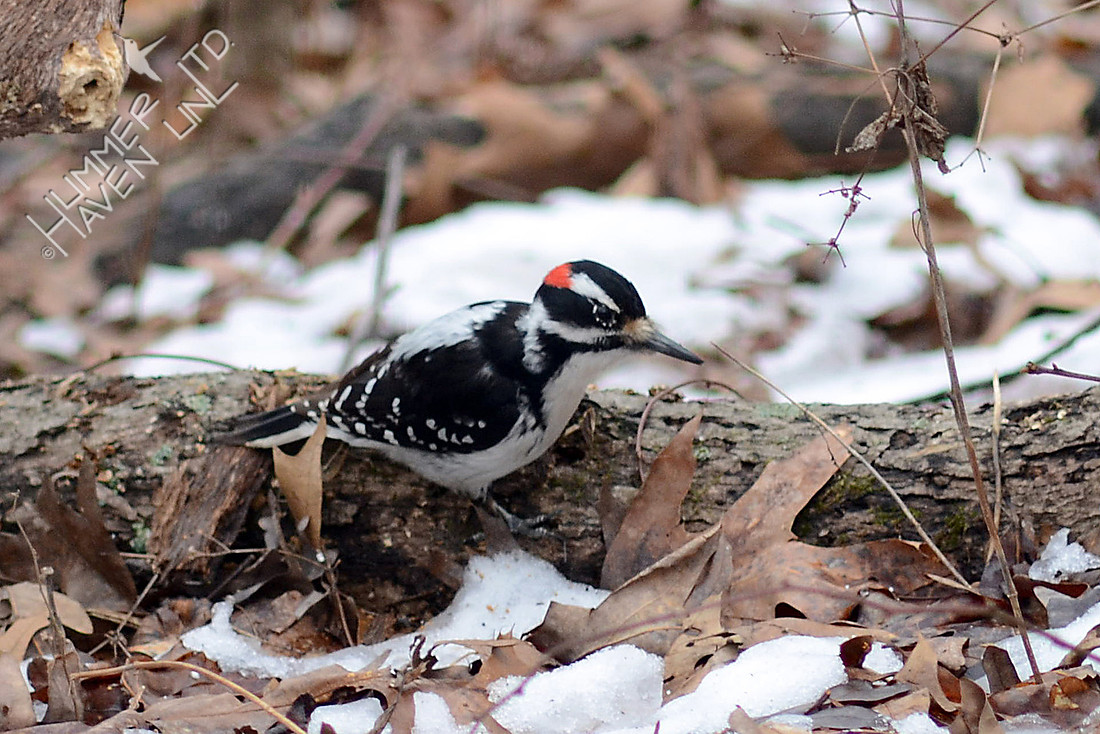
The snow began melting pretty quickly in the afternoon. By the next day, not much was left. This Hairy Woodpecker was back, checking the logs for insects.
We spent Friday morning with our dear friend and native plant accomplice, Sue, at a Grow Native workshop in Edwardsville, IL. It was a wonderful event, with our favorite inspirational speaker, Doug Tallamy, giving the keynote.
Read more about Doug and his work here: http://www.bringingnaturehome.net
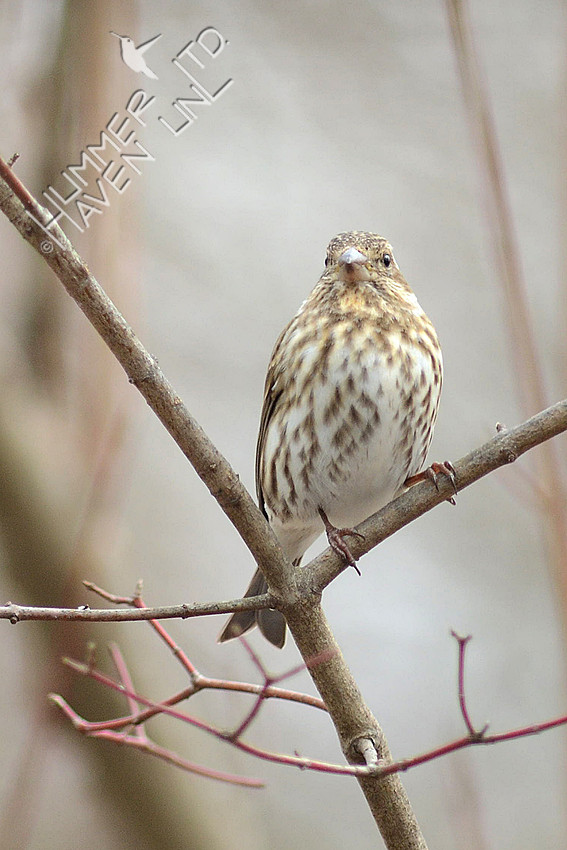
When we returned Friday afternoon, this Purple Finch female was around for a while. It had been about a month since we'd seen one.
This male Yellow-bellied Sapsucker came in - it is beginning to look brighter, too!
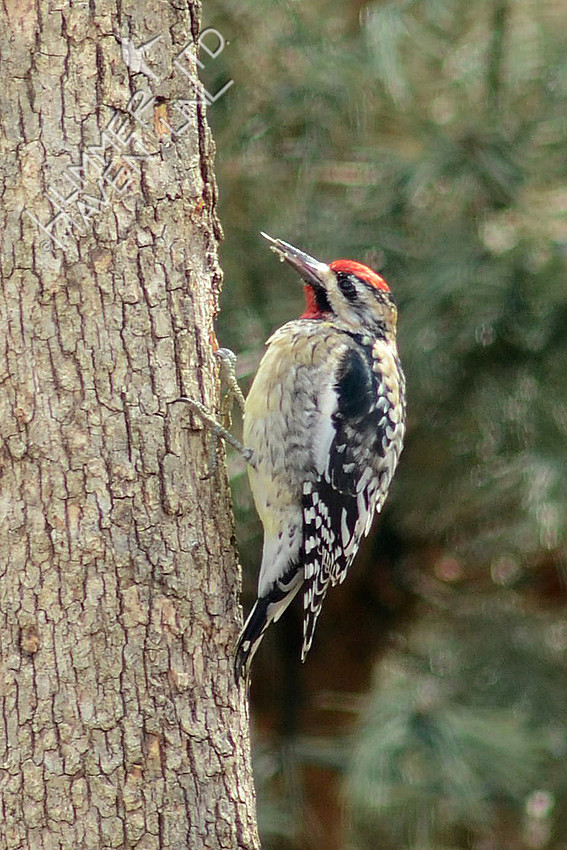
I guess the roller coaster weather ride will last a while, but breeding plumage certainly is another precursor of spring.
2/20/16 Eastern Bluebird!
When we left on the tenth to visit family for a week it was 13 degrees. We returned to rising temperatures and today it was 78 degrees for a new record high. What a difference! Of course, it won't last. But, spring does seem to be in sight on warm days like today. I went out early and saw a large flock of Snow Geese. They were calling and flying north with their black-tipped white wings bright against the blue sky. A short time later I went back out with my camera. My neighbor stopped by and we spent ten minutes catching up. As she left, I saw a Red-shouldered Hawk and then turned to see a bright blue bird swoop down from the maple tree to land in the leaves in the garden. Ah, an Eastern Bluebird! I quickly went around the house to change to the tripod, hoping the bird would stay a while. I positioned myself in the gazebo and watched for it.
The bluebird foraged in the leaf litter and would return to different branches, waiting to spy movement.

It's a thrush, a cousin to the American Robin. Here it is in a young hackberry.

It perched in a small redbud, closer to the ground.

The bluebird covered quite a bit of area, working the east and north perimeters of the yard. It also took a break to splash in a puddle in the swamp. It would sometimes pick a spot that another bird claimed. A Red-bellied Woodpecker chased it from this branch.

It flew across the street and out of sight for a while. An American Goldfinch checked out the Beebalm (Monarda fistulosa) in the garden.

It was a beautiful male. We've only had them here probably five times in twenty years! Though we have many of the plants and insects that would support them and we don't use any pesticides that would poison them, we actually don't have enough habitat. According to the definitive bluebird website, each bluebird couple needs about a 12 acre territory. So, this bird may be a one-day wonder, scoping out possible nesting sites.
Here's the website: http://www.sialis.org/eablbio.htm


This visit of our beautiful state bird certainly made my day!
1/26 and 1/27/16 Rusty Blackbirds, Red-winged Blackbirds and Brown-headed Cowbird
The blackbird flock continues to change up and come in on different days. They didn't show on 1/25 and the next day, the flock swelled again to large numbers. I managed a few shots before they spooked, lifted and flew. The Brown-headed Cowbird, uncommon in winter, is on the lower right in this photo.

The three Red-winged Blackbirds are in the center with the Rusty on the upper right.

The next day, it started with 15 Rusties in the swamp. I decided to try my luck at going outside staying below the deck to try for some photos. Again, I just got a few before everybody spooked. Here is a female Rusty Blackbird near a 'knee' of the pond cypress.

The Red-winged Blackbirds came to the Bubbler rock.

Once they all flew, I decided to just come back inside and hope the Bubbler Cam had gotten some of the activity I had seen but could not capture. I do love watching these Rusties. They march about in a somewhat organized fashion, almost like a search team, probing under the leaf litter and hoping for insect tidbits. I've rarely seen them bathe. They prefer to poke around in the shallow basin. Here is the 2 minute video from the Bubbler Cam.
A couple male Red-winged Blackbirds also came to the feeder near the deck. This looks to be a worn adult male.

This one is a young male, who will molt soon into his first spring plumage.

I haven't seen the female Purple Finch in a couple days, but she came onto the deck on 1/25.

One Pine Siskin has been pretty regular through the week, too.

We're in for a warm-up, we've gained 40 minutes of daylight since the Winter Solstice and the birdsong has been increasing, too!
1-22-16 Rusty Blackbirds
Today, twenty plus Rusty Blackbirds were here in the morning. A small group of four, then six came in hungry.

We filled the feeders around 8:00 and I also scattered some freeze dried mealworms. The word must have gotten out. There are 16 in this photo along with one European Starling.

I also took this short video of the Rusties.
Despite having a couple hours of tree work done, it was the highest count day of the year with 29 species of birds, including the first Barred Owl we've heard.