
Feeding birds in cold weather

Last week, I gave a program to the Master Gardeners at the Missouri Botanical Garden about 'Shady Oaks, Our Garden for Life'. One of the questions was whether we feed birds in the winter. Of course, we have the native plants that give sustenance with their seeds, sap, insects and berries. Here is a female sapsucker who found some sugar maple sap to take in, drop by drop, on January 6.
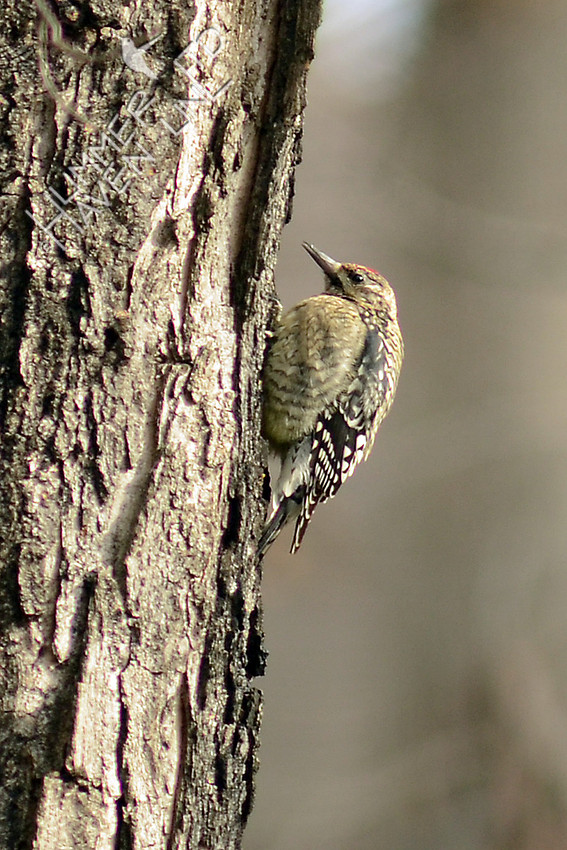 Yellow-bellied Sapsucker, female at Sugar Maple
We also do some supplemental feeding when the cold winter comes on. We have a few feeders with a Cardinal mix and added safflower seed, two socks filled with niger seed, and two cages of plain suet. We have also had a lot of birds that eat a product made by Wild Birds Unlimited called 'Jim's Bodacious Bark Butter'. (I own no stock in this company!) We use the back of a fork to push it into the bark furrows on several trees. The woodpeckers and sapsuckers look for it when it gets really cold, as in the last few days when it got down to 2 degrees.
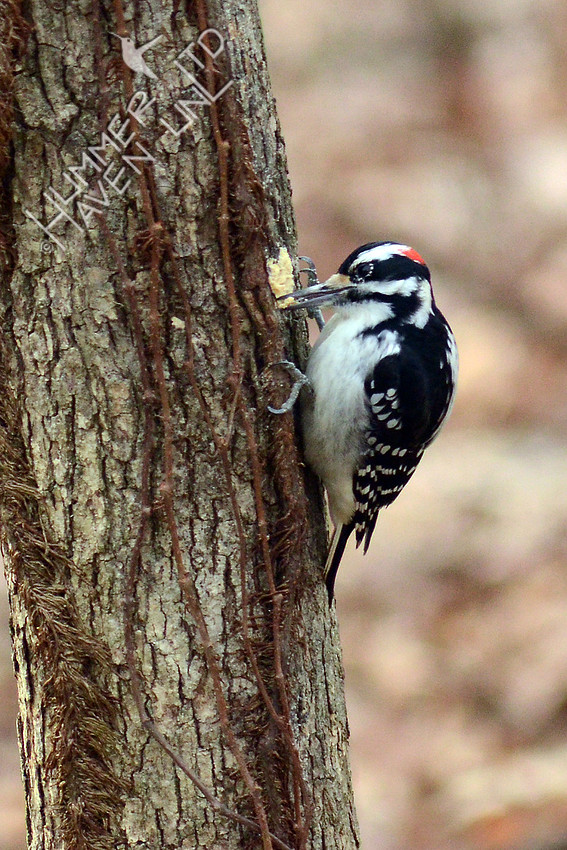 Hairy Woodpecker
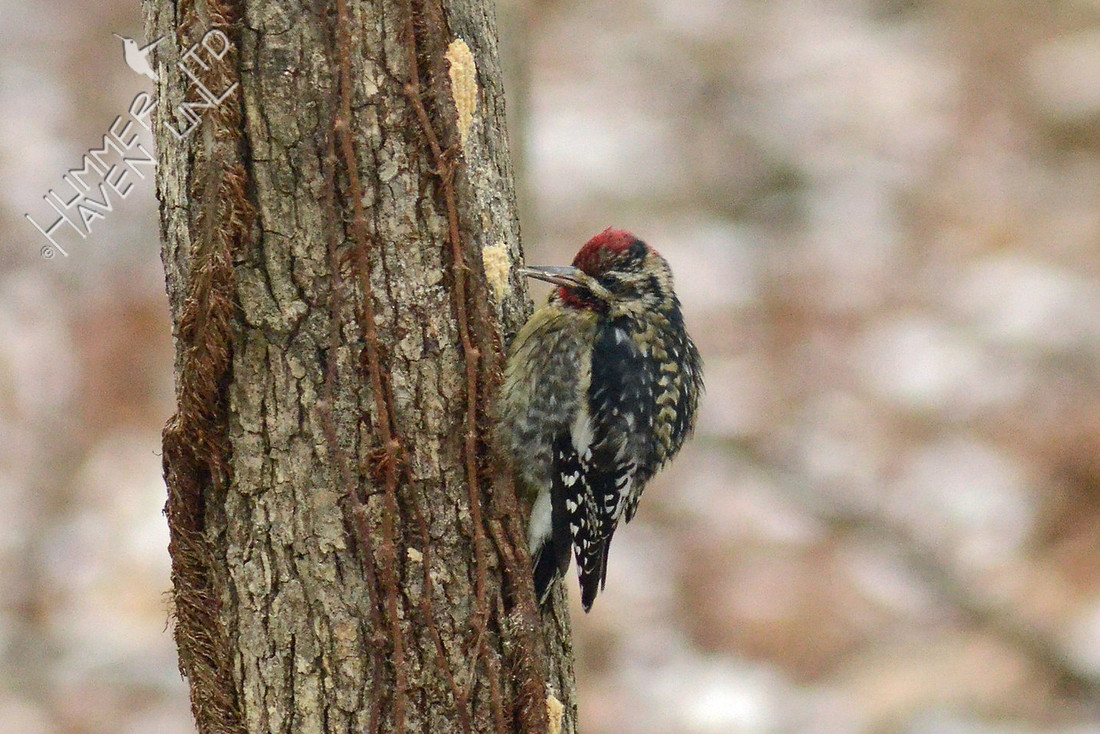 Yellow-bellied Sapsucker
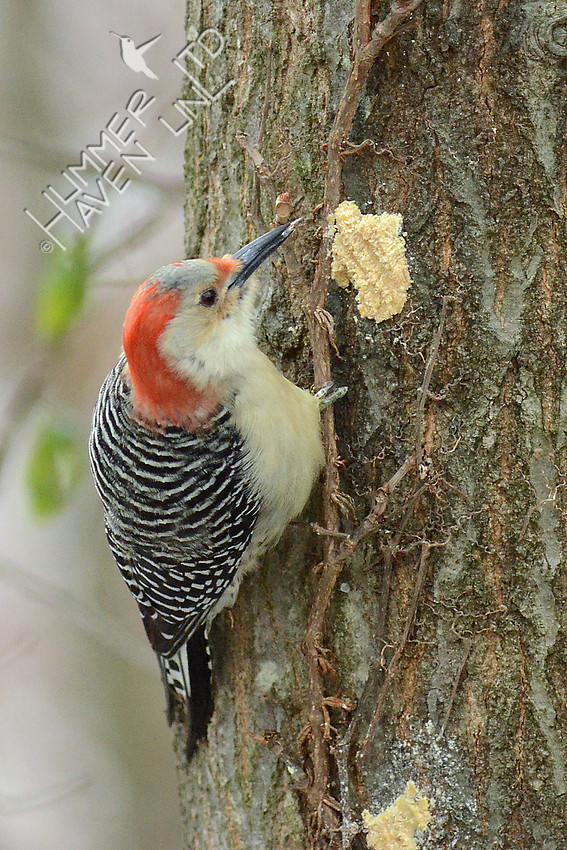 Red-bellied Woodpecker, female
Those birds cling, unlike the Dark-eyed Juncos and sparrows that typically feed on the ground. To help them out and give them a bit of a perch, I put it next to the Virginia Creeper.
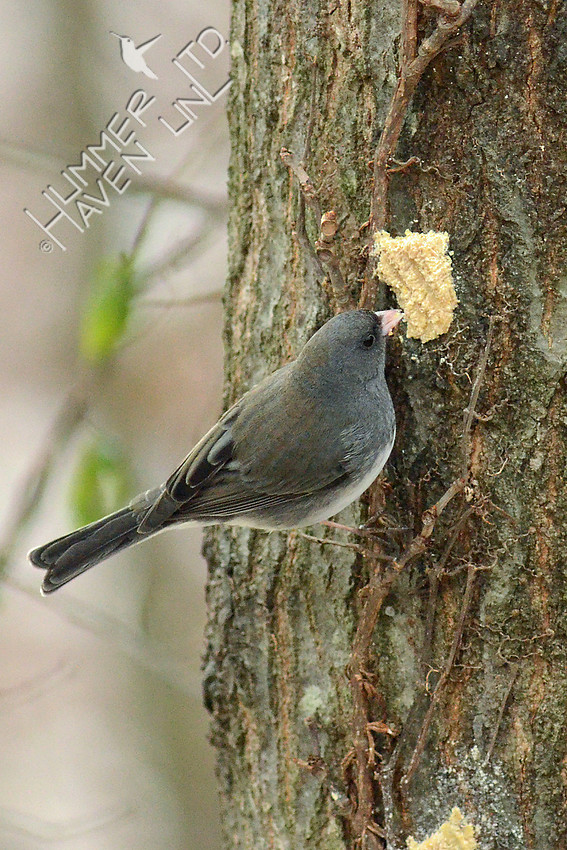 Dark-eyed Junco
Birds do become competitive about this bark butter. Here, one Yellow-bellied Sapsucker male chases off another one.
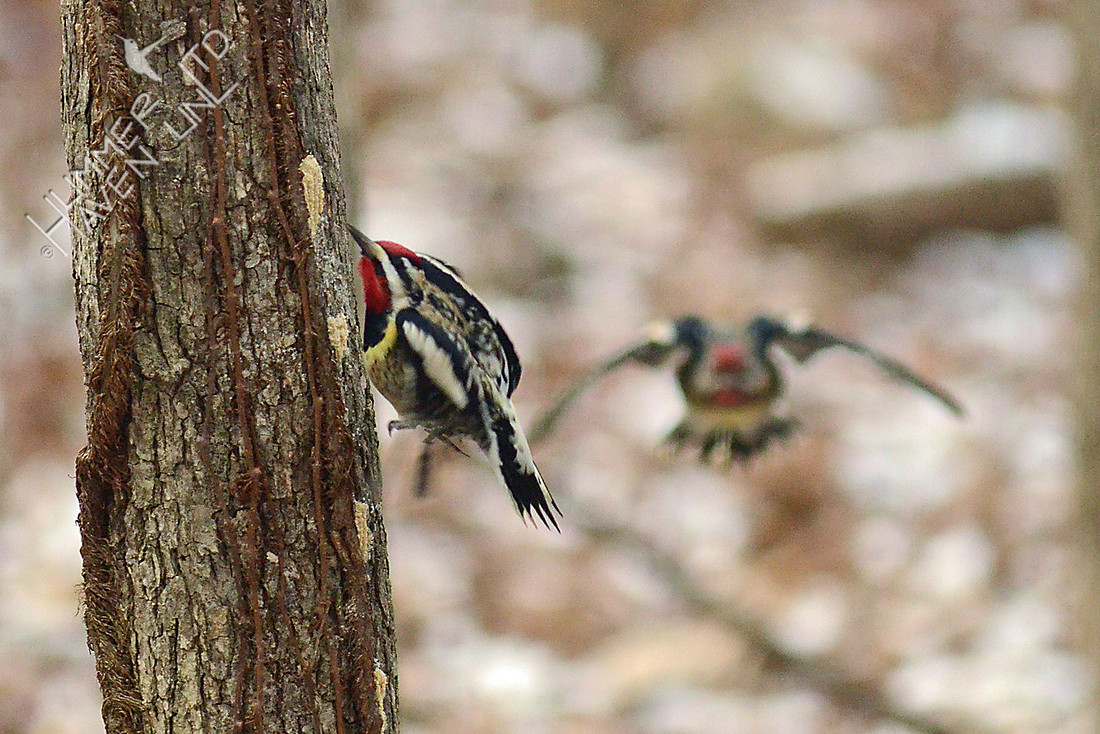 2 Yellow-bellied Sapsuckers
And these 2 Hairy Woodpeckers were keeping track of each other's whereabouts.
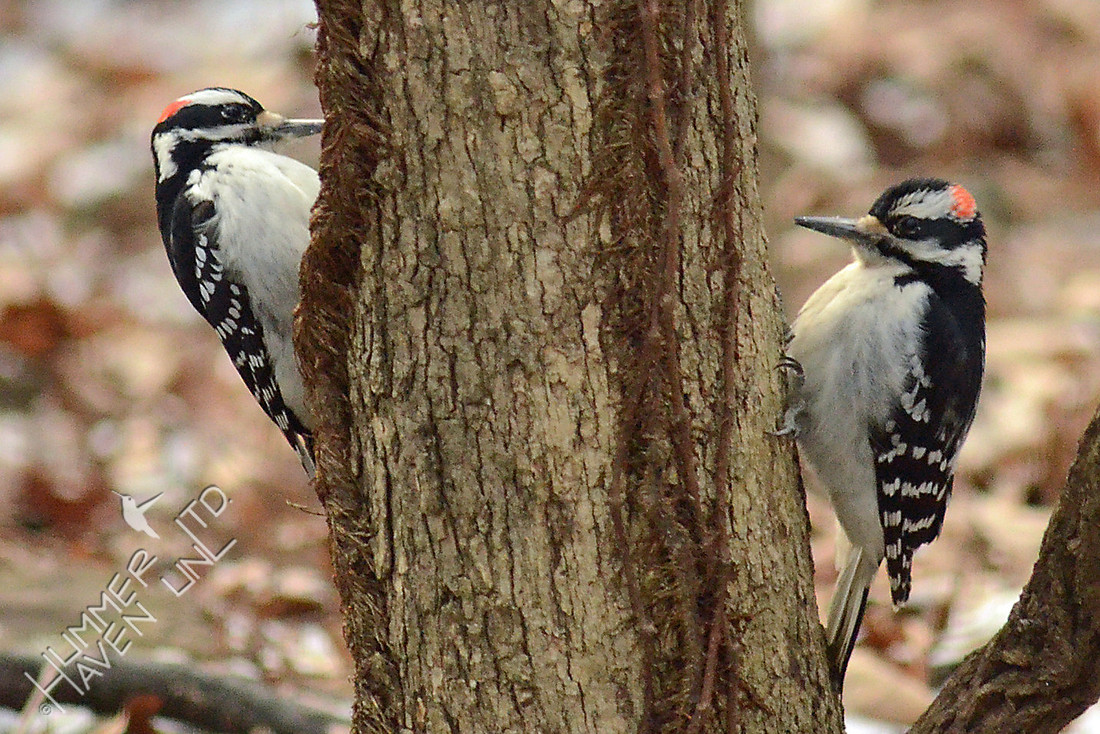 2 Hairy Woodpeckers
We have only seen 2 European Starlings so far in this cold spell, but beware! When they come in, they'll poke and jab maliciously with those sharp bills at the other birds to get to it. I will stop putting it out for a few days if they start this behavior until the flock of starlings moves on.
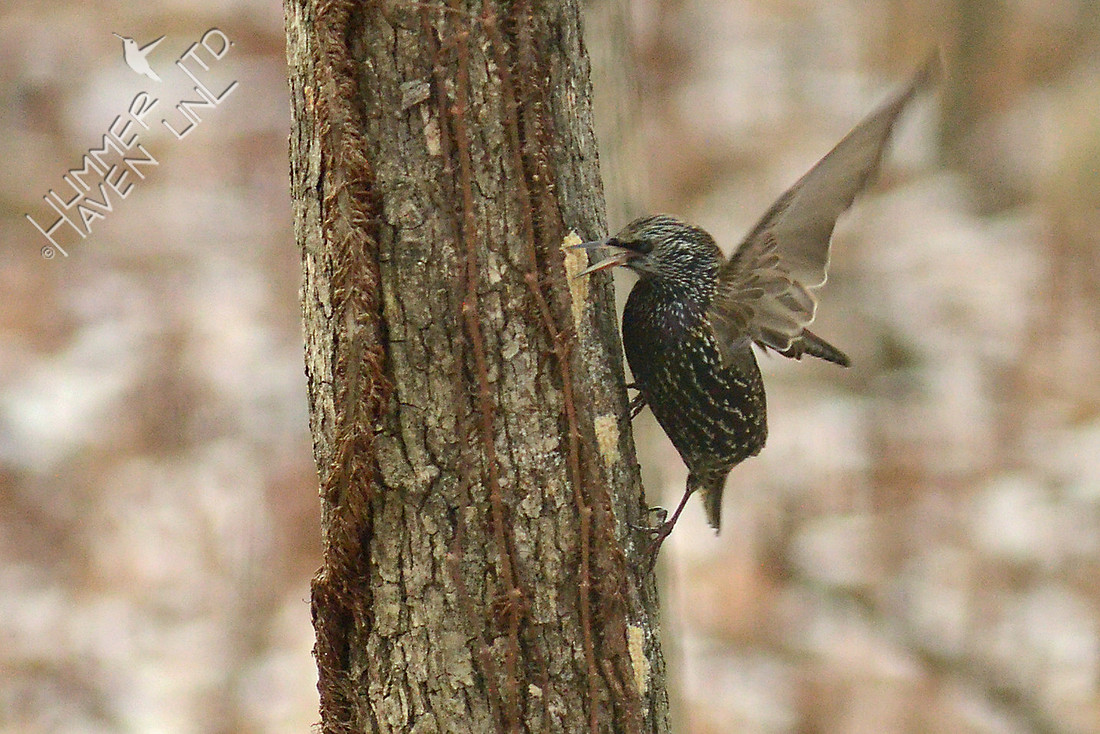 European Starling
It's winter, and the worst may yet come, but we've already gained 19 whole minutes of daylight since the solstice! Keep warm!