
Native Milkweeds and the Monarch butterfly

I am not an expert, but would like to share what I've learned in recent years about Monarchs. Native milkweed plants (Asclepias spp.) are the most important host plants for the Monarch butterfly. The reason is that milkweeds are the ONLY plant that the Monarch caterpillars or larvae can eat. The larvae are strict specialists, they ingest the milkweed and their toxins (Cardenolides) and thus become toxic to predators. Their colors also help to protect them by announcing their toxicity. The adult Monarch butterflies are generalists and will visit many different kinds of flowers to sip nectar, but they will only lay their eggs on milkweeds. Monarchs have evolved with Asclepias to have this dependent relationship - the Monarch will not survive long term without our native milkweeds for their future generations.
http://www.monarchlab.org/Lab/Research/Topics/Milkweed/Default.aspx
There are many reasons for the decline in Monarch numbers. This winter, the count was only 3% of what it was back in the 1990's.
http://www.learner.org/jnorth/tm/monarch/conservation_overview.html
The Monarch has a somewhat complicated annual life cycle. It helps to get a handle on the fact that the fourth or fifth generation each year does NOT lay eggs, but flies from Canada back to Mexico to overwinter. Here's a simple explanation:
http://www.learner.org/jnorth/tm/monarch/sl/37/A00.html
As a gardener, I'm very concerned about a tropical milkweed that's been available in the marketplace in St. Louis since 2006. This plant actually has a negative impact on the Monarch butterflies. It is called Mexican Milkweed, Tropical Milkweed or Bloodflower (Asclepias curassavica).
How can it cause harm? If it's a milkweed, surely it's good, right?? Well, it's good when the Monarchs find it - in Mexico! It is likely the most important native host plant for the Monarch IN MEXICO. (from North American Monarch Conservation Plan 2008) But, it is not native here.
Asclepias curassavica grows near the Sacred Fir or Oyamel trees (Abies religiosa) where the Monarchs overwinter in Mexico. When the Monarchs warm up and wake up in the spring, it's the first plant they look for to lay their eggs upon.
When it is grown north of Mexico, i.e. in my garden for example, it can cause problems! By September and October, the fourth generation of Monarchs are heading back to Mexico for the winter. They are NOT supposed to lay eggs at that time, but when they saw the Mexican Milkweed (Asclepias curassavica) in my garden a few years back, they DID lay eggs. They thought it was spring and time to lay eggs. The butterflies came 'out of diapause'! (Diapause is a period of physiologically enforced dormancy between periods of activity.)
Egg on Mexican Milkweed (Asclepias curassavica) found on 9/1/11
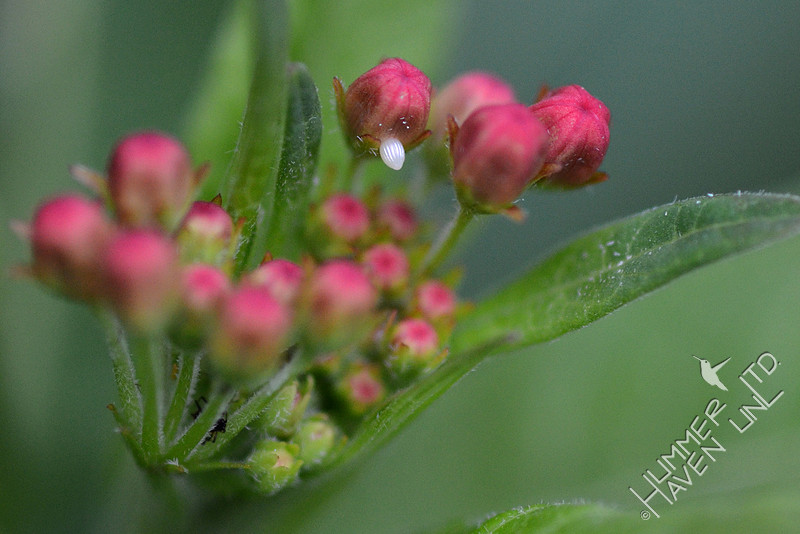 Monarch egg on Asclepias curassavica 9-1-11
Monarch laying egg on Mexican Milkweed (Asclepias curassavica) on 10/23/11 - Note the date!!
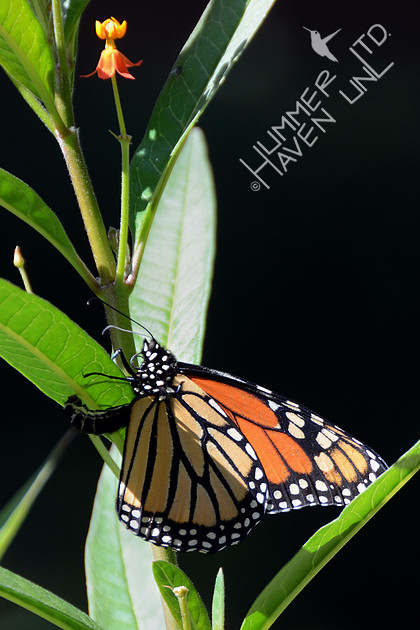 Monarch laying egg on Asclepias curassavica 10-23-11
Unfortunately, we had our first hard freeze only 18 days after this monarch laid her eggs, perhaps 300 of them. The eggs would not have survived and she probably did not have the energy to make it back to Mexico. Thus, her migratory life cycle was greatly disturbed by this Mexican Milkweed (Asclepias curassavica) and the result was that many potential Monarchs were lost. How many other gardens did this happen in??
This is the reason for my post on this issue, do learn from my experience! Please do not put this plant in your gardens. If you already have it, take it out now. The Monarchs need our native milkweeds and we need to let this plant stay in Mexico, where it belongs for their benefit. Use Missouri native milkweeds in your garden instead! Here are two that do well in our garden.
Marsh or Swamp Milkweed (Asclepias incarnata) has beautiful pink blooms
 Monarch on Marsh Milkweed (Asclepias incarnata)Margy Terpstra
Tiny Monarch larvae is eating Orange Butterflyweed (Asclepias tuberosa)
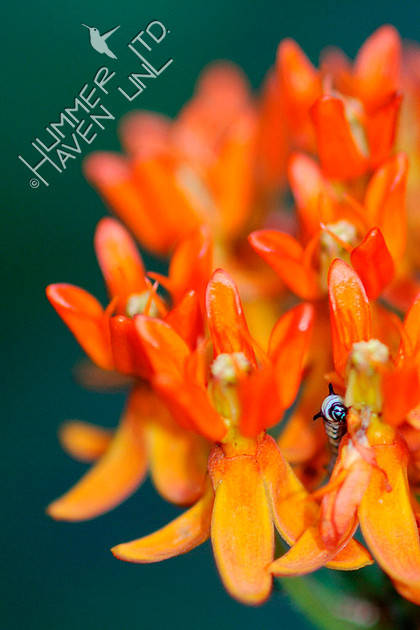 Monarch caterpillar on Butterflyweed (Asclepias tuberosa)Margy Terpstra
Monarch laying eggs 4/12/11 on Marsh Milkweed (Asclepias incarnate), the first sighting of egg laying in Missouri that year. See the tiny pearl eggs?
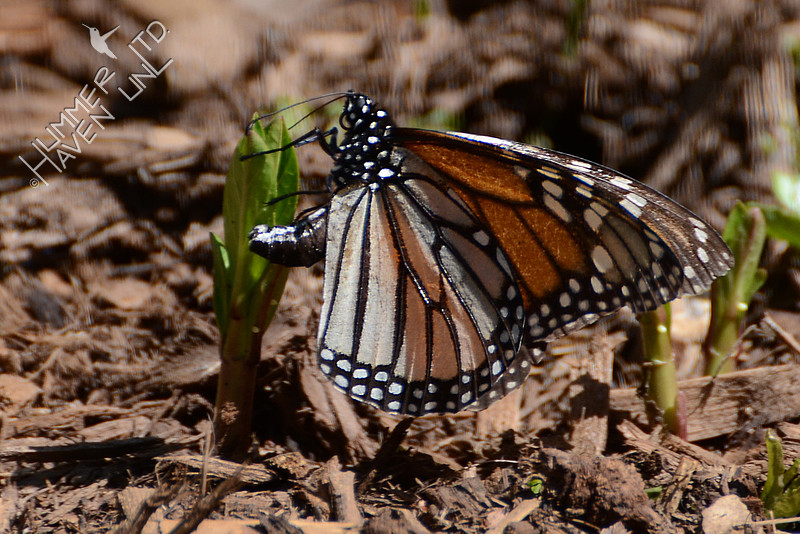 Female Monarch laying eggs on Asclepias incarnataFemale Monarch laying eggs on Asclepias incarnata in our songbird and butterfly garden on April 12, 2011
Monarch caterpillar munching on yummy Marsh Milkweed (Asclepias incarnata)! Yes, a host plant means food for the caterpillars!
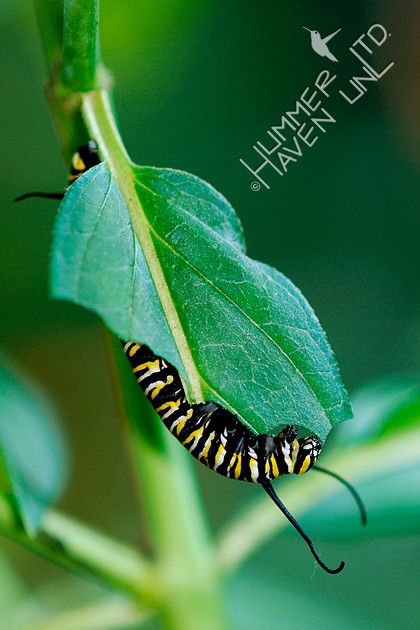 Monarch caterpillar on Marsh Milkweed (Asclepias incarnata)Margy Terpstra
A bejeweled Monarch adult about to emerge from the chrysalis on 9/8/09!
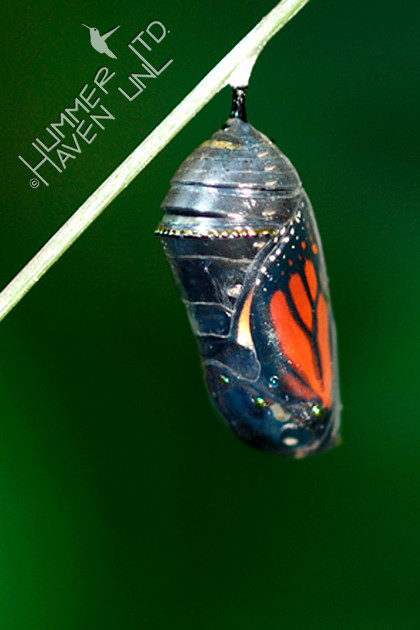 Monarch about to emerge from chrysalisMargy Terpstra
I have not seen another Monarch since that first male on June 20, but I hope to see more, perhaps on their return to Mexico to rest and refuel.